


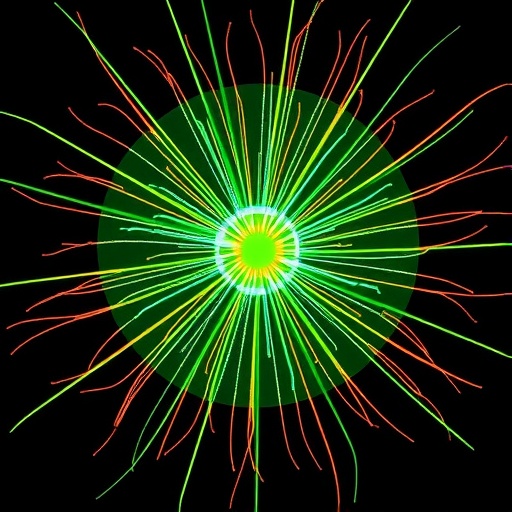
In a groundbreaking advancement poised to revolutionize cellular imaging, a team of researchers has developed an innovative fluorescent probe named CenSpark that promises unprecedented precision in labeling centrioles and cilia. These tiny yet vital organelles have long evaded clear visualization due to their intricate structure and dynamic nature, limiting our understanding of their role in cellular physiology and disease. The newly reported fluorescent probe represents a significant leap forward, enabling scientists to explore centriole and cilia biology with remarkable clarity and specificity.
Centrioles are cylindrical, microtubule-based structures that play crucial roles in cell division and the formation of cilia and flagella. Cilia, on the other hand, are hair-like projections extending from the cell surface, essential for motility, signaling, and sensory functions across a diverse range of organisms. Visualizing these structures accurately has been a persistent challenge for bioimaging technology because traditional markers lack specificity or disrupt the organelles’ native functions. CenSpark addresses these limitations by providing a fluorescent tag that binds selectively without compromising the structural or functional integrity of centrioles or cilia.
The development of CenSpark involved a multidisciplinary approach combining organic chemistry, molecular biology, and high-resolution microscopy. Researchers carefully engineered the probe to target specific protein components within centrioles and cilia, leveraging unique molecular interactions that permit selective binding. This specificity arises from the probe’s design, which capitalizes on the distinctive biochemical environment of centrioles and cilia, differentiating them from surrounding cellular components. The successful conjugation of fluorescence to this targeting moiety enables live-cell imaging with exceptional contrast and minimal background noise.
What sets CenSpark apart from existing probes is not only its specificity but also its photostability and brightness. Fluorescence probes are often hindered by photobleaching, a phenomenon where prolonged exposure to excitation light leads to loss of signal. CenSpark’s chemical composition incorporates novel fluorophores engineered for extended emission duration, allowing researchers to track organelle dynamics over longer periods with maintained signal fidelity. This feature dramatically enhances the capacity to study centriole duplication, migration, and cilia assembly in real-time.
The implications of this advancement are far-reaching, particularly in the field of cell biology and pathology. Centriole dysfunction is implicated in a spectrum of disorders, including cancer and ciliopathies, a group of diseases caused by cilia malfunction. With CenSpark, scientists can visualize disease-associated structural anomalies at a molecular level, potentially accelerating diagnostics and therapeutic development. Moreover, the probe’s application is not limited to static imaging; it facilitates live-cell analysis, thereby opening avenues for observing dynamic processes previously inaccessible due to technical constraints.
Innovative microscopy techniques, such as super-resolution microscopy, stand to benefit immensely from CenSpark’s characteristics. By combining CenSpark labeling with advanced imaging modalities, researchers can penetrate the nanoscopic architecture of centrioles and cilia, revealing intricate details about protein organization and spatial-temporal dynamics. Such insights are critical for understanding how these organelles coordinate complex cellular functions, including signaling pathways and mechanotransduction.
The interdisciplinary team behind CenSpark also validated the probe’s performance across a range of model organisms—from cultured mammalian cells to more complex systems—demonstrating its versatility and broad applicability. This versatility ensures that CenSpark is not merely an academic tool but one adaptable for diverse research contexts, including developmental biology, neurobiology, and regenerative medicine where centriole and cilium functions are pivotal.
Importantly, the synthesis protocol for CenSpark was optimized to facilitate scalability and reproducibility, addressing common bottlenecks associated with probe availability. The affordability and accessibility of this probe are anticipated to drive widespread adoption across research laboratories, accelerating the pace of discovery in centriole and cilia biology globally.
The development process also accounted for biocompatibility, ensuring that CenSpark does not induce cytotoxic effects or interfere with normal cellular physiology. This attribute is essential for long-term imaging studies that investigate how centrioles and cilia respond to physiological stimuli or pharmacological interventions in living cells.
Further advancements envisioned by the research team include modifying the probe to enable multiplexed imaging with other organelle-specific markers. This capability would allow simultaneous visualization of centrioles, cilia, and additional cellular structures, offering a comprehensive perspective on cellular architecture and coordination. Such multiplexing is crucial for dissecting the interplay between different organelles in health and disease contexts.
CenSpark also opens new corridors for quantitative analysis, as its consistent fluorescence intensity can be calibrated for measuring centriole numbers, cilia length, and dynamic changes during cell cycle progression or environmental response. These quantitative capabilities facilitate high-throughput screening applications, such as drug discovery or genetic perturbation studies targeting centriole and cilia function.
From a mechanistic perspective, CenSpark serves as a powerful tool to unravel the molecular motors and scaffold proteins that organize centrioles and cilia. Tracking these components in real time will elucidate how structural remodeling supports cellular adaptation and function, offering fundamental insights into cell biology that were previously unattainable.
Ultimately, CenSpark’s advent marks a transformative milestone in bioimaging, marrying chemical innovation with biological inquiry to illuminate cellular microstructures that are central to life and disease. As the probe becomes integrated into routine experimentation and clinical research, we anticipate a surge in discoveries that will reshape our understanding of cell architecture and its implications for health and disease.
The publication of CenSpark’s development in Nature Chemical Biology underscores its significance and the growing interest in tools that empower detailed exploration of microtubule-based organelles. Researchers around the globe are eager to harness CenSpark’s capabilities to delve deeper into the mysteries of centriole duplication, cilia formation, and their pathological derangements in human disease.
For those engaged in cellular microscopy and molecular biology, CenSpark represents not only a new probe but a new lens through which the inner workings of cells are rendered vividly visible. This breakthrough promises to propel the scientific community toward refined models of cellular machinery and novel therapeutic targets, heralding an era of illumination within the microcosm of the cell.
Cite Scienmag News
Ophelia Keating. (April 15, 2026). CenSpark: New Fluorescent Probe for Centrioles, Cilia. Scienmag. https://scienmag.com/censpark-new-fluorescent-probe-for-centrioles-cilia/
Ophelia Keating. "CenSpark: New Fluorescent Probe for Centrioles, Cilia." Scienmag, 15 April 2026, https://scienmag.com/censpark-new-fluorescent-probe-for-centrioles-cilia/. Accessed 5 September 2026.
Ophelia Keating. "CenSpark: New Fluorescent Probe for Centrioles, Cilia." Scienmag. April 15, 2026. https://scienmag.com/censpark-new-fluorescent-probe-for-centrioles-cilia/


