


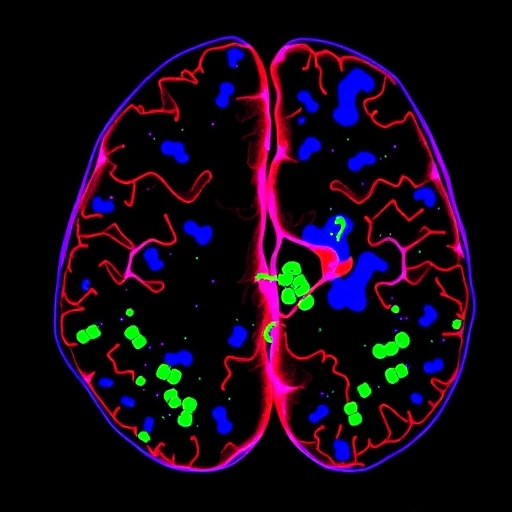
In a groundbreaking new study, researchers have uncovered pivotal molecular mechanisms that may deepen our understanding of Alzheimer’s disease, shedding light on the complex interplay between Tau protein modifications and neuronal dysfunction. The study, led by Fu, Lin, Xu, and colleagues, has revealed that hyperphosphorylation of a specific Tau isoform, Tau217, mediated by the enzyme cyclin-dependent kinase 5 (CDK5), plays a critical role in disrupting synaptic structures in neurons. This molecular disturbance significantly exacerbates cognitive decline, offering fresh insights into the pathological progression of Alzheimer’s and opening new avenues for therapeutic intervention.
Alzheimer’s disease (AD) remains one of the most debilitating neurodegenerative disorders, characterized by progressive memory loss, cognitive impairment, and ultimately, loss of independence. Central to the disease’s pathology is the accumulation of abnormal Tau protein aggregates inside neurons. Tau, a microtubule-associated protein, normally functions to stabilize neuronal microtubules, which are essential for maintaining cell shape and facilitating intracellular transport. However, pathological modifications to Tau, including phosphorylation, can cause it to detach from microtubules, leading to neurofibrillary tangles—a hallmark of Alzheimer’s pathology.
Although Tau hyperphosphorylation has long been implicated in AD, this study hones in on Tau217, a specific isoform gaining recognition for its elevated levels in Alzheimer’s patients and its strong correlation with disease severity. The authors identify CDK5, a proline-directed serine/threonine kinase, as a central player driving excessive phosphorylation at Tau217 sites. Unlike other kinases, CDK5 activity is tightly controlled under normal physiological conditions, but its dysregulation is increasingly linked to neurodegeneration.
Employing a combination of advanced biochemical assays, neuron culture models, and mouse models of Alzheimer’s disease, the researchers meticulously mapped the phosphorylation patterns induced by CDK5. Their data reveal that CDK5 catalyzes the addition of phosphate groups at multiple residues on Tau217, a modification that not only promotes Tau aggregation but also alters synaptic architecture. Dendritic spine density and morphology, crucial for synaptic transmission and plasticity, were notably disrupted in neurons expressing hyperphosphorylated Tau217. These synaptic deficits provide a mechanistic explanation for cognitive impairments observed in AD animal models.
The research team utilized sophisticated imaging techniques, including high-resolution confocal microscopy and electron microscopy, to observe synaptic changes at the ultrastructural level. The images revealed pronounced synaptic loss and alterations in spine morphology, hallmark features correlating with learning and memory deficits. Importantly, these structural abnormalities were directly linked to Tau217 hyperphosphorylation status, establishing a causal relationship rather than mere association.
Cognitive testing in mouse models further confirmed this connection; animals displaying elevated CDK5-driven Tau217 phosphorylation demonstrated significant impairments in spatial learning and memory tasks. These functional deficits mirrored synaptic pathology and provided compelling evidence that targeting CDK5 activity or Tau217-specific modifications could be a promising therapeutic strategy to mitigate cognitive decline in Alzheimer’s patients.
Interestingly, the study also explored the upstream factors contributing to CDK5 hyperactivation. The enzyme’s regulatory subunit p25, known to aberrantly activate CDK5, was found at elevated levels in Alzheimer’s brain tissues and mouse models. This finding integrates a broader signaling cascade whereby dysregulated proteolysis and kinase activation converge to exacerbate Tau pathology and synaptic dysfunction.
To assess the therapeutic potential of modulating this pathway, the authors conducted experiments employing CDK5 inhibitors. Treatment with selective inhibitors reduced Tau217 hyperphosphorylation and partially restored synaptic structure and function in vitro and in vivo. These results highlight the feasibility of targeting CDK5 or its downstream effects as a disease-modifying approach, moving beyond symptomatic treatments currently available for AD.
The implications of this work extend beyond Alzheimer’s disease alone. CDK5 is implicated in various neurodegenerative and neuropsychiatric disorders, suggesting that Tau217 hyperphosphorylation could be a convergent mechanism underlying synaptic deficits across multiple conditions. This universality raises the possibility of broad-spectrum neuroprotective therapies, contingent upon a more detailed understanding of kinase regulation and substrate specificity.
Moreover, the study’s focus on Tau217 adds to the evolving narrative that not all Tau isoforms contribute equally to disease pathology. Unlike the canonical Tau species extensively studied in the past, Tau217 appears to be particularly vulnerable to pathogenic phosphorylation, making it a valuable biomarker and potential target for early diagnosis and intervention. The specific detection of hyperphosphorylated Tau217 in cerebrospinal fluid and blood could revolutionize clinical diagnostics by providing a sensitive and specific indicator of disease progression.
This research also underscores the critical role of synaptic health in cognitive function. Efforts to preserve or restore synaptic integrity are emerging as key therapeutic targets. By elucidating how Tau217 hyperphosphorylation destabilizes synaptic structures, the study bridges molecular pathology with functional outcomes—a necessary step for translating laboratory findings into effective treatments.
Looking forward, further investigations are warranted to dissect the temporal dynamics of CDK5 activity and Tau217 phosphorylation during AD progression. Understanding when and how these pathological events occur could inform the timing and design of interventions. Additionally, the potential side effects and specificity of CDK5 inhibitors must be carefully evaluated to ensure safety and efficacy in clinical settings.
Complementary approaches, such as gene therapy to modulate kinases or phosphorylated Tau clearance mechanisms, may enhance therapeutic outcomes. Integrating these strategies with lifestyle interventions and existing pharmacological treatments might offer comprehensive management of Alzheimer’s disease, a critical need given the growing aging population worldwide.
In conclusion, Fu, Lin, Xu, and colleagues have provided a compelling and detailed mechanistic insight into how CDK5-mediated hyperphosphorylation of Tau217 disrupts synaptic structures and accelerates cognitive deficits in Alzheimer’s disease. Their work not only advances our molecular understanding of tauopathies but also charts a course for innovative treatment strategies aimed at preserving neuronal integrity and cognitive function. As the scientific and medical communities strive to confront the global burden of dementia, discoveries like these illuminate the path toward more effective and targeted therapies, fostering hope for millions affected by this devastating condition.
Cite Scienmag News
Diana Fleming. (August 21, 2025). CDK5 Hyperphosphorylates Tau217, Worsening Alzheimer’s Cognition. Scienmag. https://scienmag.com/cdk5-hyperphosphorylates-tau217-worsening-alzheimers-cognition/
Diana Fleming. "CDK5 Hyperphosphorylates Tau217, Worsening Alzheimer’s Cognition." Scienmag, 21 August 2025, https://scienmag.com/cdk5-hyperphosphorylates-tau217-worsening-alzheimers-cognition/. Accessed 6 September 2026.
Diana Fleming. "CDK5 Hyperphosphorylates Tau217, Worsening Alzheimer’s Cognition." Scienmag. August 21, 2025. https://scienmag.com/cdk5-hyperphosphorylates-tau217-worsening-alzheimers-cognition/


