


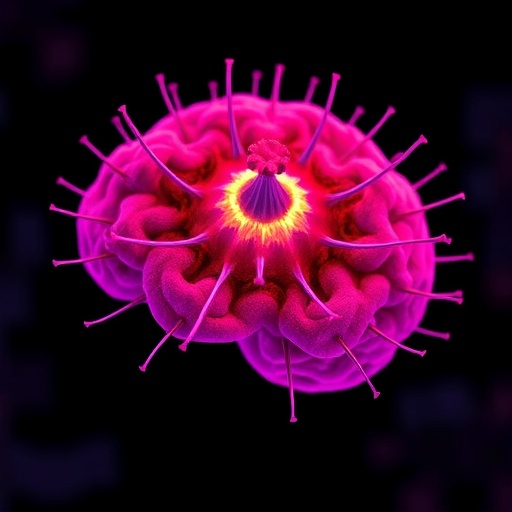
In a groundbreaking study poised to reshape our understanding of chronic neurological conditions, researchers have unveiled compelling evidence linking infection with the protozoan parasite Toxoplasma gondii to altered long-term outcomes in patients suffering from traumatic brain injury (TBI). This discovery, recently published in Translational Psychiatry, bridges parasitology, neurology, and psychiatry, revealing a complex interplay that may significantly influence recovery trajectories and neuropsychiatric sequelae following brain trauma.
Toxoplasma gondii, a ubiquitous intracellular parasite, is known for its widespread prevalence, infecting up to one-third of the global population. Typically acquired through ingestion of contaminated food or contact with feline feces, this protozoan establishes a lifelong, often latent infection in host tissues, including the central nervous system (CNS). While generally asymptomatic in immunocompetent individuals, T. gondii has been implicated in subtle behavioral changes and neuropsychiatric disorders, captivating neuroscientists and clinical researchers alike.
The research spearheaded by Spitz, Baker, McDonald, and collaborators delves deep into the chronic phase of traumatic brain injury, an area historically overshadowed by acute medical interventions. TBI, characterized by an external mechanical force causing brain dysfunction, often leads to persistent cognitive, emotional, and motor impairments. Despite advances in acute care, mechanisms influencing chronic recovery remain elusive, hampering effective long-term therapeutic strategies.
Leveraging a multidisciplinary framework, the investigators employed state-of-the-art diagnostic and analytic methodologies, including neuroimaging, immunological profiling, and behavioral assessments, to scrutinize the influence of latent T. gondii infection on TBI patients. Their cohort comprised individuals with documented TBI histories, stratified based on serological evidence of T. gondii exposure, allowing for a comparative evaluation of neurological trajectories.
The findings are both startling and illuminating. Patients harboring latent T. gondii infection exhibited distinct alterations in chronic neuropsychiatric outcomes compared to their uninfected counterparts. These alterations encompassed exacerbated cognitive deficits, heightened susceptibility to mood disorders such as depression and anxiety, and in certain cases, more profound motor dysfunction. The mechanistic basis for these clinical disparities appears multifactorial, intertwining persistent low-grade neuroinflammation induced by the parasite and its manipulation of host neurotransmitter systems.
At the molecular level, T. gondii is known to modulate dopamine synthesis pathways—a neurotransmitter pivotal in motivation, reward, and executive function. The study’s advanced neurochemical assays corroborated increased aberrations in dopamine signaling among infected TBI patients, suggesting a parasite-driven perturbation compounding the neuronal damage caused by injury. This dopaminergic dysregulation potentially contributes to the observed neuropsychiatric symptomatology and impaired neurocognitive recovery.
Neuroimaging analyses revealed notable structural and functional brain differences between infected and uninfected groups. Specifically, alterations were detected in regions integral to memory consolidation, emotional regulation, and sensorimotor processing, such as the hippocampus, amygdala, and basal ganglia. These regions are known reservoirs for latent T. gondii cysts, implicating localized parasitic persistence in sustained neuropathological processes after TBI.
Another critical aspect of the study highlights the immune system’s role in mediating these effects. Chronic T. gondii infection elicits a finely balanced immune response to prevent parasite reactivation while minimizing tissue damage. However, in the context of TBI-induced neuroinflammation, this equilibrium may be disrupted, leading to prolonged inflammatory states detrimental to neural repair and plasticity. Elevated inflammatory biomarkers, including cytokines and chemokines implicated in neurodegeneration, were documented in the infected TBI cohort, reinforcing this hypothesis.
From a clinical perspective, these revelations beckon a paradigm shift in how clinicians approach TBI management. Routine screening for T. gondii serostatus might become integral to prognostic evaluations, informing personalized rehabilitation regimens. Moreover, anti-parasitic therapies, traditionally reserved for acute toxoplasmosis cases, could be investigated as adjunct treatments in select TBI patients to mitigate parasitic contributions to chronic neuropathology.
The study also raises profound questions about the bidirectional relationship between infections and brain injuries. While TBI may predispose individuals to opportunistic infections due to blood-brain barrier disruption, latent parasitic infections might conversely exacerbate injury outcomes, creating a vicious cycle. Understanding the temporal dynamics and mechanistic underpinnings of this interplay represents a fertile area for future research.
Moreover, this work underscores the importance of considering environmental and infectious factors in neuropsychiatric disorders post-TBI. The heterogeneity in clinical presentations often confounds therapeutic attempts, suggesting that latent infections like T. gondii may be unrecognized contributors to this variability. By integrating parasitological perspectives into neurotrauma research, the potential emerges for novel biomarkers and treatment targets.
Intriguingly, the behavioral modifications attributed to T. gondii in animal models — such as altered fear responses and risk-taking behaviors — may parallel human neuropsychiatric phenomena observed post-TBI, particularly in infected subjects. This behavioral nexus provides a unique translational model to dissect underlying neurobiological circuits affected by coexisting brain injury and parasitic infection.
Technological advancements employed in this research also merit emphasis. The sensitivity of serological assays, combined with high-resolution functional MRI and positron emission tomography, allowed for unprecedented insight into host-parasite interactions within living human brains affected by trauma. Such tools pave the way for real-time monitoring of infection dynamics and neuroinflammation in clinical settings.
The societal and public health implications are equally profound. Given the extensive prevalence of T. gondii worldwide and the frequency of TBI incidents — from sports injuries to military combat and accidents — millions of individuals could potentially experience altered recovery courses influenced by this hidden parasite. This intersection demands heightened awareness and resource allocation toward integrated infectious and neurological healthcare.
In summary, the research by Spitz et al. elucidates a critical, previously underexplored dimension of TBI pathophysiology: the influence of latent Toxoplasma gondii infection on chronic neurological and psychiatric outcomes. Their findings not only advance scientific knowledge but also signal potential shifts in clinical practice, emphasizing a biopsychosocial model encompassing infectious factors in brain injury recovery.
As the scientific community absorbs these insights, the clarion call is clear: multidisciplinary collaborations bridging neurology, infectious disease, immunology, and psychiatry will be paramount in unraveling the complexities of brain health post-injury. Future investigations will hopefully extend these findings, exploring therapeutic interventions that can alleviate the compounded burdens faced by patients at this intricate confluence of infection and trauma.
The dawn of precision medicine in neurotrauma appears closer than ever, with this study heralding a nuanced appreciation of how microscopic parasites might sway the destiny of the injured human brain. Understanding and addressing the invisible viral shadow cast by Toxoplasma gondii could revolutionize outcomes for millions worldwide.
Cite Scienmag News
Cassandra Pierce. (June 7, 2026). Toxoplasma gondii Alters Chronic Outcomes in TBI. Scienmag. https://scienmag.com/toxoplasma-gondii-alters-chronic-outcomes-in-tbi/
Cassandra Pierce. "Toxoplasma gondii Alters Chronic Outcomes in TBI." Scienmag, 7 June 2026, https://scienmag.com/toxoplasma-gondii-alters-chronic-outcomes-in-tbi/. Accessed 4 September 2026.
Cassandra Pierce. "Toxoplasma gondii Alters Chronic Outcomes in TBI." Scienmag. June 7, 2026. https://scienmag.com/toxoplasma-gondii-alters-chronic-outcomes-in-tbi/


