


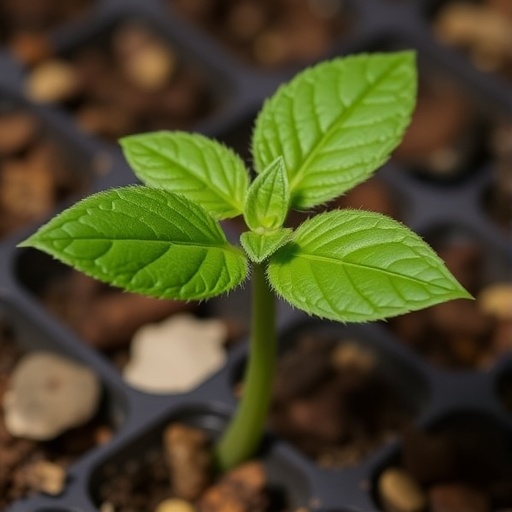
In a groundbreaking study published in Nature Plants, researchers have unveiled a pivotal role for major alleles of the gene CDCA7 in determining CG methylation patterns within the model plant Arabidopsis thaliana. This discovery offers profound insights into the epigenetic landscape of plants and underscores the intricate genetic regulation that guides DNA methylation, a fundamental process influencing gene expression and genome stability.
DNA methylation, the addition of a methyl group primarily to cytosine residues, is a key epigenetic modification that serves as a regulatory mechanism in eukaryotes. Among the various contexts of methylation, CG methylation stands out due to its prevalence and importance in gene silencing, transposon suppression, and developmental regulation. The factors that shape differential methylation patterns, particularly in plants, have remained elusive, making this new contribution from Bourguet et al. exceptionally timely and significant.
At the center of this study is CDCA7, a gene previously implicated in mammals for its involvement in chromatin remodeling and methylation regulation. The researchers set out to investigate whether natural variation in CDCA7 could influence DNA methylation in Arabidopsis thaliana, a widely used plant model organism known for its genetic tractability. Their approach combined genome-wide association studies with epigenetic profiling to establish a connection between CDCA7 allelic variation and methylation changes.
The research team employed advanced genomic techniques, including bisulfite sequencing, to map methylation patterns across the Arabidopsis genome. By analyzing numerous natural accessions, they identified that major allelic variants of CDCA7 were consistently associated with distinct levels of CG methylation. This correlation suggests that specific CDCA7 alleles exert a regulatory influence that shapes the epigenetic status of the genome.
Delving deeper into the molecular mechanisms, the study reveals how CDCA7 may interact with methyltransferase enzymes or chromatin remodelers to modulate the accessibility of cytosine residues for methylation. The presence of certain alleles potentially enhances or attenuates these interactions, leading to the observed methylation pattern differences. This level of mechanistic understanding is particularly valuable for decoding the complexities of epigenetic control.
Moreover, the findings have broader implications for evolutionary biology. Natural variation in epigenetic regulators like CDCA7 can contribute to phenotypic diversity and environmental adaptability in plants. By demonstrating that CDCA7 alleles shape CG methylation, the study provides evidence that epialleles—allelic variants influencing epigenetic configuration—could be subject to natural selection, thereby influencing plant fitness and evolution.
This discovery is also poised to impact agricultural biotechnology. Plants with tailored methylation profiles hold promise for enhanced stress tolerance, yield improvement, and disease resistance. Understanding the genetic determinants of methylation, such as CDCA7, equips breeders and genetic engineers with new targets for manipulation, potentially accelerating the development of superior crop varieties through epigenetic breeding strategies.
The robustness of the research is underscored by rigorous validation experiments. The authors utilized mutant analysis, gene expression profiling, and complementation assays to confirm the causal role of CDCA7 alleles in dictating CG methylation patterns. These complementary approaches consolidate the evidence, making a persuasive argument for CDCA7’s central role.
Intriguingly, the study noted that the effect of CDCA7 on methylation is context-dependent, varying across different genomic regions. This suggests a sophisticated level of epigenetic regulation whereby CDCA7-mediated methylation is finely tuned according to chromatin environment, DNA sequence, and potentially other interacting proteins. Such nuance highlights the dynamic nature of epigenetic control.
In addition to enriching our fundamental understanding of plant epigenetics, this research opens new avenues for exploring cross-kingdom conservation of methylation mechanisms. Given that CDCA7 homologs exist in other eukaryotes, including humans, the plant findings may inform broader biological principles and even medical research into methylation-related diseases.
The work by Bourguet and colleagues is also a testament to the power of leveraging natural genetic diversity combined with cutting-edge epigenomic technologies. The integration of large-scale data sets and sophisticated analyses exemplifies the future direction for studies seeking to dissect complex genetic and epigenetic interactions in any organism.
Beyond Arabidopsis, similar investigations could be extended to economically important crops, potentially uncovering yet more epigenetic regulators that influence agricultural traits. Such research would benefit from the conceptual framework and methodological innovations presented in this study.
In conclusion, the identification of major CDCA7 alleles as key modulators of CG methylation patterns represents a major leap forward in plant epigenetics. It enriches the molecular narrative connecting genotype to epigenotype and ultimately phenotype, driving new hypotheses about gene-environment interplay and epigenetic inheritance.
As the scientific community digests these findings, it becomes clear that epigenetic regulation is not only a molecular detail but also a vital evolutionary lever. By finely tuning methylation landscapes, CDCA7 allelic variation shapes plant biology in ways previously unappreciated, promising transformative insights and applications.
This landmark research not only broadens the horizon of epigenetic science but also inspires a new generation of studies aiming to unravel the genetic underpinnings of epigenetic phenomena. The implications for biology, agriculture, and beyond are profound, rendering CDCA7 a gene to watch closely in the coming years.
With the publication of this study, the narrative of how plants control their epigenome gains a crucial chapter—one where inherent genetic variation in CDCA7 writes the script for CG methylation patterns, unlocking both mystery and potential in plant genomics.
Cite Scienmag News
Juliet Wilcox. (November 7, 2025). CDCA7 Alleles Influence CG Methylation in Arabidopsis. Scienmag. https://scienmag.com/cdca7-alleles-influence-cg-methylation-in-arabidopsis/
Juliet Wilcox. "CDCA7 Alleles Influence CG Methylation in Arabidopsis." Scienmag, 7 November 2025, https://scienmag.com/cdca7-alleles-influence-cg-methylation-in-arabidopsis/. Accessed 4 September 2026.
Juliet Wilcox. "CDCA7 Alleles Influence CG Methylation in Arabidopsis." Scienmag. November 7, 2025. https://scienmag.com/cdca7-alleles-influence-cg-methylation-in-arabidopsis/


