


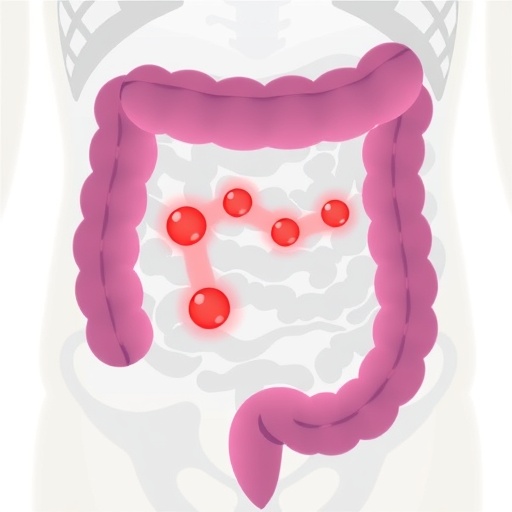
In a groundbreaking study published in the Journal of Translational Medicine, researchers have unveiled significant insights into the role of different immune cell populations in ulcerative colitis (UC) and their response to anti-tumor necrosis factor-alpha (anti-TNF-α) therapy. The study conducted by Li, Ma, Nie, and their team leverages cutting-edge single-cell RNA sequencing technology to elucidate these complex interactions. As the global prevalence of ulcerative colitis continues to rise, understanding how immune system variations can affect treatment responses is of paramount importance.
Ulcerative colitis is a chronic inflammatory bowel disease, characterized by a complex interplay of genetic, environmental, and immune factors. The disease often results in debilitating symptoms and necessitates a nuanced treatment approach. Among the therapeutic options, anti-TNF-α therapies have emerged as a backbone treatment for moderate to severe cases of UC. While many patients benefit from these therapies, not all experience the desired therapeutic effects, prompting scientists to explore the underlying mechanisms of this variability.
In their analysis, the researchers focused on conventional dendritic cells type 3, or cDC3s. The team demonstrates that cDC3s play an adverse role in the treatment response of UC patients undergoing anti-TNF-α therapy. This finding is particularly striking as dendritic cells are integral components of the immune system, acting as a bridge between innate and adaptive immunity. Their function typically involves the presentation of antigens and the initiation of T-cell responses, making them key players in the body’s defense against pathogens.
The innovative use of single-cell RNA sequencing allowed the researchers to dissect the cellular heterogeneity of the immune landscape in patients with ulcerative colitis. By analyzing individual immune cells, the team could uncover details that bulk RNA sequencing methods would surely overshadow. The data revealed that patients who had poorer responses to anti-TNF-α therapy exhibited specific transcriptional signatures in their cDC3s, indicating that these cells may be involved in the immune dysregulation characteristic of ulcerative colitis.
A critical aspect of the study is the identification of distinct molecular pathways within cDC3s that may promote exacerbated inflammatory responses in UC. The researchers discovered that these cells express higher levels of inflammatory cytokines, which can contribute to the maintenance of inflammatory states in the gut. Moreover, the activation of these cDC3s was linked to increased numbers of effector T-cells, suggesting that these dendritic cells may drive T-cell responses that ultimately worsen disease outcomes.
The implications of these findings could be transformative for UC treatment paradigms. By identifying the inflammatory profiles of cDC3s, clinicians could potentially stratify patients based on their predicted responsiveness to anti-TNF-α therapies. This could lead to more personalized treatment approaches, where therapies are tailored based on an individual’s immune profile rather than applying a one-size-fits-all regimen.
Importantly, the research also highlights the need for further studies to validate the role of cDC3s in different cohorts of ulcerative colitis patients. Moreover, understanding the signaling mechanisms that regulate cDC3 activation and their relationship with gut microbiota could open new avenues for therapeutic intervention. There is an emerging interest in how the microbiome influences dendritic cell function, suggesting that dietary or probiotic strategies might complement existing anti-TNF-α treatments.
With inflammatory bowel diseases like ulcerative colitis on the rise globally, the search for novel therapeutic approaches continues. Future strategies may include combining traditional immunosuppressive therapies with targeted therapies that aim specifically at modulating dendritic cell behavior. Such an integrated approach might enhance overall treatment efficacy, providing long-lasting relief to patients suffering from this chronic and often debilitating condition.
The study’s findings not only bolster the existing body of literature regarding dendritic cells and their role in autoimmune diseases but also set the stage for exciting new research avenues. Ongoing investigations will need to focus on the precise mechanisms through which cDC3s exert their effects and how these can be modulated to improve treatment outcomes for ulcerative colitis patients.
Researchers are also indicating that the application of single-cell technologies can yield insights into other diseases, suggesting that this methodology might help untangle the complexities of various autoimmune and inflammatory disorders. As the scientific community begins to harness these advanced techniques, we can anticipate a new era of precision medicine where treatment strategies are not solely based on symptoms, but rather on the intricate interplay of immune cells and signaling pathways.
In conclusion, the study presented by Li et al. marks a significant advance in our understanding of ulcerative colitis. The adverse role of cDC3s in the context of anti-TNF-α therapy highlights the complexities of immune responses in chronic disease and opens the doorway for future research aimed at elucidating the better-targeted therapies. As we delve deeper into the cellular and molecular mechanisms at play, we may well be on the brink of revolutionary treatment strategies that could redefine the management of ulcerative colitis and potentially other inflammatory diseases.
Li, Z., Ma, R., Nie, Z. et al. Single-cell RNA sequencing reveals the adverse role of cDC3s in the response of ulcerative colitis patients to anti-TNF-α therapy.
J Transl Med 23, 1025 (2025). https://doi.org/10.1186/s12967-025-06909-1
Cite Scienmag News
Ophelia Keating. (October 6, 2025). cDC3s Impair Anti-TNF-α Therapy in Ulcerative Colitis. Scienmag. https://scienmag.com/cdc3s-impair-anti-tnf-%ce%b1-therapy-in-ulcerative-colitis/
Ophelia Keating. "cDC3s Impair Anti-TNF-α Therapy in Ulcerative Colitis." Scienmag, 6 October 2025, https://scienmag.com/cdc3s-impair-anti-tnf-%ce%b1-therapy-in-ulcerative-colitis/. Accessed 4 September 2026.
Ophelia Keating. "cDC3s Impair Anti-TNF-α Therapy in Ulcerative Colitis." Scienmag. October 6, 2025. https://scienmag.com/cdc3s-impair-anti-tnf-%ce%b1-therapy-in-ulcerative-colitis/


