


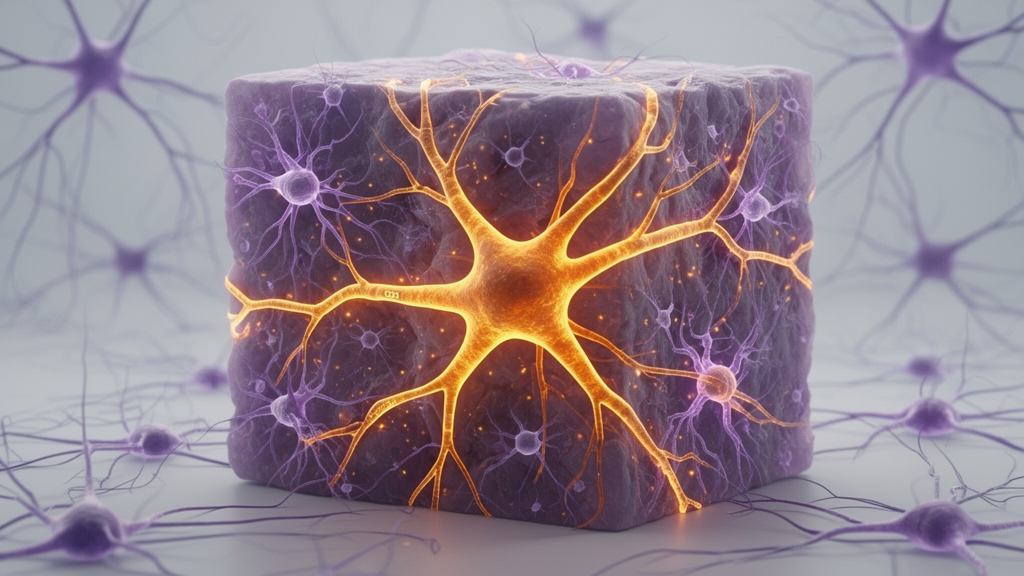
Distinct subtypes of astrocytes perform specialized jobs in the mouse brain, according to a peer-reviewed experimental study led by researchers at Baylor College of Medicine. The team used a newly engineered mouse line and genetic tools to separate astrocytes that carry the surface protein CD51 from those that do not, revealing differences in synapse formation, memory-circuit adaptation and recovery after stroke. The findings indicate that astrocytes, long treated as a largely uniform population of support cells, can be organized into functionally distinct subtypes comparable in diversity to neurons.
Astrocytes are star-shaped support cells found in the brain and spinal cord. They help maintain neural circuits, nourish nerve cells, support communication between neurons and contribute to the blood-brain barrier, but the extent to which particular astrocyte populations perform particular functions in a living brain had remained unclear. Previous work had shown that astrocytes can differ molecularly, including in the surface proteins they express and the genes they activate, and experiments in cell cultures had demonstrated behavioral differences among astrocytes with different molecular profiles. Those findings did not establish whether the distinctions were retained in intact neural circuits. The new study, published in Nature, directly compared CD51-positive and CD51-negative astrocytes in the cerebral cortex and hippocampus of developing, adult and injured mouse brains.
For the experiments, the researchers developed a mouse line and a set of laboratory tools that allowed them to label and manipulate the two astrocyte groups separately in living animals. The cerebral cortex, the brain’s outer region involved in functions including thought, sensory processing and voluntary movement, was examined alongside the hippocampus, a structure important for memory formation. The comparison showed that CD51-positive and CD51-negative astrocytes differed in morphology, activity and development. Their divergence was therefore not limited to molecular markers: the cells had distinct physical properties and patterns of behavior within neural tissue. The approach also enabled the investigators to test whether manipulating one population affected circuits more than the other.
One specialized function emerged in the developing and injured cortex. CD51-positive astrocytes helped form synapses, the junctions through which neurons communicate, whereas CD51-negative astrocytes did not show this role in the experiments. The researchers traced the synaptic contribution to glypican 6, a protein through which CD51-positive astrocytes supported synapse formation. A different mechanism appeared in the hippocampus, where CD51-positive astrocytes supported the operation and adaptation of memory-related circuits while CD51-negative astrocytes did not. In this region, CD51 itself was associated with circuit rewiring. The results thus point to region-specific mechanisms: glypican 6 was linked to the cortical synaptic function, while CD51 was linked to hippocampal plasticity.
The subtype distinction also extended to brain injury. In mice subjected to experimental stroke, CD51-positive astrocytes aided functional recovery by remodeling connections between neurons, while CD51-negative astrocytes did not show a comparable contribution in the study. These observations establish a specific role for one astrocyte population after injury rather than a general effect attributed to all astrocytes. The authors said the findings change the view of astrocytes from broadly uniform support cells to a collection of specialized populations with distinct functions in developing, adult and injured brains. Because the experiments involved mice, the results demonstrate circuit-level division of labor in an animal model and do not by themselves establish the same functions or treatment potential in humans. Future work on astrocyte biology and disease will need to identify which subtypes are involved, according to the research team.
Subject of Research: Functional specialization of CD51-defined astrocyte subtypes in mouse brain circuits
Article Title: Division of labor among the brain’s star cells
Article References: Division of labor among the brain’s star cells. Original publication (Bibliographic details unavailable.)
Image Credits: AI Generated
DOI: Not provided
Keywords: astrocytes, CD51, neural circuits, synapse formation, hippocampus, cerebral cortex, memory circuits, stroke recovery, mouse models, glypican 6, Division, labor
Cite Scienmag News
Cassandra Pierce. (October 26, 2026). CD51 defines specialized astrocyte roles in mouse brain circuits. Scienmag. https://scienmag.com/cd51-defines-specialized-astrocyte-roles-in-mouse-brain-circuits/
Cassandra Pierce. "CD51 defines specialized astrocyte roles in mouse brain circuits." Scienmag, 26 October 2026, https://scienmag.com/cd51-defines-specialized-astrocyte-roles-in-mouse-brain-circuits/. Accessed 26 October 2026.
Cassandra Pierce. "CD51 defines specialized astrocyte roles in mouse brain circuits." Scienmag. October 26, 2026. https://scienmag.com/cd51-defines-specialized-astrocyte-roles-in-mouse-brain-circuits/


