


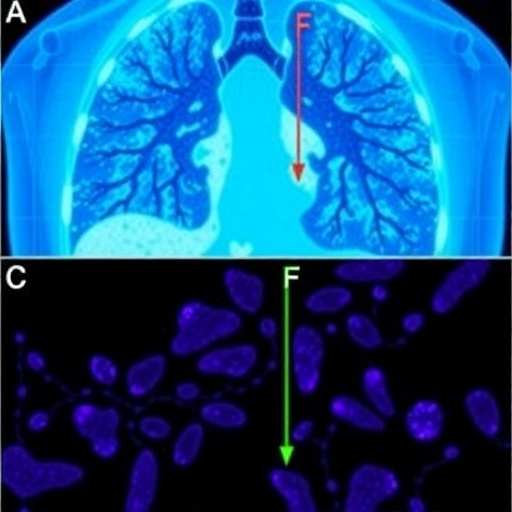
Recent advancements in cancer research have identified the CBFA2T3 protein as a crucial prognostic biomarker in lung adenocarcinoma, a common and aggressive form of lung cancer. In a groundbreaking study published in the journal Biochemistry and Genetics, researchers including Xiao, Luo, and Liu present comprehensive analyses that amplify our understanding of this biomarker’s role in the progression of the disease. This finding is pivotal, as it opens new avenues for both diagnostic and therapeutic strategies, offering hope to patients battling this devastating illness.
Lung adenocarcinoma has been a focal point in oncological research due to its high prevalence and aggressive nature. Patients often face poor prognoses, largely because of late diagnoses and limited treatment options that fail to specifically target tumor heterogeneity. The challenge has been to unravel the molecular intricacies associated with this cancer subtype, and the discovery of CBFA2T3 marks a significant step toward more personalized therapy approaches.
The research team employed an array of methodologies to dissect the role of CBFA2T3 in lung adenocarcinoma. Through an integrative bioinformatics approach, they analyzed gene expression profiles, patient survival data, and clinical features to establish a correlation between CBFA2T3 levels and patient outcomes. This sophisticated analytical framework not only validated prior assumptions but also illuminated new pathways through which CBFA2T3 may influence tumor behavior and patient prognosis.
A noteworthy aspect of this study is its commitment to rigorous validation. The researchers harnessed both in vitro and in vivo experimental models, ensuring that their findings on CBFA2T3 were not mere correlations but indicative of a biological relationship. This level of validation is crucial in cancer research, where findings require substantial evidence before they can translate into clinical practice.
Further, the implications of elevated CBFA2T3 expression in lung adenocarcinoma were explored beyond statistical significance. The study delves into the mechanistic pathways modulated by CBFA2T3, revealing its potential influence on cell proliferation, apoptosis resistance, and metastasis. Understanding these mechanisms is essential for developing targeted therapies that could inhibit CBFA2T3’s pathological roles, thereby controlling tumor progression and improving survival rates.
Additionally, the research highlights the protein’s potential as a therapeutic target. The authors suggest that drugs designed to modulate CBFA2T3 activity, either through inhibition or degradation, could be instrumental in managing lung adenocarcinoma. This conceptualization of CBFA2T3 as a drug target signifies a shift towards precision medicine, wherein treatments are tailored based on individual biomarker profiles, thereby enhancing treatment efficacy and minimizing side effects.
The intersection of genomics and clinical data in this study also underscores the importance of multidisciplinary approaches in cancer research. Collaboration among bioinformaticians, molecular biologists, and clinical oncologists is essential for translating laboratory discoveries into real-world applications. The integration of diverse expertise enables a comprehensive understanding of cancer biology, which is critical for developing innovative therapeutic strategies.
Through the lens of this research, the urgency for early detection of lung adenocarcinoma becomes increasingly evident. If CBFA2T3 expression can be effectively utilized as a biomarker for early diagnosis, it could significantly enhance the clinical outcomes for patients, facilitating timely interventions and improving survival rates. This pivot towards early detection aligns with broader trends in oncology emphasizing the importance of identifying cancer at its nascent stages.
As the research community continues to explore the nuances of lung adenocarcinoma, the role of CBFA2T3 stands as a beacon for future investigations. The potential for certain genetic signatures, like that of CBFA2T3, to serve as prognostic indicators paves the way for advancements not only in lung cancer therapeutics but also in understanding tumor biology at a cellular level.
In conclusion, the findings of Xiao, Luo, and Liu represent more than just a contribution to the literature; they signify a transformation in our approach to lung adenocarcinoma. By harnessing the power of CBFA2T3 as a prognostic biomarker, the research sets the stage for improved diagnostic tools and targeted therapies, ultimately aiming to lift the burden of one of the deadliest cancers.
This study serves as a call to action for researchers and clinicians alike to embrace the evolving landscape of cancer biomarkers. As more insights are gained, the hope is to cultivate a more robust arsenal against lung adenocarcinoma, allowing for better diagnostics, therapies, and outcomes for patients across the globe.
Xiao, J., Luo, K., Liu, M. et al. CBFA2T3 as a Key Prognostic Biomarker in Lung Adenocarcinoma: Insights from Comprehensive Analysis and Validation.
Biochem Genet (2025). https://doi.org/10.1007/s10528-025-11224-x
Cite Scienmag News
Nathaniel Bowman. (August 31, 2025). CBFA2T3: A Key Lung Adenocarcinoma Prognostic Biomarker. Scienmag. https://scienmag.com/cbfa2t3-a-key-lung-adenocarcinoma-prognostic-biomarker/
Nathaniel Bowman. "CBFA2T3: A Key Lung Adenocarcinoma Prognostic Biomarker." Scienmag, 31 August 2025, https://scienmag.com/cbfa2t3-a-key-lung-adenocarcinoma-prognostic-biomarker/. Accessed 4 September 2026.
Nathaniel Bowman. "CBFA2T3: A Key Lung Adenocarcinoma Prognostic Biomarker." Scienmag. August 31, 2025. https://scienmag.com/cbfa2t3-a-key-lung-adenocarcinoma-prognostic-biomarker/


