


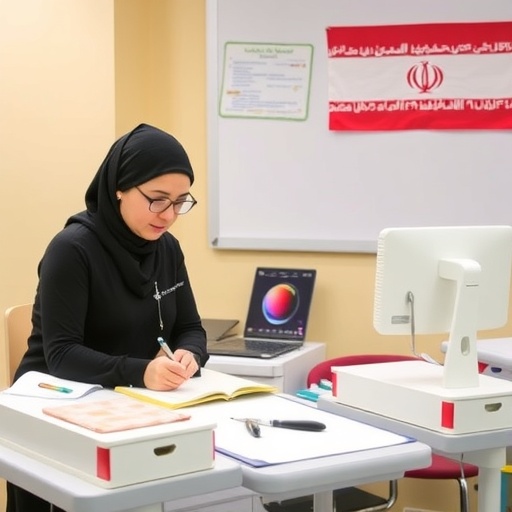
In recent years, the field of educational psychology has increasingly focused on understanding the various factors that influence learning behavior among students across diverse academic disciplines. A groundbreaking study conducted by Jalali, Naghibzadeh, Mohammadi, and their colleagues has provided insightful data through the translation and psychometric evaluation of the Persian version of the Learning Behavior Questionnaire (LBQ) specifically tailored for undergraduate nursing students. This assessment tool serves not only to evaluate students’ learning behaviors but also to explore the intricacies of their educational experiences.
The significance of studying learning behaviors in nursing students cannot be overstated. Nursing education is characterized by its demanding curriculum and the necessity for practical skill acquisition. Therefore, understanding how students engage with the learning process is crucial for developing effective pedagogical strategies. The researchers embarked on this project to fulfill a critical gap in the literature, as previous studies had not adequately addressed the unique learning contexts and challenges faced by nursing students in Iran.
The research team initiated their work by rigorously translating the original English version of the Learning Behavior Questionnaire into Persian. This process wasn’t merely linguistic; it involved cultural adaptation to ensure that the content resonated with the specific nuances of the Iranian educational landscape. Every item of the questionnaire was scrutinized for clarity and relevance, ensuring it accurately measured the constructs it aimed to explore. This meticulous approach emphasizes the researchers’ commitment to maintaining the integrity and validity of the assessment tool.
Following the translation, the researchers turned their attention to psychometric evaluation. This evaluation is essential for establishing the reliability and validity of the questionnaire in a new context. The authors enrolled a sample of undergraduate nursing students from various universities, facilitating a robust data set for analysis. Through statistical methods, they analyzed the internal consistency of the questionnaire, which is critical for ensuring that all items reliably measure the same construct.
One of the most compelling aspects of this research was the identification of several distinct learning behaviors prevalent among nursing students. These behaviors included collaboration with peers, self-directed learning, and the ability to seek out and integrate feedback from instructors. Understanding these behaviors allows educators to tailor instructional strategies that cater to the specific learning needs of their students, ultimately enhancing the educational experience.
The findings from this study revealed not only the importance of fostering specific learning behaviors among nursing students but also highlighted the broader implications for nursing education in Iran. For instance, the research indicates the necessity of integrating more collaborative learning opportunities into the curriculum. By doing so, nursing programs can encourage students to develop crucial teamwork skills which are vital in healthcare settings.
Given the rigorous training that nurses undergo, it is evident that enhancing learning behaviors can lead to improved clinical competencies. When students engage actively in their learning process, they are more likely to retain information and develop the necessary skills for their future careers. This research firmly establishes a link between student learning behaviors and the quality of nursing education, thus emphasizing the need for educational institutions to innovate their approaches to teaching and learning.
Moreover, the psychometric properties of the Persian version of the LBQ affirm its utility as a valid instrument for future research. This growing body of research can enrich our understanding of not only nursing education in Iran but also inform practices in similar cultural contexts. As more educational institutions embrace these findings, we may witness a paradigm shift in how nursing education is approached in the region.
Importantly, this study stands as a testament to the application’s role in addressing specific educational issues within nursing programs. With the evidence gathered, educators and policymakers can implement strategic changes to curriculum design, ensuring that it addresses the diverse learning needs of students. Consequently, adapting educational strategies to fit student behaviors will not only enhance learning outcomes but will likely lead to improvements in patient care as well.
In conclusion, the research by Jalali, Naghibzadeh, and Mohammadi is a significant contribution to the field of nursing education and educational psychology. Through their comprehensive approach to translating and validating the Learning Behavior Questionnaire, they have opened new avenues for understanding student behaviors in nursing programs. This study lays the groundwork for subsequent research that can further explore the dynamics of learning in healthcare education, ensuring that future nurses are well-prepared to meet the challenges of their profession.
As nursing education continues its evolution, it is imperative that we foster an environment of inquiry and adaptability. The momentum generated by studies like this not only catalyzes improvements in educational practices but ultimately enhances the quality of healthcare delivered to communities. By prioritizing student learning behaviors, educational institutions can ensure the next generation of nurses is equipped with the skills and knowledge necessary to succeed in an ever-changing healthcare landscape.
The implications of this research stretch far beyond the classroom. With a solid foundation for understanding learning behaviors, educators can develop more innovative and effective training programs that are responsive to the evolving needs of the healthcare system. As we continue to investigate and address the challenges faced by nursing students, we set the stage for sustainable improvements in both education and patient outcomes.
Jalali, A., Naghibzadeh, A., Mohammadi, M.M. et al. Translation and psychometric evaluation of the Persian version of the learning behavior questionnaire among undergraduate nursing students.
BMC Med Educ 25, 1230 (2025). https://doi.org/10.1186/s12909-025-07867-4
Cite Scienmag News
Courtney Benton. (August 31, 2025). Evaluating Persian Learning Behavior Questionnaire in Nursing Students. Scienmag. https://scienmag.com/evaluating-persian-learning-behavior-questionnaire-in-nursing-students/
Courtney Benton. "Evaluating Persian Learning Behavior Questionnaire in Nursing Students." Scienmag, 31 August 2025, https://scienmag.com/evaluating-persian-learning-behavior-questionnaire-in-nursing-students/. Accessed 4 September 2026.
Courtney Benton. "Evaluating Persian Learning Behavior Questionnaire in Nursing Students." Scienmag. August 31, 2025. https://scienmag.com/evaluating-persian-learning-behavior-questionnaire-in-nursing-students/


