


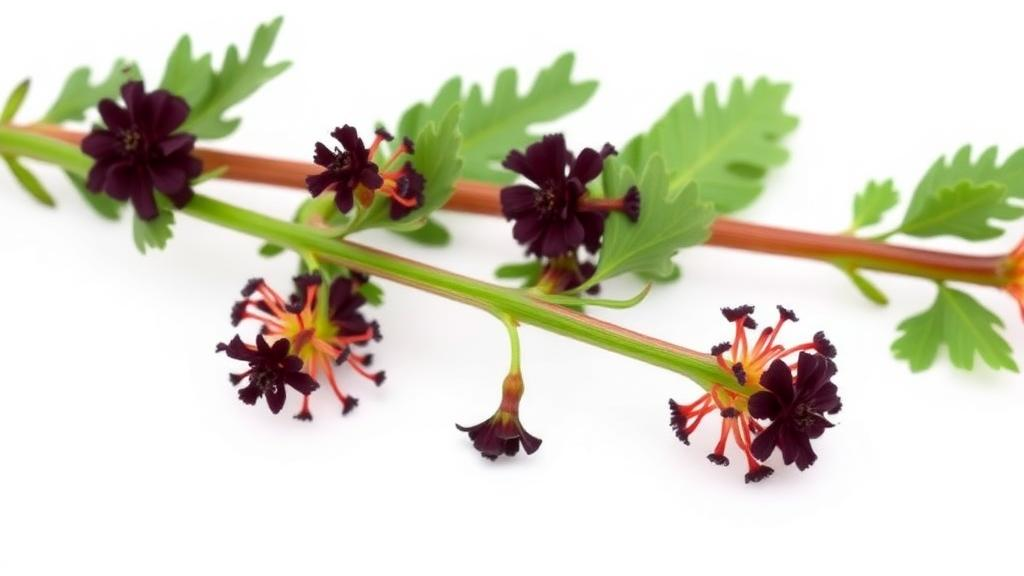
Castor oil has been a staple of traditional medicine cabinets for centuries, rubbed into aching joints and inflamed skin across cultures from ancient Egypt to modern India. Now, a research team at Bajaj College of Science in Wardha, Maharashtra, has put this humble remedy under the microscope with an unusually rigorous combination of laboratory assays and computational modeling. Their findings, published in Discover Chemistry, suggest that Ricinus communis L. formulations contain a far richer arsenal of anti-inflammatory molecules than the ricinoleic acid that has long dominated the scientific conversation about the plant.
The researchers, Rahul Narnaware and Pratibha Dhabarde, began by collecting fresh castor plants from the wild regions of the Wardha district and formally authenticating the botanical identity of their specimens. They then prepared two distinct formulations, a methanolic extract of the raw oil and a processed cream, and subjected both to high-resolution chemical profiling using an Agilent 1290 Infinity II UHPLC system coupled to a 6545 Q-TOF mass spectrometer. This analytical setup allowed them to separate and identify the complex mixture of secondary metabolites with a mass accuracy threshold of plus or minus five parts per million, cross-referencing every fragmentation spectrum against the METLIN and PubChem databases.
The profiling effort paid off with the annotation of 24 major metabolites, classified as putatively identified at Level 2 under the Metabolomics Standards Initiative. The chemical diversity was striking: indole alkaloids such as hirsutine and hirsuteine, terpenoid glycosides, cyclic phosphatidic acids, sterols, phenolic compounds, and aliphatic acetogenins all appeared in the chromatograms. Notably, the raw oil was enriched with the indole alkaloids hirsutine and hirsuteine, while the cream formulation showed a higher relative abundance of phenolic compounds, including 2,6-dimethoxyphenol and a long-chain alkylresorcinol known as 5-(12,15-heneicosadienyl)-1,3-benzenediol. This formulation-dependent chemical distribution suggests that the delivery vehicle itself reshapes which bioactive molecules are available at the application site.
With the chemical inventory in hand, the team turned to in vitro screening using two established protein denaturation models. Protein denaturation, the unfolding of a protein’s three-dimensional structure under stress, is considered a key phenomenon in arthritic tissue injury, making its inhibition a common first-line screen for anti-arthritic candidates. The researchers heated egg albumin and bovine serum albumin under controlled conditions and measured how effectively the castor formulations prevented the resulting structural damage, using diclofenac sodium, a widely prescribed NSAID, as the reference standard.
The results were eye-catching. At the highest tested concentration of 6400 micrograms per milliliter, the cream formulation achieved 97.80 percent inhibition of BSA denaturation and 96.20 percent inhibition of egg albumin denaturation, compared with roughly 72 to 75 percent for diclofenac sodium under the same conditions. The differences were statistically significant at p less than 0.001, and the formulations showed measurable, dose-dependent protection even at concentrations as low as 100 micrograms per milliliter. The authors are careful to stress that these are cell-free, non-specific screening assays: they demonstrate a remarkable capacity for structural stabilization under thermal stress, but they do not establish clinical superiority over established NSAIDs or account for pharmacokinetics and systemic inflammatory pathways in living organisms.
To probe the molecular mechanisms behind these observations, the team docked 24 metabolites against three central players in the inflammatory cascade: cyclooxygenase-2, or COX-2, the enzyme responsible for producing pro-inflammatory prostaglandins; interleukin-6, a cytokine that drives systemic inflammation; and tumor necrosis factor-alpha, another master regulator of inflammatory signaling. Using the AutoDock Vina algorithm with a validated protocol confirmed by re-docking the native ligands, the researchers found several compounds with predicted binding affinities rivaling synthetic drugs. Hirsutine topped the list with a binding free energy of minus 9.3 kilocalories per mole in the COX-2 pocket, forming hydrogen bonds with the residues ARG120, TYR355, and SER530. The SER530 interaction is particularly significant because this residue sits at the heart of the cyclooxygenase active site and is central to how established NSAIDs achieve competitive inhibition.
The cytokine targets yielded equally intriguing candidates. Tsangane L 3-glucoside, a terpenoid glycoside, showed a predicted affinity of minus 8.8 kilocalories per mole at the IL-6 receptor interface, making contact with ARG179 and GLU172, while cyclic phosphatidic acids demonstrated structural complementarity at the same interface with a score of minus 8.6 kilocalories per mole. On the TNF-alpha front, the alkylresorcinol 5-(12,15-heneicosadienyl)-1,3-benzenediol achieved minus 8.7 kilocalories per mole, anchored by interactions with TYR59 and LEU120, a binding mode that the authors suggest could potentially stabilize the inactive trimeric conformation of the cytokine.
Static docking snapshots can be misleading, so the team ran 200-nanosecond atomistic molecular dynamics simulations using the GROMACS 2022 package with the CHARMM36 force field, explicitly solvating each protein-ligand complex in water with physiological salt concentrations. All three prioritized complexes, hirsutine with COX-2, tsangane L 3-glucoside with IL-6, and the alkylresorcinol with TNF-alpha, reached structural equilibrium by 170 nanoseconds and remained stable through the end of the production run. Low root-mean-square fluctuation values across active site residues indicated limited local flexibility upon ligand binding, while consistent radii of gyration showed that the proteins did not unfold. Free energy landscape analysis revealed funnel-shaped energy minima, suggesting that the predicted ligand orientations correspond to thermodynamically favorable states with a low probability of spontaneous dissociation within the simulation.
The authors are refreshingly candid about the limits of their work. The metabolite annotations remain putative in the absence of physical isolation and nuclear magnetic resonance confirmation, and the docking and simulation results represent structural hypotheses rather than demonstrated biological activity. No kinetic enzymatic assays, cellular cytokine expression studies, or in vivo pharmacokinetic analyses have yet been performed, and the protein denaturation data cannot be extrapolated to therapeutic efficacy in patients. What the study does deliver is a systematically characterized chemical map and a set of high-probability binding hypotheses that transform castor plant research from empirical observation into a rational starting point for drug discovery.
Those hypotheses are worth taking seriously. The indole scaffold of hirsutine, which structurally mirrors the binding orientation of high-affinity COX-2 inhibitors, could serve as a template for semi-synthetic optimization, while the cyclic phosphatidic acids open an unexplored avenue for cytokine interface modulation. If follow-up studies in mammalian cell lines and animal models of rheumatoid arthritis confirm even a fraction of the predicted activity, the ancient castor plant may yet contribute modern molecular medicine, bridging the gap between ethnobotanical tradition and the demanding standards of contemporary pharmacology.
Subject of Research: Phytochemical and computational analysis of the anti-inflammatory and anti-arthritic potential of Ricinus communis L. oil and cream formulations
Article Title: Metabolic profiling and multitarget in silico docking reveal the anti inflammatory and anti arthritic potential of Ricinus communis L formulations
Article References: Narnaware, R., & Dhabarde, P. (2026). Metabolic profiling and multitarget in silico docking reveal the anti inflammatory and anti arthritic potential of Ricinus communis L formulations. Discover Chemistry, 3(1), Article 519. https://doi.org/10.1007/s44371-026-00979-w
Image Credits: AI Generated
DOI: 10.1007/s44371-026-00979-w
Keywords: Ricinus communis, castor oil, anti-inflammatory, rheumatoid arthritis, COX-2, IL-6, TNF-alpha, molecular docking, molecular dynamics, LC-MS, protein denaturation, natural products
Cite Scienmag News
Bethany Barker. (October 5, 2026). Castor Plant Chemistry Shows Surprising Anti-Inflammatory Power in Lab Tests. Scienmag. https://scienmag.com/castor-plant-chemistry-shows-surprising-anti-inflammatory-power-in-lab-tests/
Bethany Barker. "Castor Plant Chemistry Shows Surprising Anti-Inflammatory Power in Lab Tests." Scienmag, 5 October 2026, https://scienmag.com/castor-plant-chemistry-shows-surprising-anti-inflammatory-power-in-lab-tests/. Accessed 5 October 2026.
Bethany Barker. "Castor Plant Chemistry Shows Surprising Anti-Inflammatory Power in Lab Tests." Scienmag. October 5, 2026. https://scienmag.com/castor-plant-chemistry-shows-surprising-anti-inflammatory-power-in-lab-tests/


