

Tuesday, October 27, 2026
Science
No Result
View All Result
  • Login
  • HOME
  • SCIENCE NEWS
  • CONTACT US
  • HOME
  • SCIENCE NEWS
  • CONTACT US
No Result
View All Result
Scienmag
No Result
View All Result
Home Science News Medicine

Cartilage-binding coacervate lubricant eases osteoarthritis in animal models

October 27, 2026
in Medicine
Ophelia Keating
By Ophelia Keating Scienmag Editorial Profile - Health Services Research
Reading Time: 3 mins read
0
Cartilage-binding coacervate lubricant eases osteoarthritis in animal models

Cartilage-binding coacervate lubricant eases osteoarthritis in animal models

65
SHARES
587
VIEWS
Share on FacebookShare on Twitter
ADVERTISEMENT

A biomimetic lubricant that mimics the natural coating on healthy joint cartilage has alleviated osteoarthritis in rat and miniature pig models, researchers report in Nature Biomedical Engineering. The material, a polyzwitterionic coacervate dubbed pZCO, combines three functions in one water-immiscible formulation: it binds tightly to cartilage, establishes an ultralow-friction lubricating layer on the joint surface, and serves as a depot for sustained release of anti-inflammatory drugs and mesenchymal stem cells.

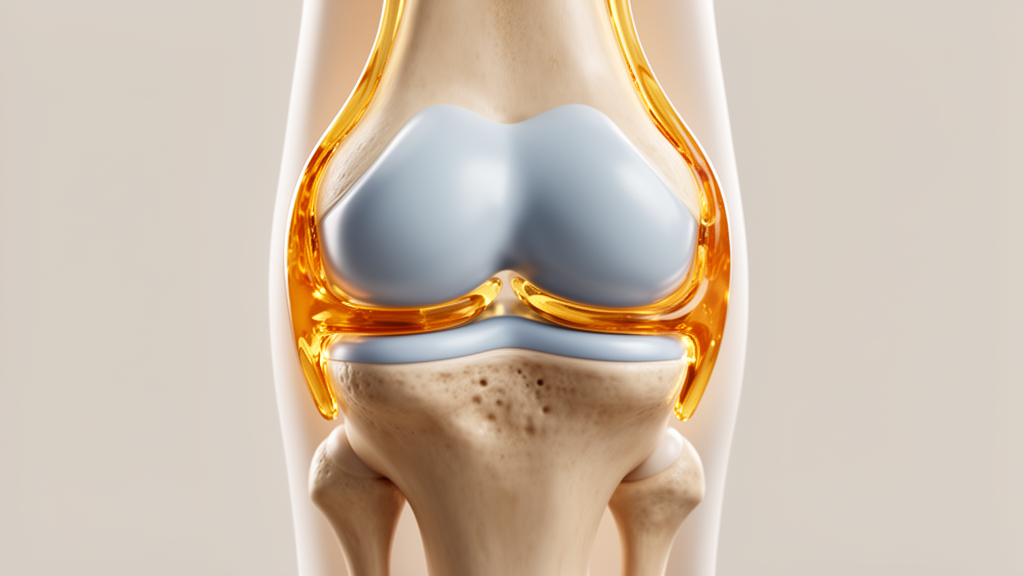
The design is modelled on the boundary lubrication layer that keeps healthy articular cartilage nearly frictionless. In natural joints, that layer is built from a complex of zwitterionic lipids, hyaluronic acid and the glycoprotein lubricin. The zwitterionic lipids mediate lubrication itself, while hyaluronic acid and lubricin anchor the complex to the cartilage matrix. In osteoarthritis, this lubrication system is progressively degraded, which increases cartilage wear and contributes to joint dysfunction. Because the damage begins with lost lubrication, the authors argue that early, lubrication-based intervention is urgently needed.

The engineered coacervates reproduce both halves of that natural system. According to the study, pZCOs show strong binding affinity to fibronectin, an adhesive protein in the cartilage matrix, which allows them to establish a stable, ultralow-friction lubrication layer on the cartilage surface. The material also resists dilution by synovial fluid, a property the researchers link to its fluidity and physiological stability, and it outperformed clinical hyaluronic acid lubricants in lubrication performance and in how long it remained in the joint.

Beyond lubrication, the coacervate acts as a delivery vehicle. The team showed that pZCO enables sustained release of anti-inflammatory drugs and preserves the viability of mesenchymal stem cells encapsulated within it, along with the cells’ anti-inflammatory paracrine secretion. In cell experiments, the formulation also suppressed the expression of pro-inflammatory factors, and pZCO promoted the expression of cartilage matrix proteins while inhibiting inflammation in the articular cavity of osteoarthritic rats.

In vivo, intra-articular injection of drug- and MSC-laden pZCOs reduced cartilage degradation, suppressed inflammation and promoted cartilage integrity in both rat and miniature pig models of osteoarthritis, outperforming clinical hyaluronic acid lubricants in lubrication performance, retention in the joint and therapeutic efficacy. Single-cell and spatial transcriptomic analyses of treated joints pointed to reparative and immunomodulatory effects of the cell-laden coacervate, and in miniature pigs the treatment alleviated the major osteoarthritis symptoms measured in the model.

The findings highlight the translational potential of engineered biomimetic coacervates as next-generation joint lubricants for the integrated management of osteoarthritis, the authors write. They caution, however, that the evidence so far comes from animal models; efficacy in human patients remains to be demonstrated in clinical studies, and the safety, dosing and durability of the treatment in human joints are questions for future work.

Subject of Research: A cartilage-binding biomimetic coacervate lubricant that delivers anti-inflammatory drugs and stem cells to treat osteoarthritis in animal models.

Article Title: Cartilage-binding coacervate with therapeutic payload delivery and biomimetic lubrication alleviates osteoarthritis by reducing joint friction and inflammation

Article References: Chen, S., Jiang, T., Qiu, X., Luo, R., Yao, H., Wang, R., Li, Z., Zhao, P., & Bian, L. (2026). Cartilage-binding coacervate with therapeutic payload delivery and biomimetic lubrication alleviates osteoarthritis by reducing joint friction and inflammation. Nature Biomedical Engineering. https://doi.org/10.1038/s41551-026-01819-z

Image Credits: AI Generated

DOI: 10.1038/s41551-026-01819-z

Keywords: osteoarthritis, coacervate, biomimetic lubricant, cartilage, hyaluronic acid, lubricin, mesenchymal stem cells, drug delivery, joint friction, inflammation, Nature Biomedical Engineering, preclinical models

Cite Scienmag News

Ophelia Keating. (October 27, 2026). Cartilage-binding coacervate lubricant eases osteoarthritis in animal models. Scienmag. https://scienmag.com/cartilage-binding-coacervate-lubricant-eases-osteoarthritis-in-animal-models/


Ophelia Keating. "Cartilage-binding coacervate lubricant eases osteoarthritis in animal models." Scienmag, 27 October 2026, https://scienmag.com/cartilage-binding-coacervate-lubricant-eases-osteoarthritis-in-animal-models/. Accessed 27 October 2026.

Ophelia Keating. "Cartilage-binding coacervate lubricant eases osteoarthritis in animal models." Scienmag. October 27, 2026. https://scienmag.com/cartilage-binding-coacervate-lubricant-eases-osteoarthritis-in-animal-models/

Tags: animal model studies for osteoarthritis therapyanti-inflammatory drug depot for joint repairbiomimetic lubricantbiomimetic materials for cartilage protectionboundary lubrication layer reconstructioncartilageCartilage-binding biomimetic lubricantcoacervatedegradation of cartilage lubrication in osteoarthritisDrug deliveryearly intervention with biomimetic lubricantshyaluronic acidinflammationjoint frictionlubricinmesenchymal stem cellsnatural joint lubrication mechanismsNature Biomedical Engineeringosteoarthritisosteoarthritis treatment in animal modelspolyzwitterionic coacervate for joint lubricationpreclinical modelssustained drug and stem cell delivery for osteoarthritisultralow-friction joint surface coating
Share26Tweet16
Previous Post

Cosmologists Weigh the CMB Lensing Anomaly with Planck, ACT and DESI Data

Next Post

Reading AI Text May Quietly Reshape How Humans Write, Perspective Argues

Related Posts

Mitofusin-blocking peptides shrink heart attack damage in mice
Medicine

Mitofusin-blocking peptides shrink heart attack damage in mice

October 27, 2026
Nurses with higher empathy show more positive attitudes toward older adults
Medicine

Nurses with higher empathy show more positive attitudes toward older adults

October 27, 2026
Amygdala neurons that fire early decide which images become lasting memories
Medicine

Amygdala neurons that fire early decide which images become lasting memories

October 27, 2026
Hippocampus encodes experience as disentangled variables in cell assemblies
Medicine

Hippocampus encodes experience as disentangled variables in cell assemblies

October 27, 2026
Low pyruvate carboxylase makes respiration-deficient tumours dependent on asparagine
Medicine

Low pyruvate carboxylase makes respiration-deficient tumours dependent on asparagine

October 27, 2026
Hong Kong Team Makes CAR-T Therapy for Children With Leukaemia in Just 14 Days
Medicine

Hong Kong Team Makes CAR-T Therapy for Children With Leukaemia in Just 14 Days

October 27, 2026
Next Post
Reading AI Text May Quietly Reshape How Humans Write, Perspective Argues

Reading AI Text May Quietly Reshape How Humans Write, Perspective Argues

  • Mothers who receive childcare support from maternal grandparents show more optimized

    Mothers who receive childcare support from maternal grandparents show more parental warmth, finds NTU Singapore study

    27656 shares
    Share 11059 Tweet 6912
  • University of Seville Breaks 120-Year-Old Mystery, Revises a Key Einstein Concept

    1061 shares
    Share 424 Tweet 265
  • Bee body mass, pathogens and local climate influence heat tolerance

    682 shares
    Share 273 Tweet 171
  • Researchers record first-ever images and data of a shark experiencing a boat strike

    546 shares
    Share 218 Tweet 137
  • Groundbreaking Clinical Trial Reveals Lubiprostone Enhances Kidney Function

    531 shares
    Share 212 Tweet 133
Science

Embark on a thrilling journey of discovery with Scienmag.com—your ultimate source for cutting-edge breakthroughs. Immerse yourself in a world where curiosity knows no limits and tomorrow’s possibilities become today’s reality!

RECENT NEWS

  • Iridium Catalyst Achieves Elusive para-C–H Activation of Free Aromatic Carboxylic Acids
  • Mitofusin-blocking peptides shrink heart attack damage in mice
  • Mid-Cretaceous amber reveals a flourishing island cradle of Southeast Asian plants
  • X1.8 Solar Flare Shows Four-Minute Pulsations in New SDO and Aditya-L1 Study

Categories

  • Agriculture
  • Anthropology
  • Archaeology
  • Athmospheric
  • Biology
  • Biotechnology
  • Blog
  • Bussines
  • Cancer
  • Chemistry
  • Climate
  • Earth Science
  • Editorial Policy
  • Marine
  • Mathematics
  • Medicine
  • Pediatry
  • Policy
  • Psychology & Psychiatry
  • Science Education
  • Science News
  • Social Science
  • Space
  • Technology and Engineering

Subscribe to Blog via Email

Enter your email address to subscribe to this blog and receive notifications of new posts by email.

Join 5,151 other subscribers

© 2025 Scienmag - Science Magazine

Welcome Back!

Login to your account below

Forgotten Password?

Retrieve your password

Please enter your username or email address to reset your password.

Log In
No Result
View All Result
  • HOME
  • SCIENCE NEWS
  • CONTACT US

© 2025 Scienmag - Science Magazine

Discover more from Science

Subscribe now to keep reading and get access to the full archive.

Continue reading