


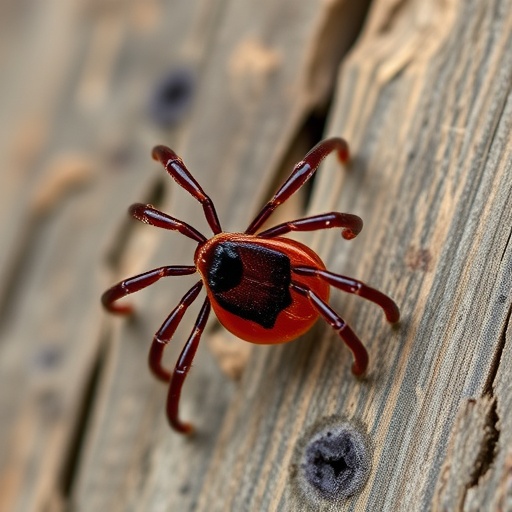
In the complex battlefield between parasites and host immune defenses, ticks stand out as masterful strategists. These arachnids have evolved an extraordinary mechanism to evade the immune surveillance of their hosts, enabling them to feed undetected for extended periods. Central to this immune evasion strategy are proteins known as evasins, which have the remarkable ability to neutralize chemokines—small signaling proteins essential for directing immune cells to sites of injury or infection. Recent groundbreaking research from a team at Monash University’s Biomedicine Discovery Institute sheds new light on this phenomenon, revealing a particularly potent evasin that targets two major chemokine classes simultaneously, a discovery with profound implications for treating inflammatory and autoimmune diseases.
The immune system orchestrates its defense actions by detecting foreign or harmful agents and responding with inflammation—a controlled mobilization of immune cells directed by chemokines. These chemokines bind to receptors on immune cells, guiding their migration to affected tissues. However, when chemokine signaling becomes dysregulated, it can lead to excessive or chronic inflammation, underpinning debilitating conditions such as rheumatoid arthritis, multiple sclerosis, inflammatory bowel disease, and even certain cancers. The ability to modulate or suppress overactive chemokine pathways is therefore a critical therapeutic goal.
Ticks circumvent host defenses by producing evasins—specialized proteins that bind chemokines, effectively silencing the alarm signals sent out by damaged or infected tissues. This binding prevents the recruitment of immune cells to the bite site, allowing the tick to feed undisturbed. Until recently, scientific consensus held that evasins are selective, each targeting a single chemokine class—either CC or CXC. This specificity limited their therapeutic prospect given the complexity and redundancy of chemokine networks involved in human diseases.
The Monash University research team, led by Professor Martin Stone and Dr. Ram Bhusal, has now identified a naturally occurring evasin with the unprecedented ability to simultaneously bind chemokines from both CC and CXC classes. This dual-acting evasin represents a paradigm shift in our understanding of immune modulation by ticks and opens new horizons in drug development. By blocking both chemokine classes, such evasins could provide broad-spectrum inhibition of inflammatory signaling pathways, potentially halting or reversing disease progression with greater efficacy than existing treatments.
The discovery process combined advanced structural biology tools with cellular assays, meticulously characterizing the interaction between this exceptional evasin and its chemokine targets. High-resolution structural data revealed a unique binding interface that accommodates distinct chemokine motifs from both classes, providing molecular insight into its dual specificity. This evolutionary distinctness underlines the sophistication of parasitic adaptations and highlights nature’s potential as a source of novel bioactive compounds.
Prior assumptions posited that ticks used a cocktail of evasins for immune suppression, each tailored to a specific chemokine subset. However, this study’s findings challenge that model and suggest nature’s strategy may be more elegant—deploying a single multifunctional protein to efficiently neutralize diverse chemokine signals. This revelation not only revises parasitology paradigms but also inspires innovative therapeutic designs mimicking such multifunctionality to tackle complex immune-mediated diseases.
Autoimmune and inflammatory conditions rely heavily on the unwarranted activation and recruitment of immune cells mediated by chemokines. Current therapies often focus on broadly suppressing the immune response or blocking individual cytokines, which can cause significant side effects and incomplete disease control. An evasin capable of broadly and specifically intercepting chemokine communication offers a targeted approach with potentially fewer off-target effects, favoring a restoration of immune balance rather than wholesale suppression.
The therapeutic potential extends beyond autoimmune diseases. Chronic inflammation is a hallmark of cancer progression, and chemokines play diverse roles in tumor microenvironment remodeling, angiogenesis, and metastasis. By harnessing this evasin’s dual chemokine blockade, future therapies may interfere with these pro-tumor inflammatory pathways, offering novel adjunct treatments for oncology.
Significant challenges remain, including optimizing evasin stability, enhancing delivery methods, and ensuring specificity without compromising host defense against infections. However, the foundational discovery of this bifunctional evasin provides a vital blueprint for engineering biomolecules or small molecules with similar properties. These next-generation immunomodulators could complement or surpass existing biologics, which are often expensive and prone to resistance.
Furthermore, this research exemplifies the extraordinary value of studying parasite-host interactions—fields historically viewed mainly from a disease perspective. By decoding the molecular arms race tactics used by parasites, scientists can uncover hidden treasures for translational medicine. The dual chemokine inhibitory evasin adds to a growing catalog of nature-derived molecules with transformative biomedical applications.
The study’s findings were published on February 27, 2026, in the esteemed journal Structure. The publication details the structural and biochemical analyses underpinning the evasin’s unique capabilities and discusses the implications for inflammatory disease therapy development. The collaborative work underlines the importance of interdisciplinary research bridging parasitology, immunology, and structural biology.
As research progresses, these insights may inspire clinical trials exploring evasin-based therapeutics and catalyze development pipelines focused on chemokine modulation. The promise of a naturally evolved molecular tool designed to quench the fire of inflammation holds exciting prospects for millions suffering from autoimmune conditions worldwide.
In conclusion, the discovery of an evolutionarily distinct tick evasin that inhibits both CC and CXC chemokines simultaneously represents a monumental leap forward in immunotherapy. This finding revises our biological understanding of tick-host immune interactions and carves a path toward novel interventions targeting dysregulated immune responses with unprecedented precision and breadth.
Cite Scienmag News
Nathaniel Bowman. (February 27, 2026). Can the Canny Tick Aid in Preventing Diseases Like MS and Cancer? Scienmag. https://scienmag.com/can-the-canny-tick-aid-in-preventing-diseases-like-ms-and-cancer/
Nathaniel Bowman. "Can the Canny Tick Aid in Preventing Diseases Like MS and Cancer?" Scienmag, 27 February 2026, https://scienmag.com/can-the-canny-tick-aid-in-preventing-diseases-like-ms-and-cancer/. Accessed 3 September 2026.
Nathaniel Bowman. "Can the Canny Tick Aid in Preventing Diseases Like MS and Cancer?" Scienmag. February 27, 2026. https://scienmag.com/can-the-canny-tick-aid-in-preventing-diseases-like-ms-and-cancer/


