


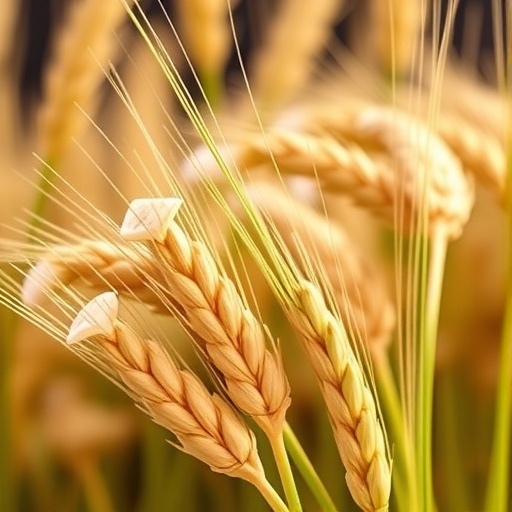
Recent advancements in agricultural biotechnology have revealed a promising strategy to enhance the micronutrient content of bread wheat, a staple food crop consumed globally. Novel research published in the journal Plants, People, Planet explores the potential of arbuscular mycorrhizal fungi (AMF), specifically Rhizophagus irregularis, to improve the bioavailability of critical micronutrients such as zinc and iron in wheat grains. This breakthrough could significantly address nutritional deficiencies linked to these essential minerals, especially in regions reliant on wheat as a primary food source.
This innovative study focused on the symbiotic relationship between bread wheat (Triticum aestivum) and arbuscular mycorrhizal fungi, a class of soil fungi known for their ability to colonize plant roots and enhance nutrient uptake. By inoculating wheat crops with R. irregularis in controlled cultivation experiments, researchers observed marked improvements in grain size and nutrient density. Notably, the fungal colonization increased phosphorus and zinc concentrations within wheat kernels, two micronutrients often limited in human diets but vital for physiological and cognitive development.
A core concern in micronutrient biofortification is the presence of phytates in grains. Phytates can chelate minerals like zinc and iron, rendering them less available for absorption in the human digestive tract. Interestingly, this study found that the elevated phosphorus content resulting from fungal inoculation did not correlate with increased phytate levels. This finding is crucial because it suggests that the mechanism by which R. irregularis enhances mineral content does not simultaneously promote anti-nutritional factors, thereby ensuring that the additional zinc and iron remain bioavailable and beneficial to consumers.
The methodology employed involved growing bread wheat varieties under identical agronomic conditions with and without AMF inoculation. The comparative analysis revealed that wheat grown in association with R. irregularis consistently produced larger grains with higher micronutrient concentrations than non-inoculated controls. These enhancements are attributed to the extensive hyphal networks formed by the fungus, which facilitate the mobilization and uptake of immobile nutrients like phosphorus and micronutrients from the soil beyond the immediate root zone.
Phosphorus is an essential macronutrient that plays a key role in plant growth, energy transfer, and nucleic acid synthesis. Its increased availability in inoculated grains likely supports enhanced metabolic activity, which in turn may promote the accumulation of vital trace elements such as zinc and iron. The elevated zinc and iron levels observed could help mitigate widespread global micronutrient deficiencies, often termed “hidden hunger,” which significantly impact public health outcomes, including impaired immune function and developmental delays.
One of the study’s lead researchers, Dr. Stephanie J. Watts-Williams from the University of Adelaide, emphasized the broader implications of this natural biofortification approach: “Beneficial soil fungi represent a sustainable option to maximize nutrient acquisition from soils. Our findings are promising for enhancing human micronutrient intake via crop biofortification without genetic modification or industrial fortification methods.” This sustainability angle appeals to ecologically conscious agricultural practices while potentially reducing dependence on synthetic fertilizers or supplements.
The role of mycorrhizal fungi extends beyond nutrient uptake; these symbionts can improve plant resilience against abiotic stresses such as drought and soil toxicity and enhance overall soil health by fostering a diverse microbial ecosystem. This multifaceted benefit can contribute to more stable crop yields and nutrient profiles under variable environmental conditions, making the approach highly relevant in the context of climate change and food security.
Mechanistically, Rhizophagus irregularis penetrates plant roots and forms arbuscules, specialized structures that facilitate intracellular nutrient exchange. This biological interface increases the surface area for mineral uptake and transport from the soil to the plant vascular system. Additionally, the fungus produces enzymes and organic acids that solubilize otherwise inaccessible mineral forms, further amplifying nutrient availability to the host plant.
Increases in grain micronutrient content through AMF inoculation do not appear to compromise other quality traits of wheat, such as protein levels or baking properties, according to preliminary data. This suggests that implementing such inoculation protocols could be scaled effectively within existing agricultural frameworks without adverse impacts on end-use quality. Monitoring and optimizing inoculum production and application methods will be critical for large-scale adoption.
Considering the global prevalence of micronutrient malnutrition, especially zinc and iron deficiencies leading to anemia and immune deficiencies, integrating AMF-based biofortification into crop production protocols offers a promising alternative or complement to conventional fortification programs. It harnesses naturally occurring soil microbiota with a view toward holistic agroecosystem management.
The findings also open avenues for exploring AMF inoculation in biofortifying other cereal crops and legumes. Understanding plant-microbe interactions at molecular and physiological levels will enable targeted applications designed to maximize nutrient enhancement and crop performance sustainably. Continued cross-disciplinary research will be essential to translate these laboratory and field trials into consistent benefits for global populations.
In conclusion, this study highlights a significant breakthrough in agricultural science by demonstrating that arbuscular mycorrhizal fungal inoculation can increase the bioavailability of zinc and iron in wheat grain effectively. This strategy holds immense promise for improving human nutrition, fostering sustainable agriculture, and combating micronutrient deficiencies worldwide. Future research efforts should focus on optimizing inoculation techniques, assessing long-term field performance, and expanding to diverse agroecological contexts.
News Publication Date: 23-Jul-2025
Web References:
Cite Scienmag News
Alan Morgan. (August 1, 2025). Can Specific Fungi Enhance the Micronutrient Levels in Bread Wheat? Scienmag. https://scienmag.com/can-specific-fungi-enhance-the-micronutrient-levels-in-bread-wheat/
Alan Morgan. "Can Specific Fungi Enhance the Micronutrient Levels in Bread Wheat?" Scienmag, 1 August 2025, https://scienmag.com/can-specific-fungi-enhance-the-micronutrient-levels-in-bread-wheat/. Accessed 3 September 2026.
Alan Morgan. "Can Specific Fungi Enhance the Micronutrient Levels in Bread Wheat?" Scienmag. August 1, 2025. https://scienmag.com/can-specific-fungi-enhance-the-micronutrient-levels-in-bread-wheat/


