


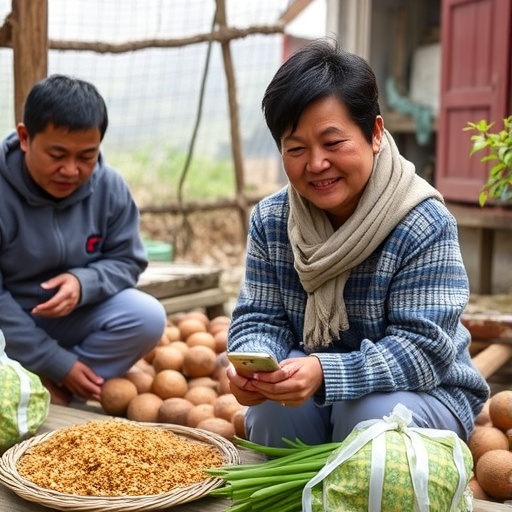
In the landscape of rural China, the rapid proliferation of short video applications is reshaping how households acquire information and make decisions, especially concerning dietary habits and food consumption. A recent observational study conducted by a Chinese research team delved deeply into this emerging phenomenon, shedding light on the intricate relationship between digital media usage and nutritional outcomes in rural settings. Utilizing a comprehensive micro-survey dataset from 2,000 households spanning 100 villages across five provinces, the study offers groundbreaking insights into how short video apps influence food choices and diversity amidst traditional rural economies.
The omnipresence of short video platforms interweaves seamlessly with the daily fabric of rural life. These applications serve as multi-functional tools, not only disseminating information but fostering social interaction and facilitating e-commerce. This convergence of features positions short video apps as potent agents for change in rural food consumption patterns. The research team meticulously analyzed data collected in 2023, aiming to quantify these platforms’ tangible impact on household per capita food intake and diet quality—a critical determinant of public health.
One remarkable finding is the documented increase in per capita food consumption linked to short video app usage. Households engaging with these digital platforms demonstrated a notable uptick in their intake of key food categories, including aquatic products, fruits, poultry, pork, and soybeans. This dietary shift implies a move toward more diversified and nutrient-rich food consumption, which is essential for combating malnutrition and diet-related chronic illnesses prevalent in rural regions. However, the research highlights a paradox: despite enhanced consumption and variety, the overall household food health index did not show significant improvement, suggesting complexities beyond mere quantity and diversity.
Dietary diversity, an important proxy for nutrient adequacy, emerges as a critical focus of the study. The association between short video application use and increased dietary variety was particularly pronounced among high-income groups within rural communities. This stratification indicates that socioeconomic factors modulate the benefits of digital media interventions, with wealthier households potentially better positioned to leverage online content for improving their diets. Furthermore, villages equipped with express delivery infrastructure but lacking traditional food markets experienced enhanced dietary diversity benefits, underscoring the complementary role of logistics and digital access in influencing nutrition.
While the study successfully quantifies broad trends, it identifies significant gaps related to the specific content types within short video apps affecting food choices. The inability to isolate the effects of health education versus commercial food promotion videos reflects data limitations that constrain understanding of the precise mechanisms driving behavioral change. This limitation signals a pivotal direction for future research, where enriching the dataset with granular viewing and interaction metrics could elucidate causative pathways and optimize digital content strategies for nutritional improvement.
The research methodology employed an observational approach, relying on detailed self-reported data across diverse demographics and geographic locations. Such a design provides robust ecological validity but inherently limits causal inference. Nonetheless, the study represents a pioneering effort to correlate digital media engagement with tangible nutritional outcomes in rural China, a demographic segment often underrepresented in technology impact studies. By integrating technological, socioeconomic, and health variables, the team advances a holistic perspective on digital interventions in rural development contexts.
The role of technological infrastructure shines as a critical enabler within this framework. Remote villages typically suffer from limited market access, which short video apps can partially mitigate by expanding exposure to food options and facilitating purchases through e-commerce linkages. The presence of express delivery points acts as a bridge, translating virtual content exposure into actual dietary improvements. This interplay reinforces the notion that technology adoption in rural areas must be complemented by logistical enhancements to realize full benefits.
Crucially, the study challenges assumptions that increasing digital engagement directly translates to improved food health metrics. The unchanged household food health index signals that quantity and diversity alone do not guarantee healthier outcomes. Factors such as food quality, preparation methods, and underlying health literacy might mediate the observed effects. This complexity underscores the need for integrated interventions combining edutainment with targeted nutrition education and community health initiatives.
The researchers emphasize the potential of “edutainment,” blending educational content with engaging video formats, to catalyze positive dietary changes. The dynamic nature of short video apps, driven by algorithms tailoring content to user preferences, offers a scalable platform to disseminate nutritional knowledge alongside entertainment. By designing content that resonates culturally and contextually with rural audiences, such digital tools could empower households to make informed food choices aligned with health-promoting behaviors.
Looking forward, the study’s authors advocate for data supplementation to unravel the nuanced impacts of specific video content genres on food consumption. Incorporating analytics on user engagement with health-related videos versus commercial advertisements could inform strategic content curation and public health messaging. Additionally, longitudinal tracking would help ascertain sustained behavioral shifts and assess potential long-term health benefits.
Moreover, the integration of artificial intelligence and machine learning techniques holds promise for enhancing the precision of such research. Automated content classification and sentiment analysis could parse vast video libraries, identifying patterns correlating with dietary changes. When combined with socioeconomic and geographic data, these insights could drive personalized interventions that adapt dynamically to evolving user needs and preferences in rural settings.
This pioneering study thus illuminates a critical intersection of digital technology, nutrition, and rural development, laying vital groundwork for leveraging short video platforms as catalysts for healthy dietary transformation. Its findings highlight both the opportunities and challenges in harnessing the power of digital edutainment to foster improved nutritional outcomes, emphasizing the importance of contextual factors such as income disparities and infrastructural readiness. As the digital landscape continues to evolve, such research underscores the need for multidisciplinary approaches to optimize health impacts within underserved rural populations.
Web References:
10.1016/j.jia.2025.12.053
Cite Scienmag News
Daisy Hatcher. (June 9, 2026). Can Short-Form Video Apps Boost Household Nutrition in Rural China? Scienmag. https://scienmag.com/can-short-form-video-apps-boost-household-nutrition-in-rural-china/
Daisy Hatcher. "Can Short-Form Video Apps Boost Household Nutrition in Rural China?" Scienmag, 9 June 2026, https://scienmag.com/can-short-form-video-apps-boost-household-nutrition-in-rural-china/. Accessed 3 September 2026.
Daisy Hatcher. "Can Short-Form Video Apps Boost Household Nutrition in Rural China?" Scienmag. June 9, 2026. https://scienmag.com/can-short-form-video-apps-boost-household-nutrition-in-rural-china/


