


The formative years of our planet Earth, stretching back over three billion years, are a period cloaked in profound scientific mystery. This era witnessed the emergence of life, the formation of the atmosphere, and the accumulation of vast oceans, yet our understanding remains limited due to the scarce geological record. Earth’s surface is perpetually reshaped by dynamic geological processes such as erosion, subduction, and tectonic burial, which obliterate much of the primordial rock record. Consequently, direct evidence of early terrestrial impacts and their influence on the nascent biosphere is exceedingly rare, posing significant challenges to reconstruction of our planet’s primordial environment.
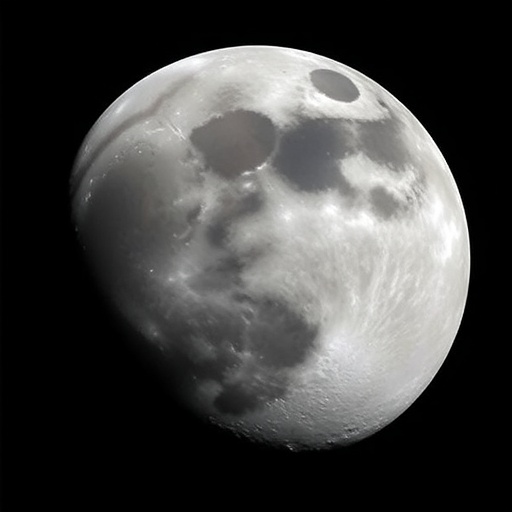
To circumvent the scarcity of direct terrestrial samples, planetary scientists often turn to the Moon as an archival proxy for understanding early solar system conditions. Unlike Earth, the Moon lacks ongoing tectonic activity, significant atmosphere, and hydrological cycles, preserving a relatively immutable surface that chronicles billions of years of impact history. Notably, the Moon shares an intertwined impact record with Earth and other inner solar system bodies, recording collisions which have also shaped terrestrial evolution. Leveraging lunar geology as a window into solar system history is a powerful approach that complements Earth-based studies and asteroid belt observations.
In a groundbreaking study published in the prestigious journal Geology on May 12, 2026, a team led by planetary scientist Carolyn Crow from the University of Colorado Boulder has unveiled compelling evidence of an ancient, catastrophic impact event approximately 3.5 billion years ago, etched into the geological fabric of a lunar meteorite known as NWA 12593. This discovery not only aligns lunar impact chronology with known terrestrial and asteroid belt events but also enriches our comprehension of the inner solar system’s bombardment phases during a transformative epoch.
The meteorite NWA 12593, discovered in northwest Africa, is a breccia—a rock comprised of fragmented mineral and rock pieces cemented together by an impact-induced melt matrix. Detailed radiometric dating techniques applied to this specimen reveal it records three discrete impact events spanning roughly 3.7 to 3.2 billion years ago. The earliest and most significant of these events triggered the formation of an extensive melt sheet on the lunar surface, capable of melting and fusing surface materials into a viscous, flowing mass.
One of the study’s most striking findings is the detection of cubic zirconia within this melt sheet. Cubic zirconia, a mineral often synthesized artificially for use in jewelry, forms under extraordinarily high temperatures and pressures seldom achieved in natural environments. The presence of this mineral phase, detected here through microscopic phase heritage signatures, indicates the severity of the impact, producing temperatures sufficient to melt zirconium-bearing minerals and foster the cubic crystalline structure. Given that natural cubic zirconia commonly does not survive cooling outside of controlled laboratory conditions, its preservation in lunar material attests to the unique thermal environment following this colossal impact.
Beyond the initial impact, the breccia itself provides a geological narrative of subsequent collisions. The second impact event caused fracturing and disruption of the original melt sheet, resulting in a jumbled conglomerate of rock fragments forcibly reunited under impact pressure. This process parallels concrete formation—an analogy used by Crow—where disparate stones and rock pieces are bound by a matrix akin to cement, except here the binding agent is a fusion of molten rock formed in the aftermath of the impact.
The third and youngest impact event pertained to the meteoritic fragment’s ejection from the Moon and subsequent transit to Earth. Collisions on the lunar surface propelled this breccia into space, ejecting it from the Moon’s weak gravitational field to cross the void of interplanetary space before landing on Earth’s surface. The study of such lunar meteorites is invaluable as they offer direct physical samples of lunar geology otherwise inaccessible without human or robotic expeditions.
This temporal alignment of lunar impact scars with terrestrial impact evidence and cratering on 4 Vesta, the fourth largest asteroid in the belt between Mars and Jupiter, is exceptionally rare. The concurrent ages suggest a synchronized spike in inner solar system bombardment events occurring roughly 3.5 billion years ago, corresponding with a transitional phase in solar system evolution from the chaotic late heavy bombardment to a more stabilized orbital architecture punctuated by sporadic collisions.
Understanding the cadence and magnitude of these early impacts challenges previous assumptions about the conditions under which early life evolved on Earth. Catastrophic bombardments would have dramatically influenced atmospheric chemistry, ocean chemistry, and surface environments, intermittently sterilizing or reshaping habitats. Yet, the resilience and persistence of life as indicated by early fossils around 3.5 billion years ago demonstrate the delicate balance between destruction and genesis inherent to Earth’s early history.
The study’s implications reach far beyond Earth and Moon geology; they provide critical insights into planetary formation, geochemical cycling, and the mechanisms governing planetary surface renewal throughout the inner solar system. By revealing a synchronized bombardment timeline extending across multiple celestial bodies, the research bridges observational gaps between planetary science, geology, and astrobiology.
Crow and colleagues’ pioneering work exemplifies the profound utility of integrating lunar meteorite analysis with radiometric dating, mineralogical investigation, and comparative planetology. Such interdisciplinary approaches advance our understanding of planetary processes over deep time, connecting geologic events to the profound question of life’s origins and resilience amid astronomical upheaval.
This discovery highlights the moon’s continuing role as an invaluable cosmic archive, preserving records unaltered by geophysical recycling processes that erase much of Earth’s early history. As analytical techniques and space missions provide ever finer resolution data, further revelations about the inner solar system’s violent infancy and its influence on terrestrial life await discovery.
The findings underscore an exciting frontier in planetary science where lunar and asteroidal geology illuminate Earth’s primordial past and guide interpretations of impact-driven planetary evolution mechanisms. Ultimately, uncovering the narrative locked inside ancient space rocks offers crucial context for understanding not only how Earth’s dynamic surface and life co-evolved but also how impact processes continue to shape worlds within and beyond our solar system.
News Publication Date: 12-May-2026
References:
Crow, C., et al., 2026, Three-body evidence of ca. 3.7 Ga to 3.2 Ga bombardment across the inner solar system: Geology, 12 May 2026
Cite Scienmag News
Grant Pearson. (June 9, 2026). Scientists Uncover Evidence of a 3.5-Billion-Year-Old Asteroid Impact on the Moon. Scienmag. https://scienmag.com/scientists-uncover-evidence-of-a-3-5-billion-year-old-asteroid-impact-on-the-moon/
Grant Pearson. "Scientists Uncover Evidence of a 3.5-Billion-Year-Old Asteroid Impact on the Moon." Scienmag, 9 June 2026, https://scienmag.com/scientists-uncover-evidence-of-a-3-5-billion-year-old-asteroid-impact-on-the-moon/. Accessed 4 September 2026.
Grant Pearson. "Scientists Uncover Evidence of a 3.5-Billion-Year-Old Asteroid Impact on the Moon." Scienmag. June 9, 2026. https://scienmag.com/scientists-uncover-evidence-of-a-3-5-billion-year-old-asteroid-impact-on-the-moon/


