


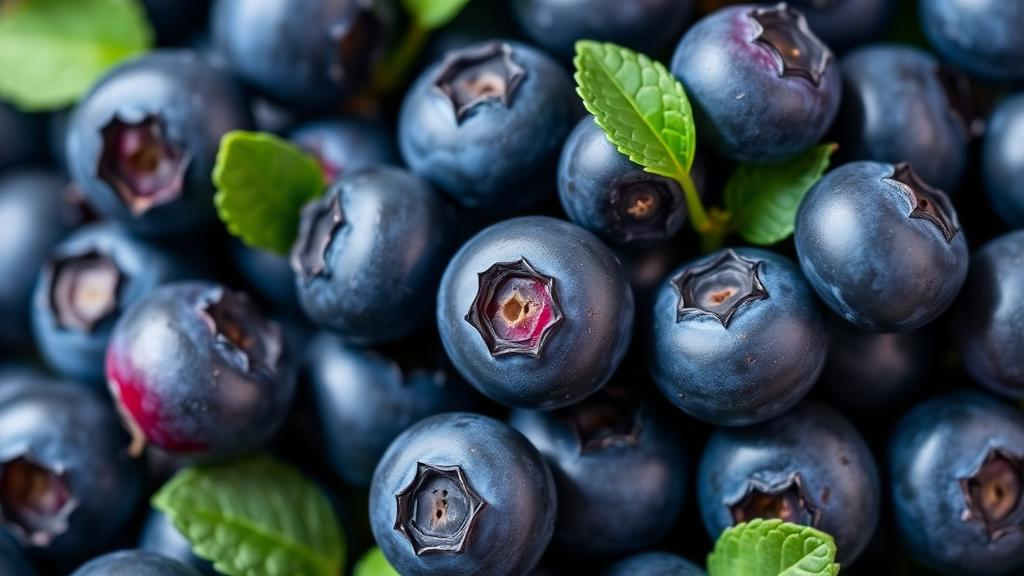
Blueberries are a global superfood darling, but behind their glossy bloom lies a fragile engineering problem: the fruit must survive picking, washing, packing and long-distance shipping without collapsing into soft, leaky mush. A new study from researchers at the Autonomous University of Sinaloa in Mexico suggests that the secret to sturdier berries may lie not in postharvest tricks, but in the precise chemistry of the water and nutrients delivered to the roots. By manipulating the osmotic potential of a hydroponic nutrient solution and the relative proportion of calcium within its cationic balance, the team showed that both factors interact to shape the structural integrity of blueberry fruit from the inside out.
The research, conducted with the southern highbush cultivar ‘Biloxi’, focused on calcium, a mineral with a dual personality in plant biology. Structurally, calcium ions cross-link pectin molecules in the middle lamella of cell walls, forming calcium pectate bridges that give tissues their rigidity and contribute directly to fruit firmness. Signaling-wise, calcium acts as a ubiquitous secondary messenger in responses to growth cues and abiotic stress. But calcium has an awkward logistical constraint: it moves almost exclusively through the xylem’s transpiration stream and has very limited mobility in the phloem, the plant’s sugar-transport highway. Because blueberry fruits transpire relatively little, delivering adequate calcium to developing berries is a persistent physiological challenge.
To probe this challenge, the researchers grew twelve-month-old ‘Biloxi’ plants in 25-liter containers filled with red tezontle, a porous volcanic substrate, under a precision fertigation system in northern Sinaloa. They arranged a 3 × 3 factorial experiment combining three relative calcium proportions (30, 45 and 60 percent of the total cationic pool) with three nutrient-solution osmotic potentials (−0.032, −0.052 and −0.072 megapascals). Crucially, raising the calcium share required reciprocal reductions in potassium and magnesium, so the treatments represent different cationic balances rather than isolated calcium doses. Osmotic potential was set by proportionally scaling all ionic concentrations, calculated from the total millimolar content of the solution, and pH was held tightly between 5.0 and 5.5, the range favored for blueberry nutrient uptake.
The results on vegetative growth were strikingly nonlinear. Shoot length and shoot number responded to a significant interaction between calcium proportion and osmotic potential, peaking not at the mildest solution but at the intermediate one: plants grown at −0.052 megapascals with 60 percent relative calcium produced the longest shoots, 26.58 centimeters, and the most shoots per plant, 24.58. At the most restrictive potential of −0.072 megapascals, growth fell sharply, with the 30 percent calcium combination yielding just 16.08 centimeters and 13.17 shoots. The authors suggest the intermediate treatment may have acted as a mild, beneficial stress, a hormesis-like stimulus, though they caution that the physiological markers needed to prove such a mechanism were not measured.
Calcium’s journey through the plant left a vivid fingerprint in the canopy. Using a portable ion-selective electrode on fresh leaf extracts, the team tracked soluble calcium across three strata and three phenological stages. Old leaves at the base accumulated dramatically more calcium than young leaves at the top, with basal concentrations reaching 7802.50 parts per million during fruiting, roughly 4.3 times the maximum recorded in apical leaves. Young leaves showed their highest calcium early in the cycle and declined toward fruiting, while basal leaves climbed steadily, a pattern consistent with calcium’s inability to be remobilized through the phloem once deposited. Under the most negative osmotic potential, calcium in young leaves dropped to as little as 751.25 parts per million, and even at the highest calcium proportion the apical concentration fell by 38 percent compared with the mildest solution.
Dry matter accumulation told a complementary story. Total biomass responded to the main effects of both factors, reaching a maximum of 364.55 grams per plant at −0.032 megapascals with 60 percent calcium and a minimum of 217.83 grams under the most restrictive combination, a 40.2 percent gap. The calcium-by-osmotic interaction was significant only for the root-to-shoot ratio, which rose from around 0.19 under mild conditions to 0.242 at −0.072 megapascals with 30 percent calcium, hinting that plants under osmotic restriction shifted investment toward roots, with the degree of that shift depending on the cationic balance.
The fruit itself revealed perhaps the most commercially consequential findings. Fruit calcium concentration, measured by atomic absorption spectrophotometry, responded independently to both factors: at 30 percent relative calcium, tightening the solution from −0.032 to −0.072 megapascals cut fruit calcium by 42.7 percent, from 1718.70 to 983.70 milligrams per kilogram of dry matter. Raising the calcium proportion from 30 to 60 percent boosted fruit calcium by 48.8 percent under mild conditions and by 72.4 percent under the most restrictive ones. Notably, the combination of −0.072 megapascals with 60 percent calcium achieved 1695.99 milligrams per kilogram, statistically comparable to the mild solution at 30 percent calcium, showing that a richer cationic calcium share can offset, at least in outcome, a tougher osmotic environment.
Physicochemical quality shifted in a different direction. More negative osmotic potential drove soluble solids upward, with ‘Brix reaching 16.90 at the 30 percent calcium combination, a 42.8 percent increase over the mild solution, while titratable acidity fell to its lowest value of 0.57 percent under the same conditions, pushing the maturity index to 30.05. Higher calcium proportions moderated these swings, keeping acidity at 0.87 percent and the maturity index at 17.21 under the most restrictive potential. The sweetest, most mature fruit therefore emerged from the harshest osmotic treatment with the least calcium, a combination that proved disastrous for texture.
Firmness and surface wax load, the two structural attributes most relevant to shelf life, followed a clear pattern: both peaked under the mildest osmotic potential and the highest calcium proportion. Maximum firmness reached 84.25 on the Shore scale and maximum wax load 0.53 milligrams per square centimeter at −0.032 megapascals with 60 percent calcium, while the harshest combination with 30 percent calcium produced the lowest values, 50.88 and 0.19 respectively, a 39.6 percent firmness deficit and a 64.1 percent wax deficit. Strikingly, at −0.072 megapascals, raising the calcium proportion from 30 to 60 percent increased wax load by 147 percent and firmness from 50.88 to 77.18, suggesting the epicuticular bloom that gives blueberries their characteristic powder-blue sheen is highly sensitive to the root-zone ionic environment. The authors note the chloroform extraction captures a broad surface lipid fraction, so they conservatively report it as surface wax load rather than epicuticular wax alone.
Perhaps the most practical takeaway is that there is no single optimal recipe. The treatment that maximized vegetative growth, −0.052 megapascals with 60 percent calcium, was not the one that maximized firmness and wax, which required −0.032 megapascals at the same calcium share. For growers, this means nutrient-solution management should be tuned to the production goal, whether canopy building or fruit durability. The findings arrive at a pertinent moment: Mexico ranks among the world’s leading blueberry exporters, and postharvest performance is a decisive competitive edge. Because the calcium treatments inherently altered potassium and magnesium as well, and because transpiration, xylem flow and calcium flux were not directly measured, the authors frame their mechanistic explanations as plausible rather than proven. Still, the study demonstrates that the invisible chemistry of the root zone, the osmotic pull of the solution and the relative standing of calcium among its fellow cations, ripples all the way to the bite of a berry, opening a path toward fruit engineered for toughness before it ever leaves the vine.
Subject of Research: Effects of nutrient-solution osmotic potential and relative calcium proportion on calcium distribution and fruit structural quality in hydroponic blueberry
Article Title: Osmotic potential and relative calcium proportion interact to determine fruit structural integrity in blueberry (Vaccinium corymbosum L.)
Article References: Montoya, F. P., Martínez, F. R., Bautista, E. L., Verduzco, C. F., Peralta, R. M., & Valdez, J. A. M. (2026). Osmotic potential and relative calcium proportion interact to determine fruit structural integrity in blueberry (Vaccinium corymbosum L.). Discover Agriculture, 4(1), Article 309. https://doi.org/10.1007/s44279-026-00784-0
Image Credits: AI Generated
DOI: 10.1007/s44279-026-00784-0
Keywords: blueberry, calcium, osmotic potential, hydroponics, fruit firmness, surface wax, cationic balance, Vaccinium corymbosum, plant nutrition, fruit quality, nutrient solution, postharvest
Cite Scienmag News
Alan Morgan. (October 2, 2026). Calcium Balance and Osmotic Potential Hold the Key to Firmer Blueberries. Scienmag. https://scienmag.com/calcium-balance-and-osmotic-potential-hold-the-key-to-firmer-blueberries/
Alan Morgan. "Calcium Balance and Osmotic Potential Hold the Key to Firmer Blueberries." Scienmag, 2 October 2026, https://scienmag.com/calcium-balance-and-osmotic-potential-hold-the-key-to-firmer-blueberries/. Accessed 17 October 2026.
Alan Morgan. "Calcium Balance and Osmotic Potential Hold the Key to Firmer Blueberries." Scienmag. October 2, 2026. https://scienmag.com/calcium-balance-and-osmotic-potential-hold-the-key-to-firmer-blueberries/


