


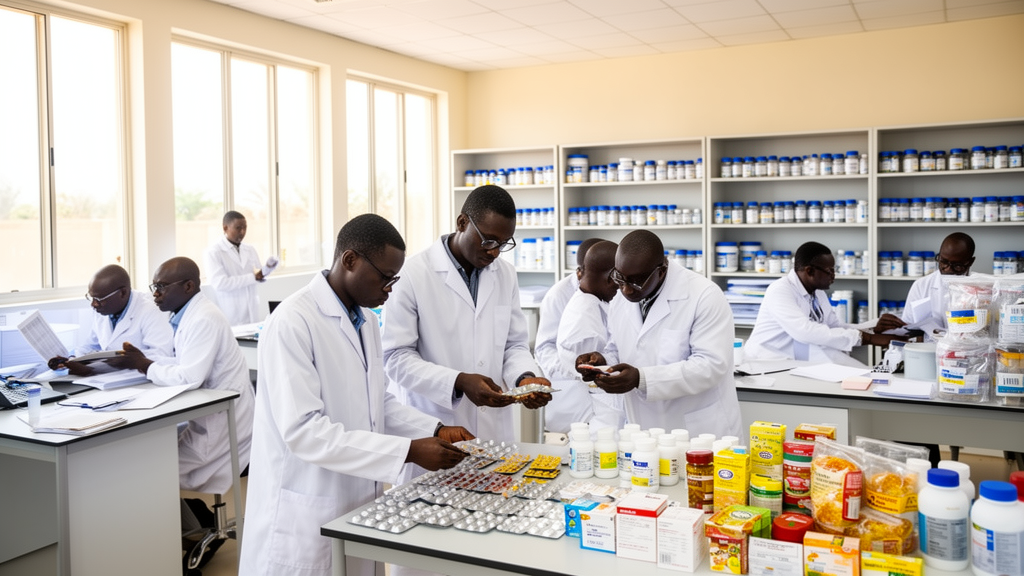
Burkina Faso has launched one of the most ambitious regulatory overhauls in West Africa, merging its fragmented food and drug oversight bodies into a single powerhouse agency. In May 2026, the government established the Faso Food and Drug Administration (Faso FDA) by Decree No. 2026-0602/PF/PRIM/MEF/MS, creating a unified national regulatory authority with a sweeping mandate over food products, health commodities, industrial chemicals, cosmetics, pesticides, and other goods that could pose public health risks. The agency was formed through the merger of the National Agency for Health, Environmental, Food, Labour and Health Product Safety (ANSSEAT) and the National Pharmaceutical Regulatory Agency (ANRP), consolidating functions that were previously scattered across the ministries of Health, Agriculture, Trade, and Environment. According to the Council of Ministers, the reform responds to persistent threats including substandard and falsified medical products, cosmetics containing prohibited substances, contaminated or improperly stored food, and the widespread use of unregistered pesticides that endanger both human health and the environment.
The new agency’s scope aligns closely with that of other mature African regulatory authorities, notably the Ghana Food and Drugs Authority and the Rwanda Food and Drugs Authority. Faso FDA will regulate food and beverages, medicines for human and veterinary use, blood products, medical devices, cosmetics, vaccines, and pesticides. Its core responsibilities span the full regulatory lifecycle: developing frameworks for clinical trials, manufacturing, marketing authorisation, importation, distribution, and post-marketing surveillance; issuing establishment licences and authorisations for regulated professionals; authorising and overseeing clinical trials; conducting pharmacovigilance and market surveillance; carrying out inspections and enforcement, including fraud prevention; performing quality control and laboratory testing; regulating advertising and promotional activities; and engaging in regional and international cooperation. The breadth of this mandate, researchers argue, demands strong institutional capacity, well-structured governance mechanisms, and sustainable financing strategies from day one.
Writing in a Perspective article published on 14 October 2026 in Frontiers in Drug Safety and Regulation, a team led by Kampadilemba Ouoba of Joseph KI-ZERBO University in Ouagadougou, alongside experts from the Medicines Control Authority of Zimbabwe, the Ghana Food and Drugs Authority, and the African Union Development Agency-NEPAD, identified six strategic priorities that will determine whether the young authority becomes operational and effective. These are securing sustainable domestic financing; strengthening governance systems and transparency; ensuring adequate infrastructure and technical capacity; developing a competent and sufficient workforce; achieving World Health Organization (WHO) Global Benchmarking Tool (GBT) Maturity Level 3; and bolstering regional and international collaboration. The authors stress that the legal establishment of Faso FDA is only the first step in a long institutional development process, and that addressing these priorities will position the agency to safeguard public health and promote sustainable local production of safe, high-quality food and medical products.
Sustainable domestic financing sits at the top of the list. The agency’s legal status as a Public Health Institution with legal personality and administrative and financial autonomy provides a solid foundation for building a reliable funding mechanism. Researchers propose a diversified revenue model combining regulatory fees for marketing authorisation, inspection, and clinical trial approvals; levies on the pharmaceutical and agri-food industries; earmarked taxes on sectors such as tobacco, alcoholic beverages, energy drinks, telecommunications, financial services, and mining; and complementary funding from global health and health security partners for priority activities. Crucially, the authors note that any taxes must be mandated by regulation to be effectively implemented. Burkina Faso already possesses a robust regulatory and administrative framework governing public funds, including Law No. 008-2013/AN on the Code of Transparency in the Management of Public Finances, Organic Law No. 073-2015/CNT on Finance Acts, and Law No. 005-2024/ALT on public procurement, alongside decrees on the financial and accounting regime for State public institutions and general regulations governing public accounting. Oversight of revenue and expenditure is carried out by the Board of Directors and the line ministries responsible for all state-owned public institutions, a framework that should enable Faso FDA to mobilise and manage its resources efficiently.
Governance efficiency and transparency are equally essential to safeguarding institutional independence. The authors recommend that Faso FDA adopt the World Health Organization’s Good Regulatory Practices (GRP), which promote legality, consistency, impartiality, proportionality, flexibility, clarity, effectiveness, and transparency. The importance of embedding strong safeguards from the outset is underscored by past public health crises. The Mediator (benfluorex) scandal in France, for instance, revealed weaknesses in transparency and conflicts of interest within the French regulatory system, ultimately leading to its restructuring. To avoid similar pitfalls, the researchers propose specific safeguards including declarations of conflicts of interest by Faso FDA staff and external experts, the publication of standards, regulatory decisions and operational procedures, and the digitisation of regulatory processes. These measures, they argue, will enable the agency to achieve sound, transparent, and accountable governance while mitigating risks related to corruption and conflicts of interest.
Human resources represent another critical pillar. A well-functioning national regulatory authority requires a multidisciplinary team of highly qualified professionals, making continuous training, career progression pathways, and competitive remuneration top priorities. National initiatives offer a promising opportunity to build this capacity. The Presidential Health Initiative and the 2025–2029 Human Resources for Health Strengthening Programme, known as the 1000×5 Plan, carries a budget exceeding USD 124.7 million and aims to train 5,000 specialists over five years. This programme can support training in key regulatory areas including pharmaceutical regulation and law, risk assessment and quality control, toxicology, quality management systems, information systems and data management, and biomedical research. Article 5 of the founding decree sets out provisions for transferring the assets and liabilities of the ANRP and the ANSSEAT to Faso FDA, enabling better management of staff and the handover of responsibilities during the start-up phase.
Infrastructure and technical capacity will rely on existing achievements from the precursor institutions, both of which are certified ISO 9001:2015, with the ANSSEAT additionally holding an ISO/IEC 17025:2017 certification for laboratory competence. However, the authors emphasise that further investment is essential. Adequate infrastructure—particularly laboratories, digital systems, inspection tools, pharmacovigilance platforms, high-performance databases, and technology for the traceability of medical products and the detection of counterfeits—is fundamental to evidence-based decision-making and effective implementation of regulatory functions. Strong political commitment, they note, will be vital to closing current gaps, especially given the backdrop of limited resources and growing challenges in public health and global health security.
Regional and international collaboration offers a fast track to maturity. Cooperation with national regulatory authorities that have already reached Maturity Level 3, such as those in Ghana, Rwanda, and Senegal, will facilitate technical support, knowledge transfer, and benchmarking. Such collaboration could involve adopting regulatory frameworks for reliance and building the capacity of technical staff through on-site training and joint assessments, supported by a clear partnership framework for developing effective institutional development plans. In addition, cooperation with regional and continental bodies—including the Alliance of Sahel States (AES), the West African Economic and Monetary Union (UEMOA), and the African Medicines Agency (AMA)—will contribute, through harmonisation, to addressing disparities in regulatory practices and strengthening oversight of clinical trials, inspections, pharmacovigilance, and laboratory quality control. Faso FDA will also be able to draw on the results of a self-assessment carried out by the ANRP using the WHO GBT tool, and on institutional development plans drawn up as part of regional work organised by the Regional Committee for the Harmonisation of Pharmaceutical Regulations of UEMOA.
Reaching WHO Maturity Level 3 represents the critical milestone for the new authority. ML3 indicates that a regulatory system is stable, well-functioning, and aligned with international quality management principles such as ISO 9004:2018. Several African national regulatory authorities—including those in South Africa, Egypt, Ghana, Nigeria, Rwanda, Senegal, Tanzania, and Zimbabwe—have already achieved ML3 status, providing a roadmap of best practices. Attaining ML3 would enable Faso FDA to ensure predictable and efficient regulatory processes, create an enabling environment for local production of medicines and vaccines, and position Burkina Faso as a potential host for vaccine and health product manufacturing units serving regional markets. The authors stress that the six priority areas are interdependent and must be addressed holistically: sustainable funding will support the development of infrastructure and the workforce; governance will promote transparency and trust; and infrastructure and cooperation will contribute to achieving Maturity Level 3.
Ultimately, the researchers argue that Faso FDA cannot meet these challenges and achieve sustainable institutional development without strong leadership from its senior management and firm political commitment, particularly from the Ministry of Health. Institutional leadership will foster partnership and cooperation with other highly mature African regulatory authorities such as the Ghana FDA, the Senegalese Pharmaceutical Regulatory Agency, and the Rwanda FDA, while political commitment will enable the accelerated implementation of endogenous self-financing mechanisms and secure the support of regional and international partners. By addressing the six strategic priorities with the support of the Ministries of Health and Finance, the agency will establish itself as a strong and effective regulatory authority capable of ensuring sustainable access to safe, high-quality health and food products. In doing so, Faso FDA will play a vital role in protecting public health, promote the development of local production capacity for health products and foodstuffs, and advance the broader goal of health and food sovereignty for Burkina Faso—a reform that offers valuable lessons for other developing countries seeking to build robust regulatory systems from the ground up.
Subject of Research: Faso Food and Drug Administration (Faso FDA): strengthening regulatory systems for public health protection in Burkina Faso
Article Title: Faso Food and Drug Administration (Faso FDA): strengthening regulatory systems for public health protection in Burkina Faso
Article References: Ouoba, K., Nyambayo, P. P. M., Dori, D., Ashie, A., Onu, K., & Semdé, R. (2026). Faso Food and Drug Administration (Faso FDA): strengthening regulatory systems for public health protection in Burkina Faso. Frontiers in Drug Safety and Regulation, 6, Article 1880709. https://doi.org/10.3389/fdsfr.2026.1880709
Image Credits: AI Generated
DOI: 10.3389/fdsfr.2026.1880709
Keywords: Faso, Food, Drug, Administration, strengthening, regulatory, systems, public, health, protection, Burkina, scientific research
Cite Scienmag News
Alan Morgan. (October 16, 2026). Burkina Faso Unifies Food and Drug Oversight Under New Faso FDA. Scienmag. https://scienmag.com/burkina-faso-unifies-food-and-drug-oversight-under-new-faso-fda/
Alan Morgan. "Burkina Faso Unifies Food and Drug Oversight Under New Faso FDA." Scienmag, 16 October 2026, https://scienmag.com/burkina-faso-unifies-food-and-drug-oversight-under-new-faso-fda/. Accessed 16 October 2026.
Alan Morgan. "Burkina Faso Unifies Food and Drug Oversight Under New Faso FDA." Scienmag. October 16, 2026. https://scienmag.com/burkina-faso-unifies-food-and-drug-oversight-under-new-faso-fda/


