


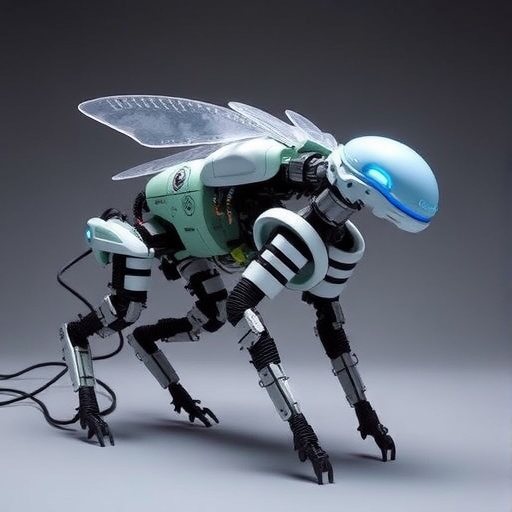
As technological innovation propels forward, the realm of robotics has witnessed remarkable progress. Traditional silicon-based robots have become increasingly intelligent, yet their rigid mechanical frameworks, reliance on batteries, and electric motors inherently limit their adaptability. These constraints especially manifest in their reduced mobility, endurance, autonomous decision-making, and lack of seamless interaction with complex, dynamic environments. Addressing these hurdles, contemporary research has shifted focus from solely bionic machines toward biohybrid entities, where biology and engineering converge. Among the most promising and intriguing of these are cyborg animals—organisms integrated with electromechanical systems, blending biological prowess with engineered capabilities to form versatile robotic platforms with unique advantages in perception, locomotion, and energy efficiency.
Cyborg animals represent a frontier where machine intelligence enhances the innate biological functions of living creatures. Exploiting animals’ evolved abilities to navigate unpredictably complex environments, these systems underscore a profound synergy: animals provide natural sensing, adaptive behavior, and energy autonomy, while electronic augmentation offers control, data acquisition, and enhanced functionalities. Practical applications range from environmental monitoring and exploration to urgent search-and-rescue missions in disaster zones, where mechanical robots fall short. Yet, despite promising demonstrations, the field grapples with persistent challenges, including inconsistent control across individual subjects, variable stimulation outcomes sensitive to internal states and surroundings, and the imperative for robust, portable, and stable long-term implementations.
Recognizing these multifaceted hurdles, leading researchers have undertaken a comprehensive review that transcends narrow experimental confines, setting a systematic framework for the evolution of cyborg animal technologies. Central to this approach is the adoption of animal taxonomy as a foundational lens—evaluating fish, reptiles, mammals, birds, and invertebrates to reveal intrinsic differences in locomotion, control responsiveness, and applicability. This broad zoological perspective facilitates more informed matches between animal models and control methodologies, moving beyond isolated case studies to a holistic understanding of biohybrid design principles.
Fundamental to system construction in cyborg animals are advanced brain–computer interfaces and diverse stimulation techniques aimed at modulating behavior and movement. Notably, electrical stimulation of muscles and sensory receptors complements interfaces based on visual, chemical, thermal, and optogenetic cues. These varied modalities have been integrated with sophisticated electronic backpacks—miniaturized control and power units—paired with navigation algorithms that enable closed-loop control systems. Such architectures empower cyborg animals not only to respond reflexively but to engage dynamically with their environment, facilitating coordinated group behaviors and sand-boxing potential real-world tasks.
Historically, the trajectory of cyborg animal research illustrates an expanding horizon. Early efforts prioritized insects and rodents with relatively straightforward nervous systems and locomotion patterns, leveraging electrical stimulation for rudimentary control. Presently, the discipline encompasses a taxonomically diverse array of species, incorporating birds, fish, reptiles, and a broad suite of invertebrates whose unique neurophysiology offers nuanced avenues for control and application. Correspondingly, control strategies have matured from simple on-off electrical stimuli toward protocol-driven, multimodal, and adaptive schemes that emphasize specificity, stability, and contextual responsiveness.
Crucially, comparative analysis reveals no universally optimal control paradigm. Instead, efficacy hinges on harmonizing the control method with the animal’s neuroanatomy, movement repertoire, and task requirements. Brain–computer interfaces and optogenetics excel in species with more complex neural circuitry, enabling intricate modulation of higher-order behaviors. By contrast, muscle and receptor stimulation affords direct, high-fidelity actuation—particularly advantageous in small-bodied organisms like insects. Noninvasive approaches centered on visual or electric field stimuli offer benign biocompatibility but at the cost of control precision and susceptibility to environmental interference. Chemical stimulation modifies behavioral states but with delayed effects and potential side effects, limiting its immediate utility.
Future progress in cyborg animal systems demands a rigorous balancing act: optimizing adaptability, biocompatibility, precision, system complexity, and readiness for deployment outside laboratory confines. Integration of sensing, localization, navigation, and feedback control into seamless closed-loop architectures will propel these entities from proof-of-concept devices into practical, autonomous agents capable of cooperative swarm behaviors and sophisticated human-machine-animal interactions. This evolution hinges on miniaturized, lightweight, and stable electronic backpacks that impose minimal physiological burden, ensuring the subject’s natural movement and endurance are preserved.
Alongside technical refinement, ethical considerations surrounding animal welfare rise to paramount importance. The design and implementation of cyborg systems must inherently minimize distress, pain, and long-term adverse effects on the living subjects. This ethical framework compounds engineering challenges, emphasizing low-burden integration and autonomous operation that respects biological integrity. Responsible innovation in this domain will be just as critical to societal acceptance as the technological breakthroughs themselves.
The revolutionary potential of cyborg animals lies not in mere control but in seamless integration—a marriage of biological capabilities with electromechanical systems that renders the whole more versatile and robust than the sum of its parts. As Yue Ma and colleagues articulate, the path ahead involves transitioning toward systems characterized by enhanced stability, intelligence, and practical usability. This pivot from one-way stimulus-response modalities to sophisticated, self-regulating entities underscores a paradigm shift in robotics and biohybrid technology.
The implications of this field extend beyond robotics and biology, impacting disciplines such as swarm intelligence, environmental science, and human-machine collaboration. Imagine coordinated flocks of cyborg birds conducting atmospheric surveys, aquatic cyborg fish mapping underwater terrains, or small insect cyborgs searching disaster rubble where humans and machines falter. The rapid convergence of neuroscientific advances, materials engineering, and artificial intelligence holds promise for actualizing these visions, ushering in a new era of intelligent biohybrid machines.
Published in the esteemed journal Cyborg and Bionic Systems, this comprehensive review delineates the intricate landscape of cyborg animal research, underscoring the breadth and depth of recent advances. The authors—Yue Ma, Chuang Zhang, Fei Nie, Hengshen Qin, Qi Zhang, Yiwei Zhang, Lianchao Yang, and Lianqing Liu—bring interdisciplinary expertise from the Shenyang Institute of Automation, Chinese Academy of Sciences. Their significant contribution lays a foundational framework to galvanize future endeavors, emphasizing both technical innovation and the ethical stewardship vital to the sustained development of this transformative research arena.
In conclusion, cyborg animals epitomize the frontier where biology and machine intelligence intersect, promising solutions to challenges in robotics, environmental exploration, and beyond. The journey from fragile laboratory prototypes to robust, field-ready systems will require meticulous design, precise control strategies tailored to diverse species, and a commitment to ethical, sustainable practice. As the field matures, these living machines could well redefine the boundaries of interaction between organisms and machines, unlocking unprecedented capabilities that harness nature’s ingenuity alongside human technological prowess.
News Publication Date: March 26, 2026
Web References: Not provided
References: Not provided
Cite Scienmag News
Reid Dalton. (April 29, 2026). Building, Controlling, and Applying Cyborg Animals: Integrating Biological and Electromechanical Systems. Scienmag. https://scienmag.com/building-controlling-and-applying-cyborg-animals-integrating-biological-and-electromechanical-systems/
Reid Dalton. "Building, Controlling, and Applying Cyborg Animals: Integrating Biological and Electromechanical Systems." Scienmag, 29 April 2026, https://scienmag.com/building-controlling-and-applying-cyborg-animals-integrating-biological-and-electromechanical-systems/. Accessed 3 September 2026.
Reid Dalton. "Building, Controlling, and Applying Cyborg Animals: Integrating Biological and Electromechanical Systems." Scienmag. April 29, 2026. https://scienmag.com/building-controlling-and-applying-cyborg-animals-integrating-biological-and-electromechanical-systems/


