


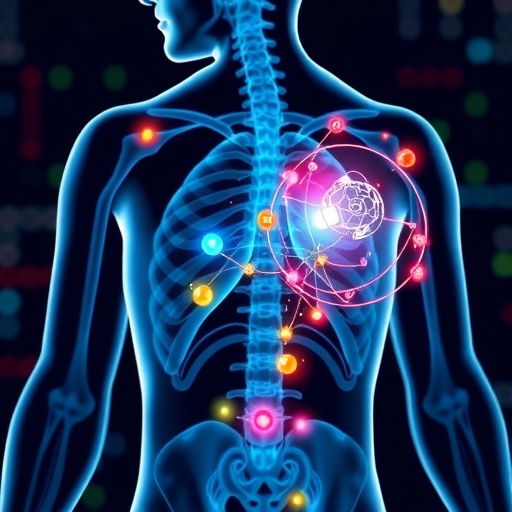
In recent years, the development of swallowable medical devices has captured significant attention as a revolutionary alternative to traditional, invasive diagnostic procedures for gastrointestinal conditions. These miniature devices, often capsule-sized cameras, offer an unprecedented window into the body’s internal environment without the discomfort and complications associated with methods such as endoscopy. Yet despite their promise, the effective use of these devices hinges critically on overcoming fundamental challenges in wireless signal transmission through the complex and heterogeneous medium of the human body.
Wireless communication signals used by swallowable devices are composed of multiple frequency components, collectively spanning a wide spectrum. As these signals traverse human tissues— including muscle, fat, and bone— each frequency experiences distinct patterns of absorption, scattering, and distortion. This results in severely degraded signal integrity by the time the data reaches an external receiver, manifesting as misaligned, weakened, or noisy signals. Consequently, maintaining high-quality and reliable communication remains a pivotal hurdle to ensuring diagnostic accuracy and real-time monitoring capabilities.
Responding to this challenge, researchers at Osaka Metropolitan University have pioneered an innovative approach aimed at optimizing wireless signal transmission for these swallowable implants by leveraging the properties of ultra-wideband (UWB) communication technology. UWB, known for its ingenuity in carrying vast amounts of data over multiple frequency bands simultaneously, plays a central role in enabling the coordination between multiple implantable devices. Crucially, the research team approached the transmission problem by treating each frequency component individually rather than as a single monolithic beam.
Led by Associate Professor Takumi Kobayashi and Professor Daisuke Anzai, the team devised a method where the transmitter embedded in the swallowed capsule and the relay stations implanted along the gastrointestinal tract operate in synergy. Each frequency’s timing and strength are meticulously calibrated so the signals arrive at the external receiver perfectly aligned, effectively combining to form a significantly amplified and clearer composite signal. This deliberate alignment counters the distortive effects of tissue heterogeneity, drastically improving wireless fidelity.
Technically, the approach consists of distributed beamforming tailored for multiple-input multiple-output (MIMO) UWB systems. By optimizing the weighting of signals in each channel, the implants can adjust phases and amplitudes with precision, compensating for both signal attenuation and delay. This ensures temporal synchronization of signal components, which is fundamental for coherent signal addition and maximization of signal-to-noise ratio at the receiver’s end.
Extensive simulations reflective of realistic physiological conditions, including the intricate electrical properties of various tissue layers, were conducted to validate the system’s efficacy. These computational models illustrated a pronounced enhancement in signal strength and clarity when compared against conventional, non-optimized transmission schemes. The findings highlight that “simple yet high-quality wireless communication” is achievable using the swallowable devices equipped with this advanced beamforming strategy.
The implications of this breakthrough extend beyond mere signal clarity. Reliable communications pave the way for more sophisticated data acquisition, facilitating continuous and precise monitoring of internal organ states. This can enable earlier detection of abnormalities, enhanced treatment planning, and even remote patient management— transforming the landscape of gastroenterological healthcare.
Moreover, implementing this distributed beamforming architecture has the potential to catalyze the next generation of intelligent medical implants, which could cooperate in networks to perform multifaceted diagnostic and therapeutic functions. The scalability and adaptability of the proposed methodology mean that it could be readily extended to other implantable devices beyond gastrointestinal applications, accelerating innovation in minimally invasive medical technologies.
This research is a testament to the power of interdisciplinary collaboration, merging expertise in wireless communication engineering, biomedical science, and computational modeling. Such convergence is essential to translate innovative theoretical concepts into practical medical solutions that directly enhance patient comfort and outcomes.
Professor Anzai emphasized the broader significance of the work, noting that the demonstration of effective UWB MIMO beamforming in a biomedical context “opens the door to more advanced medical and healthcare applications” while promoting widespread adoption of swallowable device technology. As wireless implants evolve, signal optimization techniques will be indispensable to fully unlock their potential.
Published in the prestigious journal Scientific Reports, this study sets a critical milestone in wireless medical device research. The continuous refinement and integration of signal processing algorithms aligned with physiological realities will usher in a new era of minimally invasive diagnostics, with immense benefits for patient care worldwide.
The research, conducted at Osaka Metropolitan University—one of Japan’s largest and most forward-thinking public universities—reflects their commitment to converging knowledge across disciplines to solve complex real-world challenges. Through such pioneering work, swallowable medical devices are poised to move from experimental prototypes to mainstream clinical tools, fundamentally reshaping how internal body monitoring is performed.
As this field progresses, we can anticipate a future where diagnostic pills no longer merely capture images but perform multi-modal sensing, communicate seamlessly with external devices, and guide targeted therapies—all made possible by the kind of precise, frequency-specific wireless communication the Osaka Metropolitan team has demonstrated.
News Publication Date: 21-Jan-2026
Web References: http://dx.doi.org/10.1038/s41598-026-36694-w
References: Scientific Reports
Cite Scienmag News
Denise Maddox. (April 21, 2026). Building a Wireless, Tissue-Aware Medical Device Network Inside the Human Body. Scienmag. https://scienmag.com/building-a-wireless-tissue-aware-medical-device-network-inside-the-human-body/
Denise Maddox. "Building a Wireless, Tissue-Aware Medical Device Network Inside the Human Body." Scienmag, 21 April 2026, https://scienmag.com/building-a-wireless-tissue-aware-medical-device-network-inside-the-human-body/. Accessed 4 September 2026.
Denise Maddox. "Building a Wireless, Tissue-Aware Medical Device Network Inside the Human Body." Scienmag. April 21, 2026. https://scienmag.com/building-a-wireless-tissue-aware-medical-device-network-inside-the-human-body/


