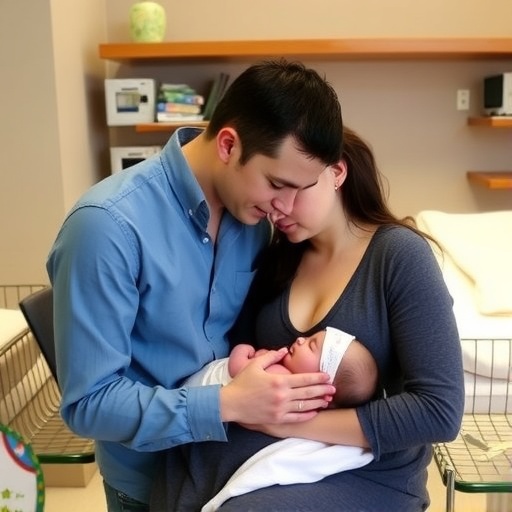
In the hushed, high-stakes environment of the neonatal intensive care unit, the primary currency of survival has long been understood through the lens of advanced medical technology: oscillatory ventilators, continuous positive airway pressure machines, and sophisticated thermal regulation systems. However, a revolutionary shift is underway that positions a much older, more organic instrument as equally vital to the developing architecture of the premature brain. A groundbreaking study published in the Journal of Perinatology reveals that the adult spoken word—mere conversation—can physically alter the neural trajectory of the most fragile patients, and that a remarkably brief parental intervention can profoundly change the auditory world of a NICU infant. The research, led by Romeo and colleagues, demonstrates that the complex acoustic data enveloping a preterm baby is not merely background noise; it is a critical nutrient for brain development that can be optimized with minimal clinical burden.
The linguistic vulnerability of preterm infants stems from a cruel biological irony. During the third trimester of gestation, the fetal auditory system is biologically primed to receive the low-pass filtered cadence of the maternal voice, a signal that drives the initial organization of the auditory cortex and lays the foundation for Broca’s area. When a baby is born at just 24 or 28 weeks, this sheltered, rhythmic input is abruptly replaced by the stochastic, often alarming soundscape of the NICU. Instead of a mother’s prosody, the infant’s developing brain must contend with the sustained high-frequency alarms of desaturation monitors, the percussive hiss of pneumatic tube systems, and the asynchronous speech of masked strangers. This abnormal sensory influx occurs during a critical period of epigenetic plasticity, where synaptic potentiation and pruning are heavily experience-dependent, immediately threatening the structural integrity of the superior temporal gyrus and the arcuate fasciculus, the white matter tract linking expressive and receptive language regions.
Prior research has established a grim dose-response relationship between the quantity of adult words heard in the NICU and long-term neurodevelopmental outcomes. Infants exposed predominantly to the mechanical din of life-support machinery exhibit reduced babbling complexity, lower Bayley-III language composite scores at 18 and 24 months corrected age, and aberrant diffusion tensor imaging metrics indicative of microstructural dysmaturation. The central challenge has always been translation: moving from identifying the danger of silence to engineering a scalable, efficacious clinical remedy that doesn’t overburden parents already crushed by the psychological trauma of a high-risk delivery. Romeo’s team tackled this translational bottleneck not with a complex, resource-intensive therapy, but with a direct, parent-driven educational model designed to shift the linguistic microclimate of the incubator.
The intervention’s elegance lies in its minimalist architecture. Researchers employed a randomized controlled design where families in the treatment arm received a single, targeted counseling session combined with visual feedback technology utilizing a language environment analysis system. This digital language processor, worn by the infant, algorithmically distinguishes between the chaotic acoustic signatures of ventilators and servo-controlled incubators and the organized spectrotemporal patterns of meaningful human speech. Crucially, it provides real-time visual feedback, transforming an invisible variable—contingent linguistic interaction—into a tangible, trackable metric. The underlying mechanism is not simply increasing word volume; it is about enhancing the semantic contingency between an infant’s subtle physiological stress cues or nascent awake states and a caregiver’s immediate verbal response, thereby strengthening the feedback loop necessary for auditory-cognitive entrainment.
The results exhibited a statistically significant aberration from the normative trajectory of the control group. Following the brief educational booster, the intervention group showed a dramatic spike in conversational turn-taking counts and adult word volume during the 12-hour recording epochs. From a neurobiological perspective, researchers hypothesize that this augmentation of meaningful signal directly counteracts the deleterious effects of background noise, effectively improving the signal-to-noise ratio within the auditory pathway. By increasing the salience of the phonemic structure—the distinct vowel sounds and formant frequencies that define language—the intervention facilitates the infant’s ability to perform statistical learning, a process by which the basal ganglia and prefrontal cortex parse the continuous acoustic stream into discrete phonetic units. This data suggests that parents, when provided with precise, quantitative feedback, act as a powerful neuromodulation tool, capable of delivering cognitive stimulation at a fidelity that rivals pharmacological agents for neuroprotection.
This paradigm shift reframes our understanding of the NICU ecosystem from a purely biomedical infrastructure to a socio-neurodevelopmental context. For decades, the acoustic profile of the unit was an afterthought, a byproduct of necessary machinery. This study underscores that the sound pressure level measured in decibels matters less than the signal complexity. A silent room offers no therapeutic benefit; it is the temporally patterned, socially meaningful interaction that drives mitochondrial function and brain-derived neurotrophic factor expression in the hippocampus. By achieving a large effect size with minimal financial overhead—no expensive pharmacologics, no prolonged specialist appointments—the model presents a highly democratized solution for global neonatology, bridging the gap between high-income and low-resource settings where infrastructure may differ but the capacity for a parent to speak with their child remains a universal, zero-cost resource intrinsically linked to the connectome’s ultimate architecture.
Subject of Research: The effect of a brief parent education intervention on the language environment of infants in the Neonatal Intensive Care Unit (NICU).
Article Title: Language environments of infants in the NICU improve after a brief parent education intervention.
Article References:
Romeo, R.R., Kalluri, N.S., Young, V. et al. Language environments of infants in the NICU improve after a brief parent education intervention. J Perinatol (2026). https://doi.org/10.1038/s41372-026-02739-1
Image Credits: AI Generated
DOI: 10.1038/s41372-026-02739-1
Keywords: NICU, Preterm Infants, Language Development, Parent Intervention, Neurodevelopment, Auditory Cortex, Neural Plasticity, Early Brain Development, Conversational Turn-Taking, Language Environment Analysis.