


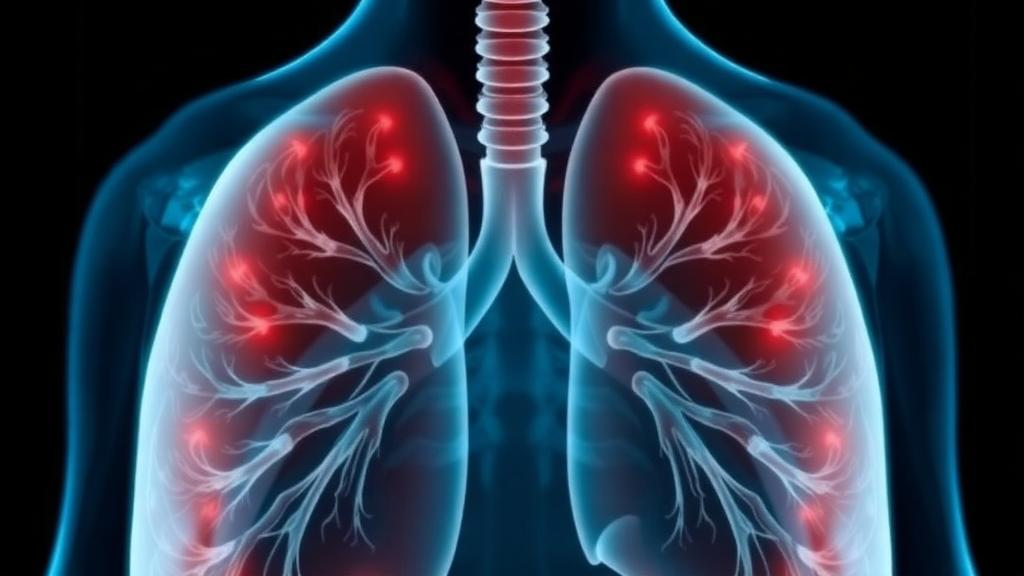
Lung cancer kills more people worldwide than any other malignancy, and the reason is painfully simple: it is usually caught too late. More than 60 percent of patients receive their diagnosis at an advanced stage, when treatment options have narrowed and the five-year survival rate for non-small cell lung cancer hovers around 27 percent. Compare that with the 64 percent survival seen when the disease is still localized, and the case for early detection becomes overwhelming. Now, a team of researchers in China has taken a striking step toward a diagnostic that requires nothing more from the patient than a few minutes of breathing into a specially designed bottle.
In a study published in Holistic Integrative Oncology, investigators at Shanghai Pulmonary Hospital affiliated with Tongji University, working with collaborators at Jiangxi University of Chinese Medicine and Jilin University, enrolled 410 participants — 308 lung cancer patients and 102 healthy individuals — and analyzed the gases they exhaled using a technique called extractive electrospray ionization mass spectrometry, or EESI-MS. Their machine learning model, built on the molecular fingerprints of breath, distinguished cancer patients from healthy controls with accuracy exceeding 90 percent in both positive and negative ion modes. The work was registered as a clinical trial (NCT06086587) before data collection, lending additional rigor to the design.
The underlying biology is elegantly simple. Tumors are metabolic engines, and their altered chemistry releases volatile organic compounds, or VOCs, that diffuse from cancer cell membranes and surrounding tissue into the bloodstream. Once in the blood, these molecules travel to the lungs, cross the alveolar membrane, and are exhaled. Each breath therefore carries a chemical record of what is happening at the tissue level — a molecular signature that, in principle, can be read without a single needle, scalpel, or X-ray. Previous studies have shown that compounds such as pentane, hexane, heptane, and nonane are elevated in the breath of lung cancer patients, but small sample sizes and the absence of independent validation cohorts have kept breath analysis out of the clinic.
The Shanghai-led team addressed both problems. Participants were recruited between January and August 2024 and randomly allocated into three independent cohorts using computer-generated random numbers. Cohorts 1 and 2, which together contained 216 lung cancer patients and 74 healthy individuals, were used for metabolite screening, model training, and internal cross-validation. Cohort 3 — 92 cancer patients and 28 healthy controls — was held back as a completely independent testing set to evaluate how well the final model generalized to unseen data. Strict exclusion criteria filtered out anyone with a history of other malignancies, active lung infections, or prior anti-cancer treatment, while healthy volunteers had to show no respiratory symptoms and normal chest imaging.
Sample collection itself was re-engineered from the ground up. Conventional breath studies rely on collection bags such as Tedlar, which fail to concentrate trace compounds and can lose VOCs to condensation on their inner walls, or on thermal desorption tubes, which risk contamination and cross-infection because exhaled breath carries aerosol particles, proteins, nucleic acids, and even viruses. The team fabricated an in-house collector fitted with unidirectional valves and a 0.45-micrometer silver nanoparticle filter on both the blowing and exhausting ports, with an extraction liquid inside the bottle to enrich volatile compounds and an automatic virus inactivation function. Participants fasted for at least six hours, avoided spicy food, alcohol, and coffee the night before, and breathed normally through a latex mouthpiece for five minutes under tightly controlled temperature and humidity. Ambient air was sampled before and after each session and subtracted as background.
The analytical engine, EESI-MS, is where the technique departs sharply from established methods. Gas chromatography-mass spectrometry, the traditional workhorse of VOC analysis, demands complex pretreatment and often takes more than 30 minutes per sample. Commercial sensor arrays detect only single compounds and are notoriously destabilized by water vapor. In EESI, two sprayers converge in front of the mass spectrometer inlet: one delivers neutral sample, the other delivers charged reagent droplets. Through collision and liquid-liquid extraction, analyte molecules are extracted into the reagent and ionized within seconds, with no enrichment or pretreatment required. Crucially, the method captures both volatile and non-volatile compounds — a capability most breath technologies lack entirely. The instrument operated at a resolution of 70,000, scanning masses from 50 to 750 m/z in both positive and negative ion modes.
To distill meaning from the resulting spectral fingerprints, the researchers applied partial least squares discriminant analysis, cross-validated with permutation testing to guard against overfitting. The models separated patients from controls with exceptional fit — R-squared values of 0.998 or higher and Q-squared values above 0.987 in both ion modes across both screening cohorts. Intersecting the significant hits from Cohorts 1 and 2 yielded 17 characteristic compounds in positive ion mode and 11 in negative ion mode, 28 significantly differential metabolites in total, each identified against the Human Metabolome Database at Level 2 confidence. A support vector machine algorithm then built the final diagnostic model, which was tested on the untouched Cohort 3.
The results were remarkable. In positive ion mode, the 17-compound panel achieved an area under the ROC curve of 0.98, with 92.50 percent accuracy, 92.39 percent sensitivity, and 92.86 percent specificity. In negative ion mode, the 11-compound panel reached an AUC of 0.92, with 90.83 percent accuracy and an even higher sensitivity of 94.57 percent, though specificity dropped to 78.57 percent. Cross-validation in the training cohorts was even stronger: AUC values surpassed 0.97, accuracy exceeded 97 percent in positive ion mode, and specificity hit 100 percent in several configurations. Because smoking is the dominant risk factor for lung cancer and a potential confounder of breath chemistry, the team stratified participants by smoking status and found no significant difference in model performance between smokers and non-smokers — evidence that the biomarkers reflect the metabolic reprogramming of cancer cells themselves rather than residues of tobacco exposure.
Among the detected molecules were non-volatile compounds rarely explored in breath research, including adenylosuccinic acid, a key intermediate in purine metabolism whose dysregulation has been linked to tumor growth and drug-tolerant persister states in lung cancer, and lipids such as lysophosphatidylcholine, monoglyceride, and phosphatidic acid. Lysophosphatidylcholine can be converted by phospholipase D into lysophosphatidic acid, a potent proliferation-signaling molecule implicated in tumorigenesis, and plasma levels of LPC are known to be diminished in lung adenocarcinoma patients. Their appearance in exhaled breath opens a new window onto cancer metabolism that conventional VOC-only approaches cannot provide.
The authors are candid about the limitations. This was a single-center, exploratory study, and the control group consisted only of healthy individuals — the far harder clinical challenge of distinguishing lung cancer from benign pulmonary diseases such as COPD or pneumonia remains untested. Breath composition is also sensitive to diet, medications, and environmental exposures. Still, the team argues that the diagnostic threshold can be tuned to clinical purpose: a lower cutoff to maximize sensitivity for mass population screening, and a higher cutoff to maximize specificity in outpatient nodule clinics, reducing unnecessary invasive procedures. With high initial instrument costs offset by reagent-free, seconds-per-sample throughput in centralized hub laboratories, the researchers now plan a prospective, multi-center trial to validate the approach — and to determine whether a simple breath test can truly become the stethoscope of cancer’s earliest whispers.
Subject of Research: Non-invasive lung cancer detection through mass spectrometry-based analysis of exhaled breath biomarkers
Article Title: Mass spectrometry-based analysis of exhaled gases: a promising diagnostic tool for lung cancer detection
Article References: Zhao, W., Li, Y., Chen, X., Zhang, N., Liu, X., Zhao, L., Wang, H., Ye, L., Xu, K., Zhang, W., Chen, Z., Liu, Y., Zhang, Q., Liu, B., Chen, H., Su, R., & He, Y. (2026). Mass spectrometry-based analysis of exhaled gases: a promising diagnostic tool for lung cancer detection. Holistic Integrative Oncology, 5(1), Article 34. https://doi.org/10.1007/s44178-026-00247-y
Image Credits: AI Generated
DOI: 10.1007/s44178-026-00247-y
Keywords: lung cancer, breath analysis, mass spectrometry, EESI-MS, volatile organic compounds, early detection, machine learning, support vector machine, biomarkers, non-invasive diagnosis, metabolomics, clinical study
Cite Scienmag News
Nathaniel Bowman. (October 4, 2026). Breath Test Spots Lung Cancer With Over 90% Accuracy in Landmark Trial. Scienmag. https://scienmag.com/breath-test-spots-lung-cancer-with-over-90-accuracy-in-landmark-trial/
Nathaniel Bowman. "Breath Test Spots Lung Cancer With Over 90% Accuracy in Landmark Trial." Scienmag, 4 October 2026, https://scienmag.com/breath-test-spots-lung-cancer-with-over-90-accuracy-in-landmark-trial/. Accessed 4 October 2026.
Nathaniel Bowman. "Breath Test Spots Lung Cancer With Over 90% Accuracy in Landmark Trial." Scienmag. October 4, 2026. https://scienmag.com/breath-test-spots-lung-cancer-with-over-90-accuracy-in-landmark-trial/


