


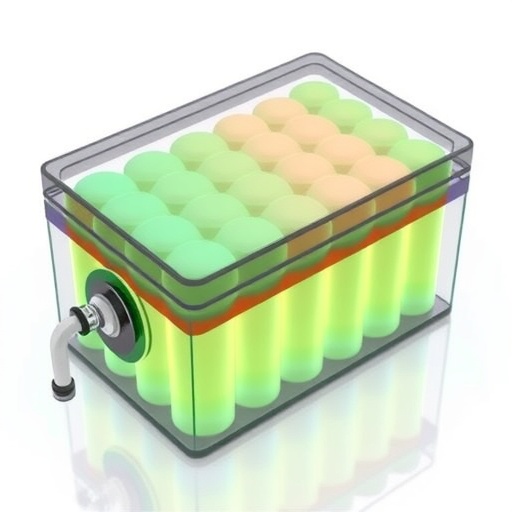
A groundbreaking advancement in the analysis of gas evolution from lithium-ion batteries has been achieved with the development of a novel membrane-separated differential electrochemical mass spectrometry system, or MDEMS. This innovative technology addresses long-standing challenges in studying the volatile electrolyte-based batteries’ gas generation, which has historically impeded long-term monitoring and understanding of critical degradation processes. By introducing a selective graphene oxide-based membrane, researchers have circumvented the limitations that have plagued traditional DEMS methods, which typically fail within just a few days due to solvent evaporation and interference.
The integration of a graphene oxide membrane is a masterstroke in this technology, enabling the selective permeation of gaseous species while effectively blocking organic solvent molecules. This selective barrier dramatically mitigates the loss of electrolytes and contamination in measurement, which are the primary causes of poor longevity and reliability in conventional DEMS analysis. As a result, the MDEMS system can sustain long-term gas evolution monitoring, even under conditions that mimic the practical operation of batteries, including elevated temperatures.
Electrochemical mass spectrometry (DEMS) has been an essential tool in studying battery chemistry for years, primarily by detecting gases evolved during charge and discharge cycles. However, volatile organic electrolytes housed within typical lithium-ion batteries evaporate quickly during testing, disrupting the delicate mass spectrometry balance and resulting in compromised data quality. With the MDEMS approach, the innovative membrane ensures a constant internal environment, allowing extended studies that can be conducted over weeks instead of mere days, opening unprecedented insights into battery aging and failure mechanisms.
This new analytical capability allowed researchers to explore the intricate interplay between electrolyte additives and cathode surface coatings in suppressing the deleterious side reactions that cause gas formation. Such side reactions are crucial contributors to capacity fade, increased internal resistance, and safety hazards in lithium-ion batteries. By analyzing these interactions under realistic operational conditions, the scientific team elucidated how specific additive compounds, in conjunction with specially engineered cathode layers, inhibit the gas-evolving processes that previously went uncharacterized under long-term conditions.
One of the most pressing challenges in lithium-ion battery technology has been ensuring stability at elevated temperatures while maintaining performance and safety. High temperatures accelerate the decomposition of electrolytes and promote gas evolution, which can lead to rapid battery deterioration and safety incidents such as thermal runaway. With the MDEMS platform, the researchers conducted long-term measurements at elevated temperatures, thereby mimicking real-life scenarios in electric vehicles and energy storage systems, concluding that targeted combinations of additives and coatings could dramatically mitigate gas generation and extend battery life under thermal stress.
The practical implications of this discovery are vast, potentially transforming how battery manufacturers approach electrolyte formulation and electrode surface engineering. By deploying the MDEMS technique during the development phase, quality control, and post-mortem analysis, manufacturers could optimize batteries for enhanced longevity and safer operation over diverse environmental conditions. This not only promises economic benefits by reducing battery replacements but also aligns with global sustainability goals by minimizing battery waste.
The underlying scientific achievement, of course, centers on the versatile properties of graphene oxide membranes. Graphene oxide’s unique structure allows it to selectively filter molecules by size and chemical affinity, which in this case translates into allowing small gas molecules—such as oxygen, carbon dioxide, and hydrogen—to pass while excluding larger organic solvent molecules. This selective permeability is the cornerstone of the MDEMS’s ability to maintain the electrolyte’s integrity within the measurement chamber, marking a significant materials science breakthrough in battery diagnostics.
Further, the precise detection of the types and rates of gas evolved during electrochemical cycling provides vital mechanistic insights into electrolyte decomposition and electrode interface stability. For instance, the presence of oxygen evolution might indicate cathode lattice oxygen release, while hydrogen evolution can signal electrolyte reduction at the anode. Tracking these gaseous byproducts over extended cycling enables researchers to pinpoint degradation pathways with unprecedented temporal resolution, yielding actionable data for battery improvement strategies.
This innovative use of MDEMS also holds promise for accelerating the introduction of next-generation battery systems beyond lithium-ion, including solid-state and lithium-metal technologies. These emerging chemistries often involve complex interfacial phenomena and volatile reaction products, for which reliable long-term gas analysis has been a missing piece of the puzzle. By adapting the MDEMS platform to these novel chemistries, researchers anticipate unraveling their failure modes and optimizing their component interactions before wide-scale commercialization.
The success of this technology also opens new avenues for real-time, in situ diagnostic monitoring of batteries during operation. Traditional approaches typically require disassembly or destructive testing, hindering continuous observation of dynamic processes. MDEMS, with its stability and selective permeation membrane, could be adapted into portable or integrated sensors that provide continuous feedback on battery health and performance, driving smarter battery management systems that preempt failure and extend operational lifecycle.
Importantly, the research underpinning the MDEMS system underscores the increasingly interdisciplinary nature of modern battery science, combining advanced materials engineering, electrochemistry, and analytical instrumentation. The collaboration across these fields was essential to design, fabricate, and validate a membrane that not only withstands battery conditions but also enhances the resolution and longevity of gas analysis, providing a template for future breakthroughs at the interface of material science and energy technology.
Taken together, the development and deployment of the membrane-separated DEMS system represent a landmark achievement in battery diagnostics. It promises to propel the field forward by enabling continuous, reliable, and precise monitoring of gas evolution—something that was notoriously difficult with previous methodologies. Such capability holds the promise of safer, longer-lasting batteries and accelerates the global transition to cleaner energy technologies powered by advanced electrochemical storage.
News Publication Date: Not provided.
Web References: Not provided.
References: Not provided.
Cite Scienmag News
Faith Mcneil. (April 6, 2026). Breakthrough Membrane Technology Unlocks Long-Term Battery Gas Analysis, Unveiling Hidden Failure Mechanisms. Scienmag. https://scienmag.com/breakthrough-membrane-technology-unlocks-long-term-battery-gas-analysis-unveiling-hidden-failure-mechanisms/
Faith Mcneil. "Breakthrough Membrane Technology Unlocks Long-Term Battery Gas Analysis, Unveiling Hidden Failure Mechanisms." Scienmag, 6 April 2026, https://scienmag.com/breakthrough-membrane-technology-unlocks-long-term-battery-gas-analysis-unveiling-hidden-failure-mechanisms/. Accessed 4 September 2026.
Faith Mcneil. "Breakthrough Membrane Technology Unlocks Long-Term Battery Gas Analysis, Unveiling Hidden Failure Mechanisms." Scienmag. April 6, 2026. https://scienmag.com/breakthrough-membrane-technology-unlocks-long-term-battery-gas-analysis-unveiling-hidden-failure-mechanisms/


