


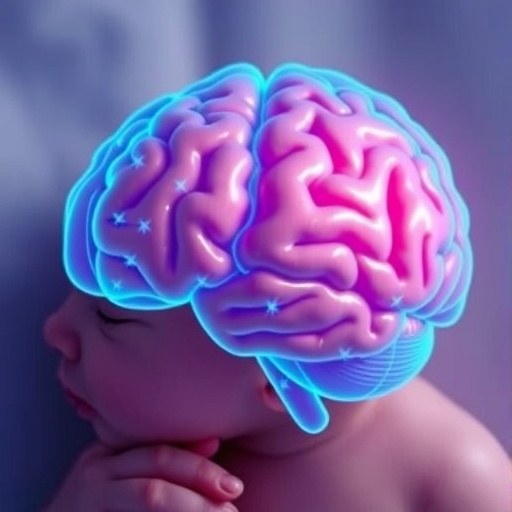
In an unprecedented breakthrough that could revolutionize neonatal care, researchers have unveiled compelling evidence that brain complexity in premature newborns, when stimulated through auditory means, offers a refined measure of cerebral maturation. This pioneering study, spearheaded by Saadatmehr, Gallard, Edalati, and their team, presents a nuanced method to assess neurological development in preterm infants, potentially transforming diagnostic and therapeutic approaches in neonatal intensive care units (NICUs) worldwide. The ability to accurately gauge brain maturation during this critical developmental window has long eluded clinicians, but with this new auditory stimulation protocol paired with cutting-edge neural complexity analyses, the future of neonatal neurology is poised for profound change.
Premature birth, which affects millions of infants annually, remains a significant cause of infant morbidity and neurodevelopmental delays. One of the greatest challenges has been the objective assessment of cerebral maturity in such vulnerable neonates, whose brains are rapidly evolving yet susceptible to injury and developmental aberrations. Historically, clinical evaluations have been limited to behavioral scales and rudimentary neurological exams, both of which are subjective and prone to inconsistencies. The novel approach explored by the researchers hinges on quantifying the dynamic complexity of the neonatal brain’s electrical response to controlled auditory stimuli, creating a window into the functional architecture and developmental status of the cortex.
At the heart of this investigation lies the principle that a mature and well-integrated brain exhibits a rich, complex pattern of neural activity when exposed to sensory input. This complexity, often measured through sophisticated mathematical frameworks such as entropy and fractal dimension analyses, captures the intricate interplay of neural circuits. In premature infants, whose brain connectivity is still being sculpted, such patterns are less elaborate, reflecting an immature state. By systematically delivering auditory stimuli—ranging from simple tones to more nuanced acoustic signals—and rigorously measuring the resulting electroencephalography (EEG) complexity, the researchers were able to discern subtle gradations in cerebral maturity previously undetectable by standard methods.
The study employed a meticulously designed protocol involving a cohort of premature newborns in specialized NICU settings. High-density EEG recordings were captured during controlled auditory stimulation sessions. The auditory stimuli were carefully calibrated to avoid overstimulation while maximizing cortical engagement. Utilizing advanced computational algorithms, the investigators quantified the temporal and spatial complexity of the EEG signals, correlating these metrics with the infants’ gestational age and clinical indicators of neurological health. The results unequivocally demonstrated that increased brain complexity in response to auditory inputs corresponded tightly with higher stages of cerebral maturation.
This finding carries profound implications. Unlike conventional clinical assessments, which often rely on static imaging or behavioral proxies, this technique offers a dynamic, functional measurement of brain development in real-time. Moreover, the use of auditory stimuli is particularly advantageous given the relative ease of application and the natural relevance of auditory input in early developmental stages. By providing a biomarker that reflects the brain’s organizational status, clinicians can better tailor interventions, anticipate neurodevelopmental outcomes, and identify neonates at heightened risk for neurological impairments.
Additionally, the study delved into the mechanistic underpinnings of the observed phenomena. The researchers hypothesize that as the premature brain matures, synaptic density increases and neural networks become more intricately interconnected, facilitating more complex processing of auditory information. This heightened connectivity manifests as increased signal complexity in EEG recordings, serving as an electrophysiological signature of cerebral maturation. Importantly, the methodology’s sensitivity was robust enough to detect even marginal differential maturation levels, highlighting its potential utility in personalized neonatal care.
This research also bridges a significant gap in neonatal neuroscience by integrating sensory neurophysiology with computational neuroscience and clinical neonatology. The interdisciplinary collaboration enabled the harnessing of sophisticated analytic tools to decode the infant brain’s responses in a clinically meaningful manner. By translating complex EEG data into actionable clinical insights, the approach holds promise for widespread adoption in NICUs, particularly with the advent of more portable and user-friendly EEG technologies.
Moreover, the researchers underscore the potential for this approach to enhance longitudinal monitoring of premature infants. Beyond a single snapshot assessment, repeated evaluations over time can track cerebral development trajectories, signaling improvements or highlighting inefficacies in therapeutic strategies. This dynamic monitoring capability aligns well with the emerging paradigm of precision medicine, aiming to optimize care based on individualized neurodevelopmental profiles.
While the study offers groundbreaking insights, the authors acknowledge certain limitations and future directions. Larger-scale studies encompassing diverse populations and varying degrees of prematurity will be crucial to validate and generalize the findings. Furthermore, integration with multimodal neuroimaging and neurochemical markers may enrich the understanding of the complex processes underpinning maturation. Long-term follow-up investigations linking early EEG complexity measures with cognitive, motor, and sensory outcomes will be instrumental in cementing the clinical utility of this novel biomarker.
The broader scientific community has greeted these findings with enthusiasm. Experts in pediatric neurology and neurodevelopmental biology emphasize the potential paradigm shift in how cerebral maturation is evaluated in the neonatal period. The method’s ability to provide objective, reproducible, and functional data promises to refine prognostic assessments and inform early interventions, which are critical in improving outcomes for this vulnerable population.
Ethical considerations surrounding neonatal research were diligently observed in this study, with protocols ensuring minimal risk and maximal benefit to participants. The non-invasive nature of EEG recording combined with passive auditory stimulation makes this approach particularly safe. This safety profile facilitates easier translation from research settings into routine clinical practice, potentially reducing barriers in implementation.
In conclusion, the research by Saadatmehr and colleagues represents a landmark advancement in neonatal neuroscience, harnessing brain complexity measures in response to auditory stimuli as a sophisticated biomarker of cerebral maturation in premature newborns. This approach not only enhances the precision of neurological assessments but also opens novel avenues for targeted therapeutic strategies and monitoring protocols, aiming to optimize neurodevelopmental outcomes. As the field moves toward more nuanced and functional biomarkers, such innovations will be pivotal in safeguarding and improving the lives of premature infants worldwide.
The integration of computational techniques with clinical neonatal care ushers in a new era where the mysteries of the developing brain can be unraveled non-invasively and in real-time. By illuminating the relationship between sensory processing complexity and cerebral maturation, this study lays a foundation for numerous future inquiries and clinical applications, cementing its significance in both scientific and medical spheres.
This visionary research has set the stage for a future where neonatal neurological care is driven by data-rich, dynamic assessments—ushering in targeted, timely, and individualized interventions. Premature infants stand to benefit enormously from this revolution, potentially altering their developmental trajectories toward healthier, fuller lives.
Cite Scienmag News
Cassandra Pierce. (May 3, 2026). Brain Complexity Enhances Premature Newborns’ Maturity Evaluation. Scienmag. https://scienmag.com/brain-complexity-enhances-premature-newborns-maturity-evaluation/
Cassandra Pierce. "Brain Complexity Enhances Premature Newborns’ Maturity Evaluation." Scienmag, 3 May 2026, https://scienmag.com/brain-complexity-enhances-premature-newborns-maturity-evaluation/. Accessed 5 September 2026.
Cassandra Pierce. "Brain Complexity Enhances Premature Newborns’ Maturity Evaluation." Scienmag. May 3, 2026. https://scienmag.com/brain-complexity-enhances-premature-newborns-maturity-evaluation/


