


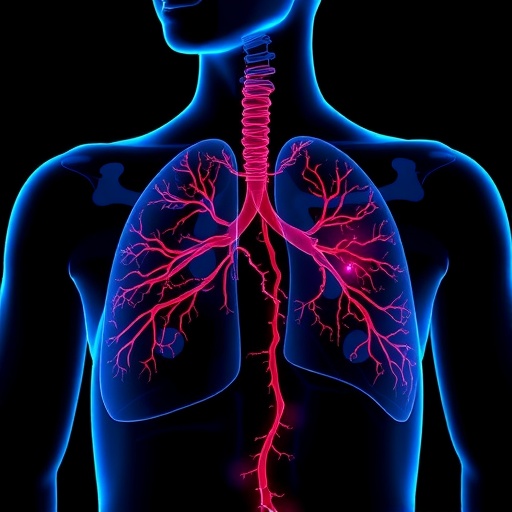
In a groundbreaking study published in Nature Communications in 2026, researchers have unveiled a complex biological pathway linking fetal growth restrictions to long-term pulmonary impairments. This extensive multicohort analysis provides the first compelling evidence that axon guidance pathways, traditionally studied in neural development, play a critical role in mediating the relationship between small for gestational age (SGA) status at birth and subsequent spirometric restriction. The findings hold profound implications for understanding the developmental origins of respiratory disease, potentially opening new avenues for early diagnosis and therapeutic intervention.
Small for gestational age refers to infants whose weight at birth falls below the 10th percentile for their gestational age. This condition is strongly associated with increased perinatal morbidity and mortality, but its long-term effects on lung function have remained elusive. Spirometric restriction, characterized by reduced lung volumes and impaired pulmonary function, has been repeatedly observed among individuals born SGA, but the molecular mechanisms behind this association were poorly understood until now. The study led by Read, Stern, and Carr et al. leveraged an innovative approach combining genomic data, advanced pulmonary phenotyping, and bioinformatic modeling to disentangle this complex relationship.
Through a meticulous analysis of multiple birth cohorts from diverse geographical and ethnic backgrounds, the investigators identified reproducible patterns of gene expression and pathway activation that implicate key regulators within the axon guidance signaling networks. Axon guidance molecules guide neuronal growth cones to their synaptic targets during neural development. Unexpectedly, these molecules were found to orchestrate critical aspects of lung morphogenesis and branching, which suggests a shared developmental framework between nervous and respiratory system growth. This discovery challenges the conventional silos of organ system biology and emphasizes the need for integrative developmental research.
One of the astounding discoveries in this analysis was the upregulation of several axon guidance genes, including members of the semaphorin, ephrin, and netrin families, in lung tissue samples from individuals born SGA with spirometric restriction. These genes regulate cellular migration, adhesion, and differentiation processes essential for the formation of alveoli and airways. The dysregulation observed points to altered lung structural development, which in turn may contribute directly to the reduced lung volumes detected decades later in spirometry testing. This molecular signature distinguishes SGA-induced pulmonary pathology from other causes of restrictive lung disease.
The expansive dataset employed included longitudinal spirometric measurements from infancy through early adulthood, allowing the team to correlate gene expression patterns with functional respiratory outcomes over time. This temporal resolution is critical to establish causality rather than mere association. The study’s high resolution and cross-sectional depth permit a dynamic view of disease evolution—from prenatal influences through postnatal lung growth—to adult lung function status. Importantly, these analyses controlled for confounding variables including smoking exposure, socioeconomic status, and concomitant respiratory conditions to isolate the role of the axon guidance pathways.
Mechanistically, the study posits that aberrant axon guidance signaling during critical windows of in utero lung development disrupts epithelial-mesenchymal communication, an essential driver of airway branching and alveolarization. This disruption leads to lung hypoplasia, reduced alveolar surface area, and compromised gas exchange efficiency. The resultant spirometric restriction phenotype mimics restrictive lung disease patterns traditionally attributed to fibrotic or inflammatory etiologies, but here arises from a developmental basis rooted in neuro-molecular misprogramming. These insights redefine the pathophysiology underlying certain chronic respiratory conditions in populations born SGA.
Clinical translation of these findings holds significant promise. By identifying molecular signatures linked to axon guidance within accessible biomarkers such as circulating microRNAs or peripheral blood mononuclear cells, clinicians may develop predictive tools for early identification of newborns at risk for later lung dysfunction. This prognostication could inform targeted surveillance, pulmonary rehabilitation, or even prenatal interventions aimed at modulating axon guidance pathways pharmacologically or through maternal nutritional optimization. The study lays the groundwork for precision medicine approaches tailored by developmental molecular profiles.
From a public health perspective, the study’s revelations underscore the importance of maternal-fetal health monitoring and interventions that promote optimal fetal growth to mitigate long-term respiratory morbidity. Given the global burden of chronic lung diseases and the disproportionate impact on disadvantaged populations, integrating these molecular insights into maternal health programs and perinatal care protocols could have far-reaching impacts on population respiratory health outcomes. The findings advocate for a paradigm shift recognizing fetal origins of adult pulmonary disease not only as a biological curiosity but as a public health imperative.
The methodology employed by the research team combined next-generation sequencing, elaborate transcriptomic profiling, and machine learning algorithms to parse massive and heterogeneous data across cohorts exceeding tens of thousands of participants. This scale provided statistical power and external validity required to confirm subtle but meaningful biological signals directly relevant to human health. Importantly, this multi-omic and integrative analytics approach exemplifies the frontier of biomedical research bridging genetics, developmental biology, and clinical epidemiology to crack longstanding mysteries linking prenatal growth restriction with chronic disease.
The involvement of axon guidance pathways in lung development is supported by complementary evidence from animal model studies, where genetic knockout or overexpression of guidance molecules results in aberrant bronchial tree patterning and compromised lung function. These preclinical insights buttress the human cohort findings, offering biologic plausibility and experimental frameworks for future mechanistic dissection. Notably, this study elevates the translational paradigm by connecting human population data directly with foundational experimental models, thus fostering bidirectional bench-to-bedside research.
Given the complexity of axon guidance signaling, implicating multiple ligand-receptor pairs, downstream intracellular cascades, and cross-talk with other developmental pathways such as Wnt and FGF signaling, future research will need to chart the hierarchical architecture of these networks in lung developmental biology. Elucidating the temporal and spatial dynamics of pathway activation and their interaction with environmental insults such as hypoxia or maternal smoking will be vital for crafting therapeutic strategies. This study’s results open the floodgates for a rich vein of inquiry aiming to unravel the developmental origin story of restrictive lung disease in unprecedented detail.
The societal implications of this research extend beyond biomedical advancements. Early identification and intervention in at-risk SGA infants could reduce the lifelong healthcare burden associated with chronic pulmonary disorders and improve quality of life. Moreover, understanding developmental pathways that underpin disease susceptibility offers a framework to study other organ systems similarly impacted by fetal growth restriction, thus potentially revolutionizing neonatal care more broadly. This integrative developmental perspective bridges gaps between pediatric care, adult medicine, and preventive health.
In summary, the multicohort analysis led by Read, Stern, and Carr et al. heralds a new era in developmental lung biology and respiratory medicine. By linking small for gestational age status to spirometric restriction through axon guidance pathways, the study propels a conceptual leap connecting neurodevelopmental signaling with pulmonary outcomes. This cross-disciplinary insight challenges existing dogma, enriches our understanding of chronic respiratory disease origins, and carves a path toward novel predictive and therapeutic modalities rooted in fetal programming. The study exemplifies the power of large-scale integrative science to illuminate devastating yet cryptic disease mechanisms.
As the mechanisms driving this association become clearer, the potential for novel therapeutic interventions targeting axon guidance molecules grows tantalizing. Pharmacologic agents designed to modulate guidance cues or their receptors could be developed to correct or prevent disrupted lung morphogenesis in at-risk pregnancies. Additionally, gene editing technologies and regenerative medicine strategies might one day enable the restoration of normal lung architecture in children born small for gestational age. While still speculative, this work propels such innovations from science fiction toward scientific feasibility.
Ultimately, this pioneering study compels the scientific and clinical communities to reconsider developmental lung disorders within a broader biological framework encompassing neural signaling axes. It urges multidisciplinary collaboration integrating pulmonology, neurobiology, developmental genetics, and epidemiology to fully exploit the translational potential unlocked by these insights. By doing so, the goal of reducing the burden of spirometric restriction and enhancing respiratory health outcomes for millions born small for gestational age can move closer to reality.
Cite Scienmag News
Ophelia Keating. (May 3, 2026). Axon Pathways Connect Small Gestational Age to Lung Restrictions. Scienmag. https://scienmag.com/axon-pathways-connect-small-gestational-age-to-lung-restrictions/
Ophelia Keating. "Axon Pathways Connect Small Gestational Age to Lung Restrictions." Scienmag, 3 May 2026, https://scienmag.com/axon-pathways-connect-small-gestational-age-to-lung-restrictions/. Accessed 3 September 2026.
Ophelia Keating. "Axon Pathways Connect Small Gestational Age to Lung Restrictions." Scienmag. May 3, 2026. https://scienmag.com/axon-pathways-connect-small-gestational-age-to-lung-restrictions/


