


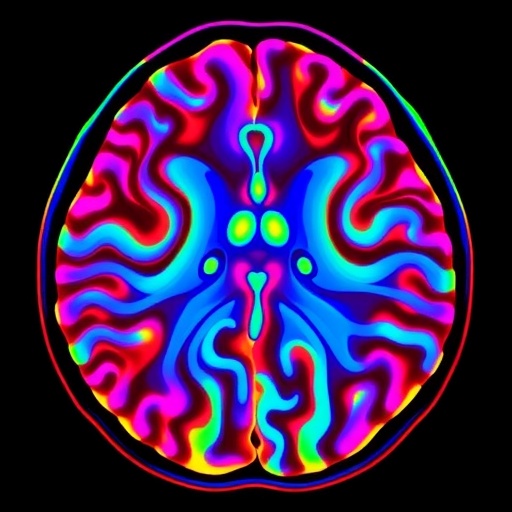
In a landmark advancement at the intersection of neuroscience and imaging technology, a team of researchers led by Girona Alarcón, W. Kuo, and M. Humbel have unveiled a pioneering methodology for visualizing the central nervous system (CNS) fluid spaces in living organisms. Their work, soon to be published in Nature Communications, leverages synchrotron radiation-based micro computed tomography (micro-CT) to deliver unprecedented in vivo images that promise to revolutionize our understanding of neurofluid dynamics and CNS pathology.
The central nervous system is enveloped by a complex architecture of fluid spaces, including cerebral ventricles and the subarachnoid space, which play critical roles in maintaining homeostasis, nutrient transport, and waste clearance. Historically, the ability to image these fluid compartments has been constrained by several technical challenges, largely due to their delicate nature and the need for high-resolution, non-invasive imaging techniques that can capture dynamic processes without compromising tissue integrity. This latest development addresses these challenges head-on, introducing a novel, high-precision imaging modality.
Synchrotron radiation, a powerful and highly coherent form of X-ray generated in a particle accelerator, serves as the cornerstone of this new technique. Utilizing synchrotron radiation enables researchers to harness X-rays of exceptional brightness and collimation, effectively pushing the boundaries of resolution and contrast achievable by typical micro-CT systems. The technique capitalizes on phase contrast imaging principles to enhance visualization of soft, fluid-filled structures that are otherwise indistinguishable in standard absorption-based imaging.
Employing micro-CT imaging with synchrotron radiation allows for three-dimensional reconstructions of minute fluid spaces within the CNS, delivering spatial resolution at the micrometer scale. This degree of resolution is critical for mapping subtle anatomical features and evaluating the fluid pathways that mediate transport within the brain and spinal cord. Crucially, the study demonstrates that these sophisticated imaging sessions can be conducted in living animals, marking a paradigm shift from prior ex vivo imaging methods that limited dynamic observations and direct physiological relevance.
The researchers meticulously calibrated radiation exposure to minimize tissue damage, employing cutting-edge detection systems and image acquisition parameters that balance image quality with animal safety. Such considerations are paramount in ensuring longitudinal studies tracking disease progression or therapeutic interventions can be performed without confounding variables related to radiation toxicity. This opens avenues for longitudinal neuroimaging studies previously constrained by the detrimental side effects of high-energy imaging modalities.
Another technical breakthrough is the integration of advanced computational algorithms capable of processing the vast datasets generated by synchrotron micro-CT. These algorithms facilitate reconstruction of detailed volumetric models of CNS fluid spaces, allowing for quantitative assessments of volume, morphology, and interconnectivity of ventricles, perivascular spaces, and cerebrospinal fluid channels. This quantitative imaging provides a powerful platform to investigate fluid dynamics under physiological and pathological conditions such as hydrocephalus, neuroinflammation, and neurodegenerative diseases.
The implications of this technique extend beyond morphological imaging. By enabling dynamic, high-resolution visualization of CNS fluids in vivo, researchers can now explore glymphatic system function and cerebrospinal fluid circulation with greater precision. The glymphatic system’s role in clearing metabolic waste products from the brain has garnered intense scientific interest, particularly regarding its dysfunction in Alzheimer’s disease and other dementias. This novel imaging approach thus holds promise for elucidating previously elusive mechanisms of brain clearance pathways.
Moreover, the research team showcased the versatility of this approach using multiple animal models, demonstrating consistent and reproducible imaging of CNS fluid spaces across different physiological contexts. This robustness underscores the method’s potential for widespread adoption in preclinical neurobiology and translational research. Investigators studying traumatic brain injury, stroke, or infection could utilize this tool to monitor fluid space alterations that correlate with disease progression or therapeutic efficacy.
The technical sophistication of synchrotron radiation-based micro-CT also allows for multi-modal imaging strategies where contrast agents can be introduced to selectively label specific CNS fluid compartments or cellular elements. This capacity enables scientists to dissect the complex interplay between fluid dynamics and cellular architecture, shedding light on how neurovascular coupling and blood-brain barrier permeability influence CNS fluid regulation.
Importantly, the methodology is compatible with longitudinal experimental designs, allowing continuous monitoring of individual subjects over time. This capability is transformative for studies investigating the temporal evolution of CNS fluid abnormalities, from early-stage pathologies to recovery phases post-intervention. Researchers can now observe real-time fluid movement and morphological changes, rather than relying solely on static snapshots or invasive sampling techniques.
Despite these impressive achievements, the authors acknowledge challenges remain, particularly regarding the accessibility of synchrotron facilities which are specialized and geographically limited. However, ongoing efforts to miniaturize and adapt high-brilliance X-ray sources could democratize this technology, translating synchrotron-derived insights into wider biomedical research applications and eventually clinical diagnostics.
Looking forward, this groundbreaking technique invites numerous frontier questions in neurobiology to be revisited with newfound clarity. As our understanding of fluid exchange and clearance in the CNS deepens, so too does our potential to identify novel biomarkers and therapeutic targets for devastating neurological conditions. The high-resolution integrative view afforded by synchrotron-based imaging is poised to unlock these mysteries, offering a powerful lens into the inner workings of the brain’s fluidic environment.
In conclusion, the work led by Girona Alarcón and colleagues represents a transformative leap in neuroimaging methodology, catapulting in vivo CNS fluid space visualization into a new era of resolution, precision, and dynamic capability. By marrying synchrotron radiation with cutting-edge micro-CT and computational reconstructions, they have crafted an indispensable toolset for probing the subtle fluid pathways that underpin brain health and disease. This breakthrough heralds exciting possibilities for neuroscience research and clinical translation, promising a deeper, more comprehensive understanding of the brain’s hidden fluid networks.
Central nervous system (CNS) fluid spaces and their in vivo imaging using advanced synchrotron radiation-based micro computed tomography techniques.
In vivo imaging of central nervous system fluid spaces using synchrotron radiation-based micro computed tomography
Cite Scienmag News
Cassandra Pierce. (May 3, 2026). Synchrotron Micro-CT Reveals CNS Fluid Spaces In Vivo. Scienmag. https://scienmag.com/synchrotron-micro-ct-reveals-cns-fluid-spaces-in-vivo/
Cassandra Pierce. "Synchrotron Micro-CT Reveals CNS Fluid Spaces In Vivo." Scienmag, 3 May 2026, https://scienmag.com/synchrotron-micro-ct-reveals-cns-fluid-spaces-in-vivo/. Accessed 4 September 2026.
Cassandra Pierce. "Synchrotron Micro-CT Reveals CNS Fluid Spaces In Vivo." Scienmag. May 3, 2026. https://scienmag.com/synchrotron-micro-ct-reveals-cns-fluid-spaces-in-vivo/


