

Friday, July 17, 2026
Science
No Result
View All Result
  • Login
  • HOME
  • SCIENCE NEWS
  • CONTACT US
  • HOME
  • SCIENCE NEWS
  • CONTACT US
No Result
View All Result
Scienmag
No Result
View All Result
Home Science News Medicine

Brain- and Body-First Subtypes Identified in Lewy Body Disease

July 17, 2026
in Medicine
Reading Time: 2 mins read
0
Brain- and Body-First Subtypes Identified in Lewy Body Disease

Brain- and Body-First Subtypes Identified in Lewy Body Disease

65
SHARES
587
VIEWS
Share on FacebookShare on Twitter
ADVERTISEMENT

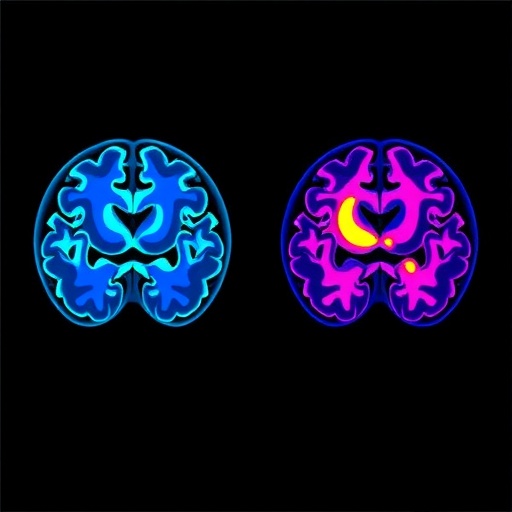
A new review in Nature Reviews Neurology argues that the striking variability of Lewy body disease—ranging from fluctuating symptoms to different patterns of neurodegeneration on brain scans—may be explained by a “brain-first versus body-first” (BvB) framework. Rather than treating Lewy pathology as a single, uniform process, the authors propose that it can originate in fundamentally different peripheral or central sites, leading to distinct clinical trajectories.

In the BvB model, Lewy pathology may begin either in autonomic nerves serving the gut and other peripheral neurons (“body first”) or in the olfactory bulb, from which it spreads into limbic circuits (“brain first”). In both routes, the earliest steps are thought to occur largely outside the central nervous system, potentially after exposure to external triggers such as infectious agents or toxins.

The review highlights how timing differences in early symptoms can map onto these pathways. Some people develop autonomic dysfunction and sleep disturbances years before a formal diagnosis, whereas others show these features only after clinical onset—suggesting non-identical underlying origins.

A key technical observation concerns neurodegeneration sequence. Among individuals with prodromal sleep disorders, cardiac sympathetic denervation reportedly appears about a decade before nigrostriatal degeneration. In contrast, in those lacking such sleep prodromes, the order of degeneration is reversed, aligning with the idea that pathology may start in different anatomical “entry points.”

Pathology gradients at post-mortem also support the model. Studies frequently report either bottom-up patterns consistent with peripheral initiation (“body first”) or top-down patterns consistent with an olfactory-first route (“brain first”), implying that spread follows anatomy-dependent routes rather than a single linear cascade.

The review critically evaluates these findings while acknowledging limitations, including variability in how prodromal symptoms are recorded and differences across imaging and pathology methods. It also emphasizes that not all cases may fit neatly into two categories, and mixed or intermediate patterns could occur.

Beyond explaining heterogeneity, the BvB framework could reshape diagnostics. It points toward stratifying patients based on early autonomic and sleep signatures, and toward imaging or biomarker strategies that reflect the expected temporal order of neuronal loss in each subtype.

Therapeutic implications are equally important: interventions aimed at early peripheral processes might benefit body-first patients differently than strategies targeting central spread would for brain-first patients. Preventive approaches could likewise leverage the model’s hypothesis of exogenous triggers that initiate pathology before CNS involvement becomes detectable.

Finally, the authors outline future research directions, including tighter longitudinal studies linking peripheral biomarkers, imaging, and post-mortem patterns in larger cohorts. If validated, the BvB model could become a practical blueprint for translating mechanistic diversity into precision medicine for Lewy body disease.

Subject of Research: Lewy body disease subtypes; brain-first vs body-first progression model

Article Title: Brain-first and body-first subtypes of Lewy body disease.

Article References: Borghammer, P., Van Den Berge, N., Berg, D. et al. Brain-first and body-first subtypes of Lewy body disease. Nat Rev Neurol (2026). https://doi.org/10.1038/s41582-026-01241-8

Image Credits: AI Generated

DOI: 10.1038/s41582-026-01241-8

Keywords: Lewy body disease, brain-first, body-first, prodromal sleep disorders, autonomic dysfunction, olfactory bulb, cardiac sympathetic denervation, nigrostriatal degeneration

Tags: autonomic dysfunction in Lewy body diseasebrain-first versus body-first subtypesearly clinical symptoms in Lewy body diseaseheterogeneity of Lewy body disease clinical trajectoriesinfectious triggers and toxins in Lewy disease developmentLewy body diseaseneurodegeneration pathways in Lewy pathologyneurodegenerativeneuroimaging patterns in Lewy body diseaseolfactory bulb involvement in Lewy pathologyperipheral versus central origins of Lewy diseaseprogression of sleep disturbances in Lewy pathology
Share26Tweet16
Previous Post

Cracking-Assisted Transfer Printing Enables High-Resolution Quantum Dot LED Displays

Next Post

Purpose in life predicts well-being and capabilities in older Thai adults

Related Posts

Purpose in life predicts well-being and capabilities in older Thai adults
Medicine

Purpose in life predicts well-being and capabilities in older Thai adults

July 17, 2026
Synthetic nanoassemblies restore disrupted intracellular homeostasis
Medicine

Synthetic nanoassemblies restore disrupted intracellular homeostasis

July 17, 2026
Study Finds Some Medical Spas Sell Compounded Weight-Loss Drugs Despite Regulatory Worries
Medicine

Study Finds Some Medical Spas Sell Compounded Weight-Loss Drugs Despite Regulatory Worries

July 17, 2026
Rethinking Cardiometabolic Treatment Thresholds for People Living With Obesity
Medicine

Rethinking Cardiometabolic Treatment Thresholds for People Living With Obesity

July 17, 2026
Insilico Medicine Execs at CPIC Discuss AI Drug Discovery’s Tech and Clinical Breakthroughs
Medicine

Insilico Medicine Execs at CPIC Discuss AI Drug Discovery’s Tech and Clinical Breakthroughs

July 17, 2026
Sleeve Gastrectomy Triggers Adipose Browning by Modulating Asprosin and ATF3-Nrf2
Medicine

Sleeve Gastrectomy Triggers Adipose Browning by Modulating Asprosin and ATF3-Nrf2

July 17, 2026
Next Post
Purpose in life predicts well-being and capabilities in older Thai adults

Purpose in life predicts well-being and capabilities in older Thai adults

  • Mothers who receive childcare support from maternal grandparents show more

    Mothers who receive childcare support from maternal grandparents show more parental warmth, finds NTU Singapore study

    27656 shares
    Share 11059 Tweet 6912
  • University of Seville Breaks 120-Year-Old Mystery, Revises a Key Einstein Concept

    1061 shares
    Share 424 Tweet 265
  • Bee body mass, pathogens and local climate influence heat tolerance

    682 shares
    Share 273 Tweet 171
  • Researchers record first-ever images and data of a shark experiencing a boat strike

    546 shares
    Share 218 Tweet 137
  • Groundbreaking Clinical Trial Reveals Lubiprostone Enhances Kidney Function

    531 shares
    Share 212 Tweet 133
Science

Embark on a thrilling journey of discovery with Scienmag.com—your ultimate source for cutting-edge breakthroughs. Immerse yourself in a world where curiosity knows no limits and tomorrow’s possibilities become today’s reality!

RECENT NEWS

  • Heat’s Nationwide Toll: Suicide and Homicide Patterns in Mexico and Brazil
  • Arabidopsis Researchers Map N1-methyladenosine mRNA Methylation
  • Nanocrystal PN-Junction Model Advances Quantum Dot Light-Emitting Diodes
  • Intercity links boost urban mobility resilience during extreme rainfall

Categories

  • Agriculture
  • Anthropology
  • Archaeology
  • Athmospheric
  • Biology
  • Biotechnology
  • Blog
  • Bussines
  • Cancer
  • Chemistry
  • Climate
  • Earth Science
  • Editorial Policy
  • Marine
  • Mathematics
  • Medicine
  • Pediatry
  • Policy
  • Psychology & Psychiatry
  • Science Education
  • Social Science
  • Space
  • Technology and Engineering

Subscribe to Blog via Email

Enter your email address to subscribe to this blog and receive notifications of new posts by email.

Join 5,146 other subscribers

© 2025 Scienmag - Science Magazine

Welcome Back!

Login to your account below

Forgotten Password?

Retrieve your password

Please enter your username or email address to reset your password.

Log In
No Result
View All Result
  • HOME
  • SCIENCE NEWS
  • CONTACT US

© 2025 Scienmag - Science Magazine

Discover more from Science

Subscribe now to keep reading and get access to the full archive.

Continue reading
