


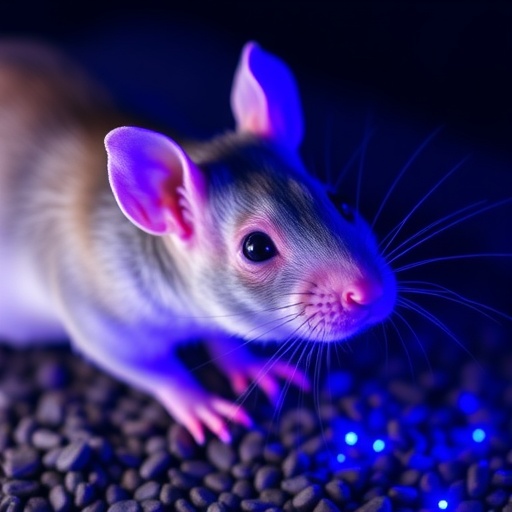
In the relentless pursuit of innovative therapies against parasitic diseases, recent research has cast new light on the potential of plant-based treatments enhanced by modern technology. A groundbreaking study, published in the latest issue of Acta Parasitologica, explores the remarkable effects of fenugreek seed extracts, both irradiated with blue LED light and non-irradiated, on murine trichinosis. This work not only advances our understanding of natural remedies in parasitic infections but also pioneers a fascinating intersection between photobiology and parasitology.
Trichinosis, caused by the nematode Trichinella spiralis, remains a global health concern, especially in regions where meat inspection and hygiene practices lag. After ingestion, larvae penetrate the gut mucosa before migrating to striated muscles, leading to a cascade of inflammatory responses and debilitating symptoms including muscle pain, fever, and fatigue. Despite several available treatments, resistance and side effects urge the scientific community to seek adjunct or alternative therapies that are both effective and safe.
Within this context, fenugreek (Trigonella foenum-graecum), known for its diverse pharmacological properties including anti-inflammatory, antioxidant, and immunomodulatory effects, emerges as a candidate worth exploring. However, what elevates the current investigation is how researchers have employed blue light-emitting diode (LED) irradiation to possibly amplify the therapeutic potentials of fenugreek seed extracts, creating two distinct treatment modalities.
Blue LED light, operating typically in the 400–470 nm wavelength range, has gained traction in biomedical applications for its antimicrobial and photostimulatory capacities. The rationale behind irradiating the fenugreek seeds with blue LED lies in the hypothesis that photomodulation can enhance bioactive compounds’ profiles, thereby improving anti-parasitic activity—a hypothesis that this study scrutinizes thoroughly.
The experimental model utilized involved infected murine populations, mimicking human trichinosis pathophysiology. Mice were administered either blue LED-irradiated or non-irradiated fenugreek seed extracts, allowing researchers to delineate differences in parasitic load, immune response, and histopathological outcomes. Such animal models remain indispensable in preclinical investigations, providing critical insight into therapeutic efficacy and safety.
Remarkably, the study demonstrates that both forms of fenugreek seed extracts led to a noticeable reduction in larval burden within the muscular tissues compared to untreated controls. However, the blue LED-irradiated extract significantly outperformed the non-irradiated variant, suggesting that light treatment could potentiate fenugreek’s antiparasitic properties. This novel finding underscores the transformative power of integrating photobiological strategies into phytotherapy protocols.
On a molecular level, the irradiated extract enhanced the expression of antioxidant enzymes such as superoxide dismutase and catalase, which are pivotal in countering oxidative stress induced by parasitic invasion. Oxidative stress not only contributes to tissue damage but also exacerbates inflammatory cascades, hence modulating oxidative pathways is crucial for disease amelioration. The ability of blue LED irradiation to upregulate these enzymes offers promising mechanistic insights.
Additionally, immunomodulatory effects were evident, with treated mice showing balanced cytokine profiles that favor anti-inflammatory pathways. This is critical since excessive pro-inflammatory cytokine release during trichinosis contributes to pathology. By skewing cytokine responses toward regulation, fenugreek extracts may help mitigate clinical manifestations and promote tissue repair.
Histological examination further validated these biochemical findings, revealing reduced inflammatory infiltrates and preservation of muscle architecture in mice treated with the irradiated extract. This morphological evidence bolsters the therapeutic promise and opens avenues for exploring similar photomodulated phytocompounds against other parasitic or inflammatory diseases.
Moreover, the safety profile shown in the study is encouraging. No adverse effects were noted in liver and kidney function markers, which often limit pharmaceutical anti-parasitic regimens. This highlights fenugreek’s advantage as a natural, biocompatible adjunct therapy with potential for high patient compliance and minimal toxicity.
From a translational perspective, this research could revolutionize how traditional medicinal plants are utilized in modern therapy. The concept of combining photobiological treatments with herbal extracts could extend to numerous bioactive agents, optimizing their efficacy and paving the way for non-invasive, cost-effective interventions against parasitic diseases that disproportionately affect low-resource areas.
The implications of this study transcend trichinosis alone. Parasitic infections globally cause a massive healthcare burden, compounded by rising drug resistance and limited vaccine options. Natural compounds modulated by light-based technologies offer a dual advantage: enhancing existing phytomedicines and reducing reliance on synthetic pharmaceuticals, which often come with high costs and side effects.
Furthermore, the methodology employed serves as a blueprint for future research, advocating for systematic analysis of light dosage, exposure time, and seed treatment parameters to standardize and maximize beneficial outcomes. The exciting interdisciplinary approach bridging parasitology, photobiology, and pharmacognosy could inspire a surge in similar studies targeting other neglected tropical diseases.
In essence, this pioneering investigation provides compelling evidence that blue LED irradiation can significantly boost the ameliorative properties of fenugreek seed extracts against murine trichinosis. It confirms the multifaceted mechanisms involved, from enhancing antioxidant defense and immunomodulation to protecting tissue integrity, all while maintaining a commendable safety profile.
Looking forward, larger-scale studies and eventual clinical trials will be necessary to validate these findings in human populations. Equally important will be the exploration of formulation and delivery methods to ensure bioavailability and stability of the irradiated extracts for practical use.
This study also invites curiosity about whether other wavelengths or light sources could yield similar or superior results, expanding the horizon of photodynamic enhancement in herbal medicine. It is a compelling call to integrate technological advances into traditional remedies, potentially revolutionizing the landscape of parasitic infection management.
In conclusion, the fusion of blue LED photobiomodulation and fenugreek seed extract offers a novel, effective strategy against trichinosis. This breakthrough combines ancient botanical wisdom with cutting-edge science, promising a sustainable and potent weapon in the global fight against parasitic diseases.
Cite Scienmag News
Drew Townsend. (August 7, 2025). Blue LED Boosts Fenugreek Extract Against Murine Trichinosis. Scienmag. https://scienmag.com/blue-led-boosts-fenugreek-extract-against-murine-trichinosis/
Drew Townsend. "Blue LED Boosts Fenugreek Extract Against Murine Trichinosis." Scienmag, 7 August 2025, https://scienmag.com/blue-led-boosts-fenugreek-extract-against-murine-trichinosis/. Accessed 5 September 2026.
Drew Townsend. "Blue LED Boosts Fenugreek Extract Against Murine Trichinosis." Scienmag. August 7, 2025. https://scienmag.com/blue-led-boosts-fenugreek-extract-against-murine-trichinosis/


