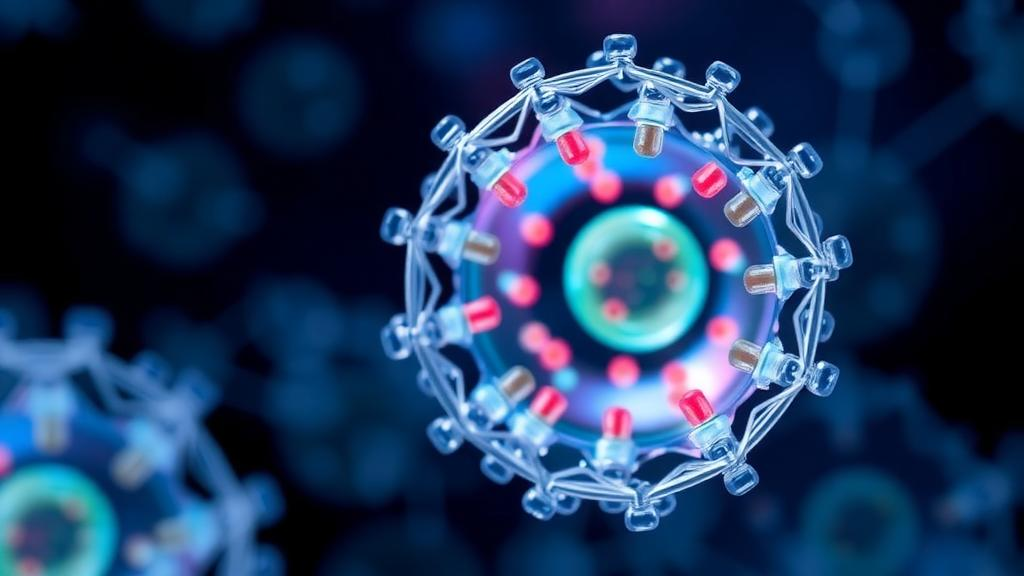
A systematic analytical review published in Discover Sensors examines how two fast-moving engineering fields—ultra-sensitive biosensing and nanorobotics—are converging on a single ambition in oncology: detecting cancer at the molecular level and treating it at the same moment, in the same place. The review, authored by Manvi Rawat, Murari Kumar Jha, Pavan Kumar Agrawal, Arun Bhatt and Sumit Kumar Rai, frames cancer theranostics, the fusion of diagnostics and therapeutics, as a backbone of twenty-first-century precision oncology. It surveys the mechanistic principles, translational development and clinical development of biosensor-nanorobotic architectures, from DNA origami nanorobots and magnetically actuated microswimmers to bacteria-propelled siRNA carriers and ultrasound-controlled nanomotors. The authors also weigh the barriers that separate laboratory demonstrations from bedside tools: manufacturing scalability, regulatory pathways and long-term biocompatibility.
On the sensing side, the review documents striking analytical performance. A differential pulse voltammetry aptasensor built on a gold nanoparticle-modified glassy carbon electrode detected prostate-specific antigen at a limit of detection of 0.01 picograms per millilitre, orders of magnitude below the clinical ELISA range, and achieved 96.4 percent sensitivity and 94.7 percent specificity against 120 serum samples from known prostate cancer patients and age-matched controls. For colorectal cancer surveillance, a molecularly imprinted polymer impedimetric sensor detected carcinoembryonic antigen at 0.3 picograms per millilitre, with reduced graphene oxide electrodes expanding the active surface area fourteen-fold compared with bare gold. Piezoelectric quartz crystal microbalance sensors reached a minimum detectable alpha-fetoprotein concentration of 1.2 picograms per millilitre for hepatocellular carcinoma screening, remaining stable after 30 days at 4 degrees Celsius with signal drift below 5 percent.
Optical platforms push sensitivity further. Gold nanosphere-enhanced surface plasmon resonance detected CEA in undiluted human serum at 0.3 picograms per millilitre. Surface-enhanced Raman scattering nanoprobes built on silver-coated gold nanostars, with a plasmonic enhancement factor of ten to the eighth, detected the microRNA miRNA-21 at 0.8 femtomolar and simultaneously distinguished miRNA-21, miRNA-155, miRNA-210 and miRNA-196a, a panel with high specificity for non-small cell lung cancer, exploiting Raman linewidths of roughly one to two reciprocal centimetres. Upconversion nanoparticles excited at 980 nanometres, which evade tissue autofluorescence and image at depths beyond two centimetres, targeted EpCAM-positive circulating tumour cells and detected single cells in whole blood with 91.2 percent sensitivity and 93.6 percent specificity in a 320-patient multicentre cohort.
Perhaps the most dramatic numbers come from CRISPR-based nucleic acid diagnostics. Building on the SHERLOCK and DETECTR systems, Cas12a-based detection of KRAS G12D and G12V mutations in plasma cell-free DNA from non-small cell lung cancer patients reached a limit of detection of 0.1 attomolar—about 60 molecules in a one-millilitre sample—with 98.3 percent clinical sensitivity and 97.1 percent specificity. The review contrasts this with next-generation sequencing liquid biopsy: 45 minutes versus 35 days, and roughly five US dollars versus five hundred dollars per test. Coupled to microfluidic paper-based analytical devices, CRISPR cartridges can detect EGFR L858R, KRAS G12C and BRAF V600E mutations from a single plasma sample within 60 minutes, read by a smartphone camera and meeting the WHO ASSURED criteria for point-of-care testing. A recent study reported 94.1 percent sensitivity for KRAS G12D detection in pancreatic juice at stage I/II disease, where conventional imaging sensitivity falls below 60 percent.
Circulating tumour cell platforms illustrate the selectivity challenge: one to ten malignant cells per ten millilitres of blood against a background of roughly ten million white cells and five billion red cells. The Magnetic Ranking Cytometry chip, an array of ferromagnetic microposts coated with EpCAM and HER2 antibodies, captured CTCs at one cell per millilitre with purity above 92 percent and enabled single-cell RNA sequencing of captured cells. In 85 patients with metastatic breast cancer, CTC counts tracked with progression-free survival, a Spearman correlation of minus 0.71, outperforming serum CA 15-3 as a response biomarker. The FDA-cleared CellSearch system, still the only approved CTC assay, showed that five or more CTCs per 7.5 millilitres portend worse overall survival in metastatic breast, colorectal and prostate cancers, though newer systems aim to capture the EpCAM-low and epithelial-mesenchymal transition-intermediate cells that immunomagnetic isolation misses.
On the therapeutic side, the review traces nanorobotics from Feynman’s 1959 vision to the 2012 demonstration of functional DNA origami nanorobots. The first in vivo tumour-selective therapeutic result came in 2018: a hollow tubular device, 90 by 60 nanometres, carrying thrombin inside and gated by nucleolin-binding aptamers, opened on contact with nucleolin on tumour endothelial cells and induced intravascular thrombosis. Tumour regression occurred in three of eight mouse models, with no thrombosis in normal vasculature. Later designs include a hexagonal barrel that co-delivered anti-CD3 and anti-EGFR antibody fragments, inhibiting tumour growth by 78 percent versus 34 percent for the free antibody combination in syngeneic melanoma models, and a pH-responsive origami robot releasing doxorubicin with 94 percent efficiency at tumour pH 6.4 but under 8 percent at physiological pH. Chemical modifications such as phosphorothioate backbones and lipid coatings extended plasma half-life from 30 minutes to 8 to 24 hours in mice.
Magnetically actuated systems are described as the most clinically tractable navigation approach, since magnetic fields do not ionize tissue and MRI infrastructure already exists. Helical microswimmers fabricated by glancing-angle deposition, moved by rotating magnetic fields at 10 millitesla and 10 hertz, achieved roughly 82 percent tumour drug accumulation versus under 15 percent for free doxorubicin in a HeLa xenograft model. MRI-guided navigation in ex vivo porcine brain tissue reached a spatial accuracy of plus or minus 500 micrometres at five-centimetre depth. Biologically propelled alternatives exploit bacterial chemotaxis toward hypoxic tumour cores: bacteria-nanorobot hybrids achieved 60 percent tumour growth inhibition in orthotopic colorectal models versus 22 percent for free siRNA, while genetically attenuated mutants showed over a thousand-fold reduced pathogenicity. Ultrasound-driven bowl-shaped nanomotors propelled at 15 to 40 micrometres per second and, loaded with cisplatin and a photosensitizer, produced 74 percent tumour volume reduction under combined ultrasound and laser irradiation, versus 38 and 41 percent for either modality alone.
The conceptual centrepiece is the closed-loop theranostic cycle: biosensors detect tumour biomarkers or microenvironmental cues such as pH, reactive oxygen species and hypoxia; signals trigger nanorobotic activation; payloads are delivered contextually; and post-therapy biosensing informs dose titration. Preclinical hybrids illustrate the idea, including iron oxide-gold nanostar platforms that combined MRI contrast, SERS-guided margin delineation and photothermal killing, and quantum dot-liposome assemblies that allowed fluorescence lifetime tracking of doxorubicin inside HeLa cells for 72 hours. The review is careful, however, to note that fully autonomous in vivo closed-loop systems remain blocked by unsolved engineering problems: nanoscale signal processing electronics, wireless power delivery to deep tissues and biocompatible materials. Only partial implementations with promising preclinical outcomes exist so far.
The translational ledger is sobering. Radiolabelled tracking studies show tumour accumulation of only 0.7 to 5 percent of the injected dose via the enhanced permeability and retention effect, with most material lodging in liver and spleen. Protein corona formation stripped more than 90 percent of targeting specificity from transferrin-functionalized nanoparticles in serum, and repeated PEGylated dosing triggers the accelerated blood clearance effect. Manufacturing remains a bottleneck: DNA origami assembly typically yields 60 to 80 percent and requires HPLC purification, with batch size coefficients of variation exceeding 20 percent reported. Combination-product regulation may require both drug and device pathways, adding an estimated three to five years and 50 to 150 million US dollars. Estimated per-patient costs of 15,000 to 80,000 dollars far exceed conventional chemotherapy cycles. The clearest regulatory precedents are radioligand theranostics: lutetium-177 PSMA-617, approved after the VISION trial showed a 38 percent reduction in the risk of death in metastatic castration-resistant prostate cancer, and lutetium-177 DOTATATE, approved after NETTER-1 showed a 79 percent reduction in the risk of progression or death.
Looking forward, the authors outline speculative horizons rather than certainties. Reinforcement learning agents trained on magnetohydrodynamic simulations steered a swarm of magnetic nanoparticles to a target site with 94 percent accuracy in a computational model, and AI-assisted navigation improved simulated efficiency three- to five-fold. Organoid-guided drug selection reportedly raised objective response rates from 27 to 49 percent in a validation programme, and machine learning on multi-analyte biosensor panels predicted platinum chemotherapy response in ovarian cancer with 91.3 percent accuracy versus 67.4 percent for CA-125 alone. The review’s conclusion is measured: electrochemical biosensors and microfluidic liquid biopsy platforms are the most clinically actionable technologies today, while integrated biosensor-nanorobotic theranostics remains at an early preclinical stage, with manufacturing scalability, nuclease stability, biosafety validation and regulatory pathway development standing as the decisive hurdles before routine clinical use can realistically be anticipated.
Subject of Research: Biosensor and nanorobotic platforms for cancer theranostics
Article Title: Translational bioengineering perspectives on biosensors and nanorobotics for cancer theranostics
Article References: Rawat, M., Jha, M. K., Agrawal, P. K., Bhatt, A., & Rai, S. K. (2026). Translational bioengineering perspectives on biosensors and nanorobotics for cancer theranostics. Discover Sensors, 2(1), Article 53. https://doi.org/10.1007/s44397-026-00087-5
Image Credits: AI Generated
DOI: 10.1007/s44397-026-00087-5
Keywords: biosensors, nanorobotics, cancer theranostics, liquid biopsy, DNA origami, CRISPR diagnostics, magnetic microswimmers, closed-loop therapy, precision oncology, nanomedicine, biocompatibility, regulatory pathways
Cite Scienmag News
Nathaniel Bowman. (October 28, 2026). Biosensors and Nanorobots Converge Toward Closed-Loop Cancer Theranostics. Scienmag. https://scienmag.com/biosensors-and-nanorobots-converge-toward-closed-loop-cancer-theranostics/
Nathaniel Bowman. "Biosensors and Nanorobots Converge Toward Closed-Loop Cancer Theranostics." Scienmag, 28 October 2026, https://scienmag.com/biosensors-and-nanorobots-converge-toward-closed-loop-cancer-theranostics/. Accessed 28 October 2026.
Nathaniel Bowman. "Biosensors and Nanorobots Converge Toward Closed-Loop Cancer Theranostics." Scienmag. October 28, 2026. https://scienmag.com/biosensors-and-nanorobots-converge-toward-closed-loop-cancer-theranostics/