


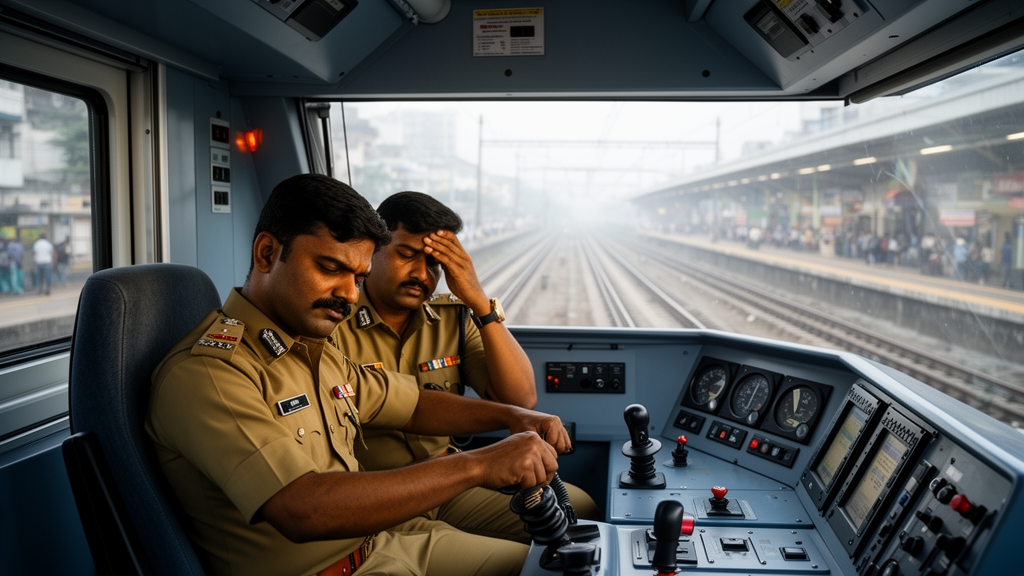
A mixed-methods study of 287 railway locomotive pilots in Bengaluru, India, found that 34.2% reported mild-to-severe work stress and 50.9% screened positive for psychological distress. Published in BMC Psychology, the study combined standardized screening with interviews to examine occupational stress, coping and workplace support among a workforce that operates trains under prolonged, irregular and high-pressure schedules.
Researchers assessed work-related stress using the 16-item Tool to Assess and Classify Work Stress, known as TAWS-16, and measured psychological distress with the 10-item Kessler Psychological Distress Scale, or K10. The survey also examined whether occupational stress was associated with age, job rank, working hours and shift type. These tools were used for screening, and the reported percentages are screening observations rather than clinical diagnoses.
In the unadjusted analyses, younger age and the rank of Assistant Loco Pilot were associated with higher occupational stress. After statistical adjustment, Assistant Loco Pilot status remained significantly associated with stress: these pilots had more than twice the adjusted odds of occupational stress compared with the reference group, with an adjusted odds ratio of 2.11, a 95% confidence interval of 1.09–4.09 and a p-value of 0.028. Age was no longer statistically significant after adjustment, although its point estimate remained above one: the adjusted odds ratio was 1.70, with a 95% confidence interval of 0.92–3.12 and a p-value of 0.089. Working hours and shift types showed no strong associations in the reported analysis.
Qualitative interviews added detail to the survey findings. The analysis identified four dominant themes: perceived causes of stress, coping strategies, organizational support and suggestions for system-level improvement. Participants identified emotional strain, disrupted sleep, family-related guilt and inadequate support as stressors. Coping strategies ranged from self-care to internalized stress management. Because these accounts came from the interview component, they describe participants’ reported experiences and do not establish how common any particular response was among all 287 pilots.
The authors concluded that existing wellness initiatives were not sufficiently tailored to this workforce and called for role-specific, age-sensitive workplace mental-health interventions and ergonomic reforms in railway operations to reduce long-term occupational health risks. The study focuses on one occupational group in Bengaluru, and its results do not show that the same rates apply to railway workers in other locations. Nor did the research test whether a particular intervention would reduce stress or distress. Its clearest findings are the high screening levels within the studied group, the association between Assistant Loco Pilot status and occupational stress after adjustment, and the interview accounts of sleep disruption, emotional strain, family pressures and support needs.
Subject of Research: Occupational stress and psychological distress among railway locomotive pilots in Bengaluru
Article Title: Occupational stress and psychological distress among railway loco pilots in Bengaluru, India: A mixed-methods study
Article References: Kumari, A., Sekaran, V. C., Tiwari, R. R., Shevade, S., & Prabhu, V. (2026). Occupational stress and psychological distress among railway loco pilots in Bengaluru, India: A mixed-methods study. BMC Psychology. https://doi.org/10.1186/s40359-026-05541-y
Image Credits: AI Generated
DOI: 10.1186/s40359-026-05541-y
Keywords: railway workers, loco pilots, Bengaluru, occupational stress, psychological distress, K10, TAWS-16, job rank, workplace mental health, mixed-methods study, Occupational, stress
Cite Scienmag News
Glenn Wilkins. (October 26, 2026). Bengaluru railway pilots face substantial stress and distress. Scienmag. https://scienmag.com/bengaluru-railway-pilots-face-substantial-stress-and-distress/
Glenn Wilkins. "Bengaluru railway pilots face substantial stress and distress." Scienmag, 26 October 2026, https://scienmag.com/bengaluru-railway-pilots-face-substantial-stress-and-distress/. Accessed 26 October 2026.
Glenn Wilkins. "Bengaluru railway pilots face substantial stress and distress." Scienmag. October 26, 2026. https://scienmag.com/bengaluru-railway-pilots-face-substantial-stress-and-distress/


