

Monday, October 26, 2026
Science
No Result
View All Result
  • Login
  • HOME
  • SCIENCE NEWS
  • CONTACT US
  • HOME
  • SCIENCE NEWS
  • CONTACT US
No Result
View All Result
Scienmag
No Result
View All Result
Home Science News Psychology & Psychiatry

Qualitative interviews reveal adolescents’ perceived mobile phone benefits and harms

October 26, 2026
in Psychology & Psychiatry
Glenn Wilkins
By Glenn Wilkins Scienmag Editorial Profile - Clinical Psychology
Reading Time: 2 mins read
0
Qualitative interviews reveal adolescents’ perceived mobile phone benefits and harms

Qualitative interviews reveal adolescents’ perceived mobile phone benefits and harms

65
SHARES
587
VIEWS
Share on FacebookShare on Twitter
ADVERTISEMENT

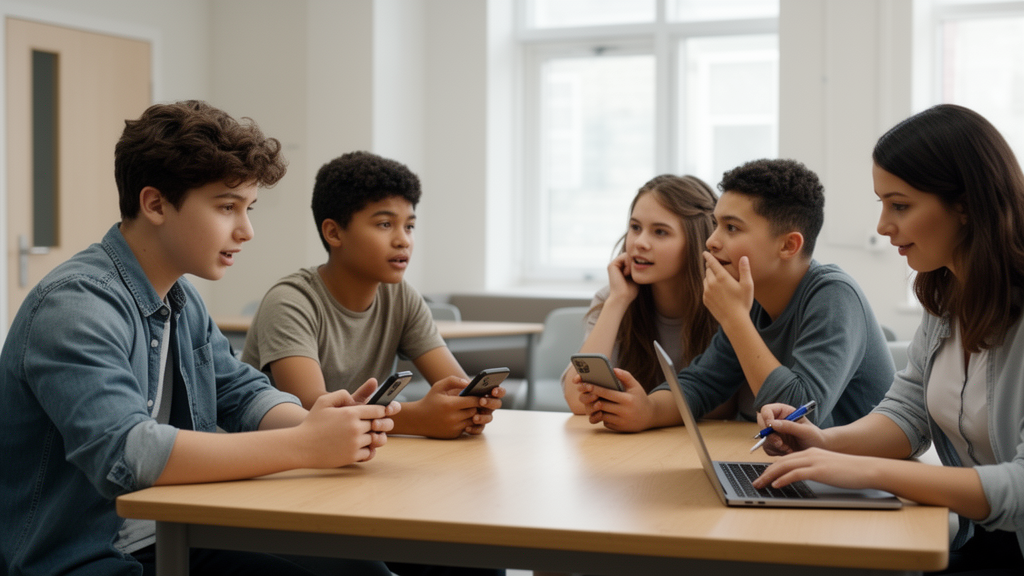
A qualitative study of 40 adolescents aged 13 to 18 found that mobile phones were viewed as useful companions for communication, education and social interaction, but intensive or prolonged use was associated by participants with eye strain, disturbed sleep, posture-related problems, stress, anxiety, social comparison, distraction and reduced physical activity. The research, conducted with adolescents recruited from two urban schools, also identified coping and self-regulation strategies that young people used to manage their phone use. Its findings describe the experiences and perceptions of the interviewed group rather than establishing that phones caused these effects or estimating how widespread the reported problems are among adolescents generally.

Researchers used purposive sampling to recruit participants from two urban schools. They collected data through semi-structured, in-depth interviews about adolescents’ patterns and purposes of mobile phone use and their perceived relationships between phone use and physical, emotional, social, academic and everyday life. Each interview lasted approximately 30 to 40 minutes and was audio-recorded with consent.

The recordings were transcribed and analyzed through thematic analysis following the framework proposed by Braun and Clarke. This qualitative design was intended to explore how adolescents understood and experienced mobile phone use in the context of their daily routines. The thematic analysis identified five broad themes.

The first described mobile phones as multifunctional companions within adolescents’ everyday lives. The second covered perceived physical effects, including eye strain, sleep disturbances and posture-related problems. The third concerned psychosocial and emotional experiences such as stress, anxiety and social comparison.

The fourth captured academic and lifestyle changes associated with prolonged screen time, while the fifth concerned coping and self-regulation strategies adopted by adolescents to manage their mobile phone use. Across these themes, participants recognized the educational and social benefits of phones alongside concerns about distraction, diminished physical activity and disrupted sleep. They described prolonged use as affecting sleep patterns, emotional well-being and academic focus, but these were perceptions reported in interviews rather than experimentally demonstrated causal effects.

The study’s population and scope limit wider interpretation. All 40 participants were adolescents recruited from two urban schools, and purposive selection did not produce a representative sample of all young people. The results therefore offer a detailed account of how this group perceived and negotiated mobile phone use rather than population-level evidence about the prevalence or magnitude of particular behaviors or health outcomes.

The researchers emphasized the dual nature of mobile phone use: the same devices that supported communication, learning and social connection were also experienced as potential sources of interruption, emotional pressure and lost rest. They did not test any such intervention or demonstrate that guidance would change adolescents’ behavior or health outcomes.

Subject of Research: Adolescents’ perceptions of mobile phone use and its effects on daily life

Article Title: Adolescents perceptions and experiences of mobile phone use in everyday life a qualitative inquiry

Article References: Priya, V., T, S., & Shaji J C, H. (2026). Adolescents perceptions and experiences of mobile phone use in everyday life a qualitative inquiry. BMC Psychology. https://doi.org/10.1186/s40359-026-05446-w

Image Credits: AI Generated

DOI: 10.1186/s40359-026-05446-w

Keywords: adolescents, mobile phones, qualitative interviews, screen time, sleep disturbance, eye strain, social comparison, academic focus, digital wellbeing, thematic analysis, perceptions, experiences

Cite Scienmag News

Glenn Wilkins. (October 26, 2026). Qualitative interviews reveal adolescents’ perceived mobile phone benefits and harms. Scienmag. https://scienmag.com/qualitative-interviews-reveal-adolescents-perceived-mobile-phone-benefits-and-harms/


Glenn Wilkins. "Qualitative interviews reveal adolescents’ perceived mobile phone benefits and harms." Scienmag, 26 October 2026, https://scienmag.com/qualitative-interviews-reveal-adolescents-perceived-mobile-phone-benefits-and-harms/. Accessed 26 October 2026.

Glenn Wilkins. "Qualitative interviews reveal adolescents’ perceived mobile phone benefits and harms." Scienmag. October 26, 2026. https://scienmag.com/qualitative-interviews-reveal-adolescents-perceived-mobile-phone-benefits-and-harms/

Tags: academic focusAdolescent mobile phone useadolescentscoping strategies for phone use managementdigital wellbeingeffects of prolonged mobile phone use on adolescent healthexperienceseye strainmobile phone-related stress and anxiety in teenagersmobile phonesperceptionsphysical health problems linked to mobile phone use in adolescentsqualitative interviewsqualitative interviews on phone benefits and harmsqualitative research on youth smartphone habitsscreen timesleep disturbancesocial comparisonsocial comparison and distraction from mobile devicessocial interaction and communication via smartphonesthematic analysisthematic analysis of adolescent interviews on mobile phone experiencesurban school-based study on adolescent mobile phone useyouth perceptions of mobile device impact
Share26Tweet16
Previous Post

Transforming suffering through faith: A phenomenological exploration of spiritual hope among parents of children with disabilities

Next Post

Panel study finds divergent CSR spending among Indian manufacturers

Related Posts

Transforming suffering through faith: A phenomenological exploration of spiritual hope among parents of children with disabilities
Psychology & Psychiatry

Transforming suffering through faith: A phenomenological exploration of spiritual hope among parents of children with disabilities

October 26, 2026
Advanced L2 proficiency linked to distinct ERP responses in metaphor processing
Psychology & Psychiatry

Advanced L2 proficiency linked to distinct ERP responses in metaphor processing

October 26, 2026
UK survey links cognitive distortions, not emotion dysregulation, to IED violence
Psychology & Psychiatry

UK survey links cognitive distortions, not emotion dysregulation, to IED violence

October 26, 2026
Survey links personality, sport commitment and exercise during COVID-19
Psychology & Psychiatry

Survey links personality, sport commitment and exercise during COVID-19

October 26, 2026
Zhongyong thinking and self-control linked to life satisfaction in Chinese students
Psychology & Psychiatry

Zhongyong thinking and self-control linked to life satisfaction in Chinese students

October 26, 2026
Cross-sectional EEG study identifies two adolescent depression subgroups
Psychology & Psychiatry

Cross-sectional EEG study identifies two adolescent depression subgroups

October 26, 2026
Next Post
Panel study finds divergent CSR spending among Indian manufacturers

Panel study finds divergent CSR spending among Indian manufacturers

  • Mothers who receive childcare support from maternal grandparents show more optimized

    Mothers who receive childcare support from maternal grandparents show more parental warmth, finds NTU Singapore study

    27656 shares
    Share 11059 Tweet 6912
  • University of Seville Breaks 120-Year-Old Mystery, Revises a Key Einstein Concept

    1061 shares
    Share 424 Tweet 265
  • Bee body mass, pathogens and local climate influence heat tolerance

    682 shares
    Share 273 Tweet 171
  • Researchers record first-ever images and data of a shark experiencing a boat strike

    546 shares
    Share 218 Tweet 137
  • Groundbreaking Clinical Trial Reveals Lubiprostone Enhances Kidney Function

    531 shares
    Share 212 Tweet 133
Science

Embark on a thrilling journey of discovery with Scienmag.com—your ultimate source for cutting-edge breakthroughs. Immerse yourself in a world where curiosity knows no limits and tomorrow’s possibilities become today’s reality!

RECENT NEWS

  • Japan residency quota simulation finds regional physician disparities largely unchanged
  • Panel study finds divergent CSR spending among Indian manufacturers
  • Qualitative interviews reveal adolescents’ perceived mobile phone benefits and harms
  • Transforming suffering through faith: A phenomenological exploration of spiritual hope among parents of children with disabilities

Categories

  • Agriculture
  • Anthropology
  • Archaeology
  • Athmospheric
  • Biology
  • Biotechnology
  • Blog
  • Bussines
  • Cancer
  • Chemistry
  • Climate
  • Earth Science
  • Editorial Policy
  • Marine
  • Mathematics
  • Medicine
  • Pediatry
  • Policy
  • Psychology & Psychiatry
  • Science Education
  • Science News
  • Social Science
  • Space
  • Technology and Engineering

Subscribe to Blog via Email

Enter your email address to subscribe to this blog and receive notifications of new posts by email.

Join 5,151 other subscribers

© 2025 Scienmag - Science Magazine

Welcome Back!

Login to your account below

Forgotten Password?

Retrieve your password

Please enter your username or email address to reset your password.

Log In
No Result
View All Result
  • HOME
  • SCIENCE NEWS
  • CONTACT US

© 2025 Scienmag - Science Magazine

Discover more from Science

Subscribe now to keep reading and get access to the full archive.

Continue reading