


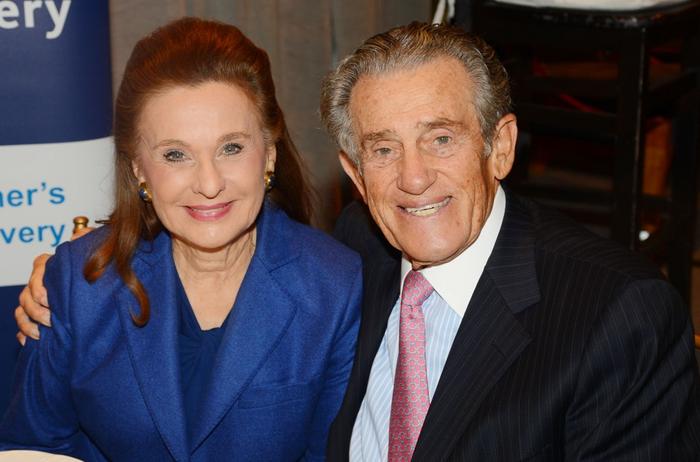
HOUSTON ― Laurence Belfer, on behalf of Robert Belfer and the Belfer family, today announced a $20 million gift to The University of Texas MD Anderson Cancer Center to strengthen neurodegeneration research through the Belfer Neurodegeneration Consortium (BNDC), a transformative multi-institutional initiative to advance the study and treatment of Alzheimer’s disease.

Credit: The Belfer Family
HOUSTON ― Laurence Belfer, on behalf of Robert Belfer and the Belfer family, today announced a $20 million gift to The University of Texas MD Anderson Cancer Center to strengthen neurodegeneration research through the Belfer Neurodegeneration Consortium (BNDC), a transformative multi-institutional initiative to advance the study and treatment of Alzheimer’s disease.
This $20 million commitment brings the Belfer family’s total giving to MD Anderson to
$53.5 million in just over 10 years. Their generous gift will be matched through institutional philanthropic efforts, bringing an additional $20 million to neurodegeneration and other age-associated disease research efforts at MD Anderson.
The research of the BNDC, which is part of MD Anderson’s Therapeutics Discovery division, may also benefit patients with cancer, as cancer shares biological similarities with neurodegenerative diseases and certain cancer treatments are known to cause neural and cognitive impairments.
“Transformative gifts like this have the power to achieve more than we could have ever imagined,” said Peter WT Pisters, M.D., president of MD Anderson. “We are grateful to the Belfer family for their forward-thinking vision and for their renewed investment in the Belfer Neurodegeneration Consortium. Their generosity has and will continue to impact countless lives.”
To commemorate the Belfer family’s generosity, MD Anderson’s South Campus Research Building 4, a 208,000 sq.-foot research facility located at 1901 East Road in Houston, will be renamed “The Robert A. and Renée E. Belfer Research Building.” The Belfer Building houses laboratories and offices of the BNDC as well as the Therapeutic Discovery division and the departments of Experimental Therapeutics, Cancer Biology, Genomic Medicine and Surgical Oncology Research.
“Since the consortium was formed, we have made tremendous progress in our understanding of the molecular and genetic basis of neurodegenerative diseases and in translating those findings into effective targeted drugs and diagnostics for patients,” said Jim Ray, Ph.D., executive director, Belfer Neurodegeneration Consortium. “Yet, we still have more work to do. Alzheimer’s disease is already the most expensive disease in the United States. As our population continues to age, addressing quality-of-life issues and other challenges of treating and living with age-associated diseases must become a priority.”
With this latest gift, the Belfer family aims to do just that.
“We want to help aging adults lead better, longer lives,” said Belfer. “My family strongly believes in the work being done at MD Anderson through the Belfer Neurodegeneration Consortium to help those with Alzheimer’s and other forms of neurodegenerative diseases. We are proud to put our name behind this collaborative effort that will impact generations to come.”
Belfer Neurodegeneration Consortium to advance novel therapeutic strategies
Formed in 2012, the BNDC is a multi-institutional initiative between MD Anderson, Massachusetts Institute of Technology (MIT), Icahn School of Medicine at Mount Sinai, Baylor College of Medicine, among others. The consortium was established to gain a deeper understanding of neurodegenerative disease biology and translate those findings into effective therapeutic interventions.
The BNDC is a core component of MD Anderson’s Therapeutics Discovery division, which unites scientists, clinicians and drug development experts to eliminate the bottlenecks stifling traditional drug discovery. Driven by unparalleled proximity to patients and unmatched clinical and research expertise, Therapeutics Discovery and the BNDC can advance effective new therapies in ways not possible elsewhere.
Building upon early successes, the BNDC aims to develop five new medicines for Alzheimer’s disease and related disorders over the next 10 years, with the goal for two treatments to demonstrate clinical efficacy.
“Our goal is ambitious, but having access to the vast clinical trial expertise at MD Anderson ensures our therapeutics can improve the lives of patients everywhere,” Ray said. “The key elements for success are in place: a powerful research model, a winning collaborative team and a robust translational pipeline, all in the right place at the right time.”
MD Anderson researchers are working through its Cancer Neuroscience Program to explore the intersection between neurological disease and cancer. The work of the BNDC helps inform the Cancer Neuroscience Program, positioning the institution to make maximal impact on patients with cancer.
Read this press release on MD Anderson’s Philanthropy Newsroom.
Cite Scienmag News
Diana Fleming. (May 6, 2024). Belfer family’s $20 million donation invigorates neurodegeneration research at MD Anderson. Scienmag. https://scienmag.com/belfer-familys-20-million-donation-invigorates-neurodegeneration-research-at-md-anderson/
Diana Fleming. "Belfer family’s $20 million donation invigorates neurodegeneration research at MD Anderson." Scienmag, 6 May 2024, https://scienmag.com/belfer-familys-20-million-donation-invigorates-neurodegeneration-research-at-md-anderson/. Accessed 4 September 2026.
Diana Fleming. "Belfer family’s $20 million donation invigorates neurodegeneration research at MD Anderson." Scienmag. May 6, 2024. https://scienmag.com/belfer-familys-20-million-donation-invigorates-neurodegeneration-research-at-md-anderson/

