


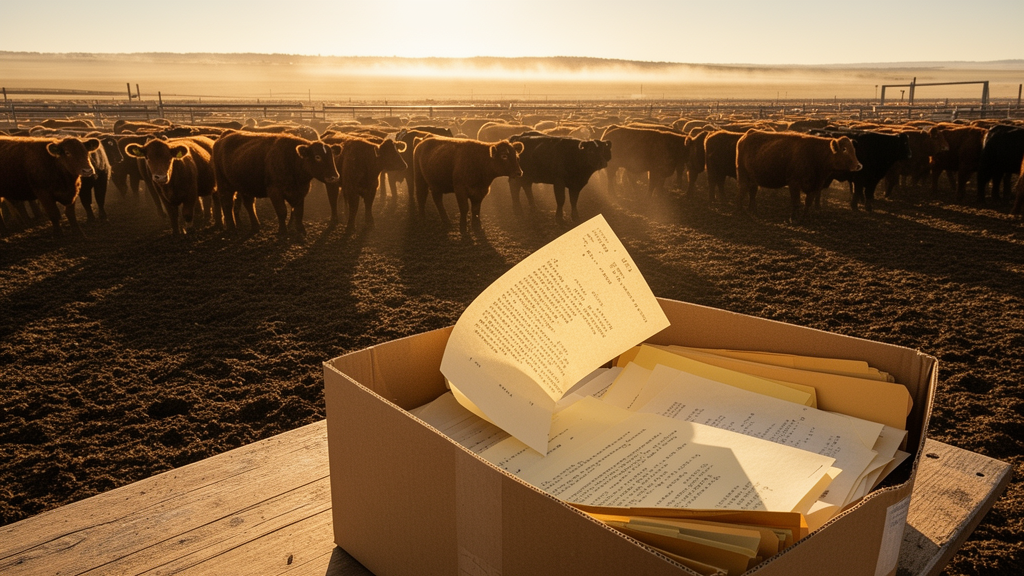
More than three decades before plant-based burgers became a supermarket staple and livestock methane became a fixture of climate negotiations, the United States beef industry was already grappling with the science linking cattle to global warming. A new archival study published in the journal PLOS Climate documents how the National Cattlemen’s Association, one of the most influential agricultural trade groups in the country, understood by 1989 that cattle contributed to the warming of the planet, yet chose to respond not by pursuing emissions reductions but by defending consumer demand for beef through a sustained public relations campaign. The research, conducted by Jennifer Jacquet, a professor of environmental science and policy at the University of Miami Rosenstiel School of Marine, Atmospheric, and Earth Science, and postdoctoral researcher Loredana Loy, draws on a decade of internal industry records to reconstruct how an agricultural trade association confronted emerging climate science at a remarkably early stage.
The scientific backdrop to the study is the growing recognition, through the mid-1980s, that methane was a far more potent heat-trapping gas than had previously been appreciated. Molecule for molecule, methane absorbs infrared radiation far more effectively than carbon dioxide over the near term, making it a powerful driver of warming despite its shorter atmospheric lifetime. Ruminant animals such as cattle produce methane as a byproduct of enteric fermentation, the digestive process in which microbes in the rumen break down fibrous plant material, and additional emissions arise from manure management. As studies increasingly identified livestock as a significant methane source, discussions of responsibility for global warming, which had centered overwhelmingly on fossil fuels, began to broaden to include agriculture. It was this shifting scientific conversation that the National Cattlemen’s Association found itself responding to in the late 1980s.
A pivotal moment came in February 1989, when an association representative attended a workshop convened by the United States Environmental Protection Agency that examined livestock methane emissions and, crucially, options for reducing them. The report that emerged from that workshop identified concrete technical measures that could lower emissions, including changes to feeding practices, the use of feed additives, and improved manure management. The researchers emphasize that the association therefore had knowledge, from an authoritative governmental source, that both the problem and potential solutions existed. Rather than investing in those solutions, however, the organization later that year developed an environmental strategic plan whose stated aims included countering criticism of the cattle industry, commissioning papers from scientific and technical experts, and promoting a positive environmental image for beef production.
Jacquet and Loy documented a set of communications strategies that will look familiar to anyone who has studied the public relations history of the fossil fuel and tobacco industries. According to the records, the association monitored environmental groups and news coverage, hired academic experts to produce reports and to serve as spokespeople, distributed talking points that minimized cattle’s contribution to global warming, and challenged the credibility of advocates who encouraged consumers to change their diets. The through line, the researchers argue, was a focus on shaping what the public heard about beef and climate, and specifically on countering the idea that eating less beef could be a meaningful climate action. In the words of Jacquet, the records show that the trade association understood the issue and knew that options to reduce methane emissions existed, but its response centered on public messaging rather than on the emissions themselves.
One of the most striking examples documented in the study is a widely circulated industry-sponsored estimate that placed the contribution of United States beef cattle at just 0.5 percent of global methane emissions. When the researchers examined the figure, they found it difficult to reproduce from the underlying data. More importantly, they found that the number had been constructed in a way that made the American cattle industry’s contribution appear as small as possible: by measuring United States beef cattle against worldwide methane emissions from all sources, including both human activities and natural sources such as wetlands. Critics of such framing note that comparing a single national industry against the entire global total, natural emissions included, obscures the proportion of anthropogenic warming attributable to that industry, and the researchers suggest the figure functioned as a rhetorical device rather than a transparent accounting.
The public relations effort extended well beyond statistical framing. The association promoted cattle producers as environmental stewards through advertisements and outreach materials, and for Earth Day in 1990 it spent one hundred thousand dollars on full-page newspaper advertisements that, according to the records reviewed in the study, reached an estimated twenty million people. Meanwhile, although some of the reports the association commissioned did mention that methane could be reduced through changes in feeding practices, the researchers found no evidence in the association’s own materials that it researched or promoted such practices. The gap between what the industry knew was technically possible and what it actually pursued is, for the authors, one of the central findings of the archival record.
The evidence base for these conclusions is substantial, though the authors are careful about its limits. For the analysis, the researchers collected 154 internal organizational documents held at the American Heritage Center at the University of Wyoming, of which 123 date from the study period between 1986 and 1996. They supplemented the archive with additional archival material, news coverage, and government and other reports. The window they examined closes in 1996, when the National Cattlemen’s Association transitioned into the National Cattlemen’s Beef Association, the organization that remains the industry’s principal trade group today. The authors caution that the archive does not contain all internal records, and they note that their findings do not establish whether individual ranchers or companies independently pursued emissions reductions on their own initiative during this period.
Even with those caveats, the study adds an important new dimension to the scholarly literature on how industries have responded to climate science. Previous archival work has documented in detail how fossil fuel companies understood the warming implications of their products decades ago while funding doubt and delay, and how tobacco manufacturers manufactured uncertainty about the health harms of smoking. The cattle industry case shares many of the same communications techniques, including the deployment of sympathetic experts, the minimization of harm through favorable statistics, and the framing of critics as unreliable. What distinguishes the beef case, the researchers argue, is its distinct focus on opposing voluntary changes in consumer diets. Because the industry’s core vulnerability was the possibility that shoppers might simply eat less beef, its response was oriented less toward defending production itself and more toward protecting demand, making dietary advocacy a particular target of its messaging.
The historical significance of the study lies partly in its timing. The period from 1986 to 1996 sits at the dawn of modern climate politics, spanning the establishment of the Intergovernmental Panel on Climate Change, the negotiation of the United Nations Framework Convention on Climate Change, and the first Conference of the Parties. That a major agricultural trade association was already monitoring the issue, attending federal workshops on livestock methane, and drafting environmental strategic plans in 1989 demonstrates that the climate implications of food production were on industry agendas far earlier than public debates about diet and climate would suggest. As Jacquet observed, this history expands our understanding of how industries responded to early climate science, and the trade association’s main concern, the possibility that consumers would change what they ate, helps explain why its response centered on public messaging.
The research was supported by University of Miami startup funds provided to Jacquet, and the study, titled Global warming and the National Cattlemen’s Association 1986 to 1996, appeared in PLOS Climate on October 7, 2026. For readers weighing the modern debate over livestock and climate, the study offers a reminder that the arguments now circulating about the scale of agriculture’s methane footprint have deep roots, and that some of the framing devices in use today were being refined in industry offices more than thirty years ago. It also underscores a broader lesson from the archival record of corporate responses to science: the technical means of reducing emissions often exist well before they are adopted, and the decisive variable is frequently not knowledge but the economic interest of the industries that hold it. In the case of American beef, the documents suggest, that interest was understood early, articulated clearly, and defended with considerable resources.
Subject of Research: Historical analysis of the U.S. beef industry's public relations response to early climate science on cattle methane emissions
Article Title: Study documents beef industry group’s early efforts to counter climate concerns
Article References: Study documents beef industry group’s early efforts to counter climate concerns. (n.d.). Original publication
Image Credits: AI Generated
DOI: Not provided
Keywords: climate change, methane emissions, beef industry, National Cattlemen's Association, public relations, livestock, climate science history, PLOS Climate, enteric fermentation, dietary change, industry archives, Environmental Protection Agency
Cite Scienmag News
William Thompson. (October 9, 2026). Beef industry knew of cattle’s climate role by 1989, archives reveal. Scienmag. https://scienmag.com/beef-industry-knew-of-cattles-climate-role-by-1989-archives-reveal/
William Thompson. "Beef industry knew of cattle’s climate role by 1989, archives reveal." Scienmag, 9 October 2026, https://scienmag.com/beef-industry-knew-of-cattles-climate-role-by-1989-archives-reveal/. Accessed 9 October 2026.
William Thompson. "Beef industry knew of cattle’s climate role by 1989, archives reveal." Scienmag. October 9, 2026. https://scienmag.com/beef-industry-knew-of-cattles-climate-role-by-1989-archives-reveal/

