


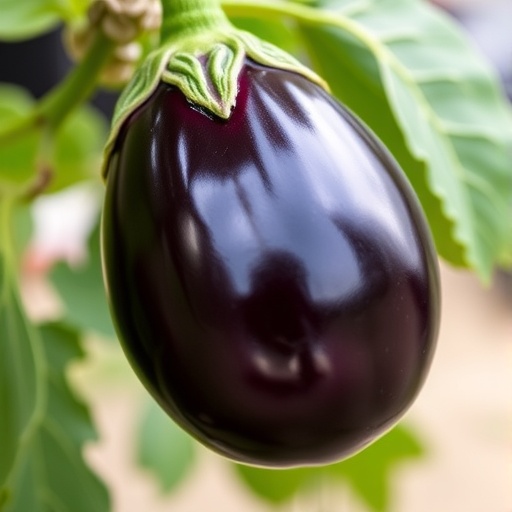
In a transformative leap for agricultural biotechnology, researchers have identified a crucial gene family known as the BBX gene family, which plays a pivotal role in enhancing anthocyanin accumulation in eggplants, scientifically referred to as Solanum melongena. This revelation not only enriches our understanding of plant genetics but also paves the way for developing crops with improved nutritional profiles and aesthetic qualities. The focus of this cutting-edge research is centered around a specific member of the BBX family termed SmBBX5, which stands out for its significant influence on pigment expression.
Anthocyanins are water-soluble pigments that belong to the flavonoid class of compounds. They are responsible for the vibrant colors found in many fruits, vegetables, and flowers, particularly in purple and red variants. These compounds serve numerous ecological and health-related purposes, including attracting pollinators, providing UV protection, and offering antioxidant benefits to human consumers. In the context of eggplants, enhancing anthocyanin levels could not only improve their visual appeal but also increase their marketability and health benefits.
The BBX gene family, which contains a diverse array of genes, has been implicated in various physiological processes in plants, including photomorphogenesis and flowering time regulation. The newly discovered role of the BBX family in anthocyanin biosynthesis represents a substantial advancement in the field of plant genetics. According to the researchers, the SmBBX5 gene was found to be particularly impactful in modulating the molecular pathways responsible for the pigmentation process in eggplants.
Through a series of meticulous experimental stages, the research team, which comprised of prominent scientists including Peng, Luo, and Xu, conducted transcriptomic and proteomic analyses. These analyses helped in elucidating the complex regulatory networks that underlie anthocyanin synthesis. The findings point towards a tightly controlled mechanism where SmBBX5 acts as a transcription factor, ultimately promoting the expression of key genes involved in the biosynthetic pathway leading to anthocyanin production.
One of the groundbreaking aspects of this study is its implications for agricultural practices. With the escalating global demand for healthier food options and the growing consumer awareness regarding plant-based nutrition, the enhancement of anthocyanin content in food crops can play a crucial role. By leveraging genetic tools and biotechnological advancements, it becomes possible to engineer crops that not only thrive in diverse growing conditions but also possess enhanced nutritional profiles—an outcome that is increasingly sought after in modern agriculture.
Furthermore, the research delves into the relevance of environmental factors in the modulation of gene expression. The team discovered that light intensity, temperature, and other abiotic stresses significantly influence the activity of the SmBBX5 gene and subsequently the accumulation of anthocyanins. Understanding how these external factors interact with genetic components will be critical in developing robust strategies for crop improvement.
In addition to agricultural applications, this research contributes to the broader field of plant biology by unveiling the intricate balance between genetic regulation and environmental influence. The study highlights the importance of integrated approaches that combine gene identification with phenotypic assessment to achieve desired traits in plant species.
Aside from the practical implications for agriculture, the identification of SmBBX5 and its role in anthocyanin metabolism opens up exciting new avenues for research. Future studies could investigate the functional mechanisms of other members of the BBX gene family, potentially uncovering additional regulators that could be targeted for crop improvement. Moreover, this foundational knowledge could be leveraged in the development of genetically modified organisms (GMOs) that meet specific market or environmental requirements.
The landscape of plant genetic research is rapidly evolving, with new methodologies and technologies emerging consistently. The integration of CRISPR/Cas9 gene-editing techniques, for instance, offers unprecedented precision in modifying plant genomes. The findings about the SmBBX5 gene could serve as a crucial reference point for scientists aiming to utilize these advanced approaches in crop enhancement programs.
This groundbreaking discovery not only reinforces the importance of fundamental genetic research but also emphasizes the need for interdisciplinary collaboration. By bridging the gap between molecular biology, genetics, and agronomy, scientists can create sustainable practices to meet the future food demands of a growing population. The journey from a simple genetic identification to practical applications in crop production illustrates the intricate relationship between science and real-world benefits.
Moreover, as the research community continues to unravel the complexities of plant genomes, the emphasis on sustainable practices is paramount. The cultivation of crops with enhanced nutritional profiles without relying heavily on chemical fertilizers and pesticides is a cornerstone of sustainable agriculture. The SmBBX5 gene findings add to the toolkit available for achieving these goals, promising not only better food quality but also enhanced environmental sustainability.
In summary, the identification of the BBX gene family, particularly SmBBX5, marks a significant milestone in the genetic study of eggplants. This research not only enhances color and nutritional value but opens new paths for future agricultural innovations. As scientists continue to deepen their understanding of plant genetics, the implications for sustainable agriculture and improved human health become increasingly profound.
In conclusion, the trajectory of this research could represent a turning point in agricultural biotechnology. The strategies formulated from understanding the BBX gene family will undoubtedly unlock new potentials in other crops as well. With continuous exploration and application of genetic advancements, the future of agriculture may very well be rooted in the foundational discoveries made from studies like that of the BBX family in eggplants.
Peng, X., Luo, X., Xu, X. et al. Identification of the BBX gene family and SmBBX5 positively regulate anthocyanin accumulation in eggplant (Solanum melongena L.). BMC Genomics (2025). https://doi.org/10.1186/s12864-025-12410-2
Cite Scienmag News
Juliet Wilcox. (December 19, 2025). BBX Gene Family Boosts Anthocyanin in Eggplant. Scienmag. https://scienmag.com/bbx-gene-family-boosts-anthocyanin-in-eggplant/
Juliet Wilcox. "BBX Gene Family Boosts Anthocyanin in Eggplant." Scienmag, 19 December 2025, https://scienmag.com/bbx-gene-family-boosts-anthocyanin-in-eggplant/. Accessed 4 September 2026.
Juliet Wilcox. "BBX Gene Family Boosts Anthocyanin in Eggplant." Scienmag. December 19, 2025. https://scienmag.com/bbx-gene-family-boosts-anthocyanin-in-eggplant/


