


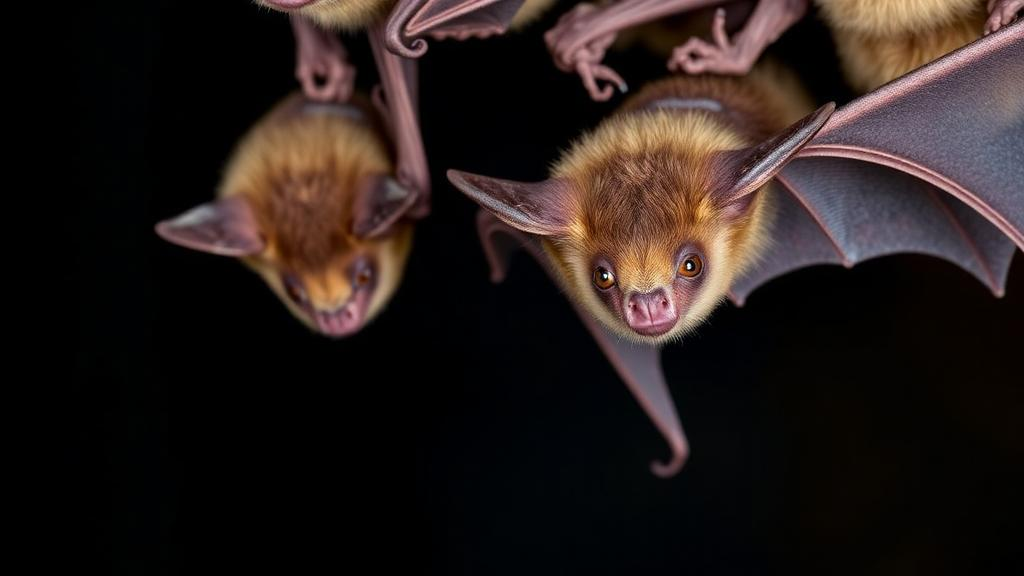
In the rolling plantation landscapes of South Africa, where macadamia trees bear one of the most expensive nuts on the planet, an international research team led by the University of Göttingen has uncovered a quiet alliance between agriculture and wildlife. Their study, published in the journal Agriculture, Ecosystems and Environment, demonstrates that the nocturnal activity of bats is one of the most powerful natural defenses macadamia farmers have against insect pests. The higher the level of bat activity recorded over the orchards, the researchers found, the lower the incidence of pest infestation on the trees. At the same time, yields climbed in landscapes that retained a greater share of their natural vegetation, a finding that carries significant implications for how agricultural land is planned and managed in one of the world’s most lucrative nut-producing regions.
The macadamia is not an ordinary crop. Labour-intensive harvesting and complex post-harvest processing make it one of the costliest nuts in the global market, which means that every percentage point of yield lost to insects translates into substantial economic damage. Protecting the trees from pests is therefore a central concern for growers, and the conventional response has often been intensive chemical or mechanical intervention. The new research suggests that an alternative, ecologically grounded strategy may already be flying overhead every night. By examining how natural vegetation in and around plantations shapes the communities of birds and bats that forage among the trees, the team set out to quantify the pest control services these animals provide and to identify the landscape features that sustain them.
The study was conducted at ten intensively managed macadamia plantations in South Africa, a design that allowed the researchers to capture variation in both management intensity and surrounding land cover. At each site, the team compared trees growing at the edge of the plantation with trees in the centre, a comparison specifically chosen to analyse the influence of the surrounding vegetation on the animals visiting the crop. Edge trees sit closer to hedgerows, forest fragments and other natural features, while central trees are embedded more deeply within the monoculture, so any systematic differences in pest damage or animal communities between the two positions can reveal how strongly the wider landscape shapes what happens inside the orchard.
Surveying the fauna required two very different techniques. The researchers recorded 111 bird species through direct observation, walking the orchards and documenting the birds foraging among the trees. Bats, being nocturnal and difficult to observe visually, were detected through their echolocation calls, which were captured with acoustic recording equipment and used to identify 16 species. This acoustic monitoring allowed the team to build a detailed picture of which bat species were active over the plantations, how their activity varied between sites, and how that variation related to the structure of the surrounding landscape and the level of insect damage measured on the nuts.
The results pointed clearly to bats as the dominant pest control agents in the system. Bat activity was associated with reduced insect damage, and this effect was particularly pronounced in plantations that contained less natural habitat within their boundaries or were surrounded by natural habitat in the wider landscape. Natural habitat, in the sense used by the researchers, includes native forests, bushland and scrubland, the heterogeneous vegetation types that provide roosting sites, foraging grounds and refuge for insectivorous bats. In landscapes where these features persisted, the bats appeared to compensate for the scarcity of on-farm natural cover, patrolling the orchards and suppressing the insect populations that would otherwise feed on the developing nuts.
To test the contribution of flying vertebrates directly, the team conducted exclusion trials, a classic experimental approach in which nets are used to keep birds and bats away from the trees. The outcome was striking. When birds and bats were excluded, the proportion of nuts damaged by insects rose from 6.2 per cent to 10.7 per cent, an increase of roughly 70 per cent. This experiment provides some of the most direct evidence that these animals deliver a measurable, economically meaningful service to macadamia growers. Intriguingly, however, the researchers could not demonstrate a direct influence of bird numbers on pest infestation, suggesting that in this system the nocturnal bats, rather than the diurnal birds, carry the primary burden of biological pest control.
The landscape context proved to matter in more ways than one. As the proportion of natural habitats around the plantations increased, not only did the number of bats rise, but their diversity increased as well, indicating that intact vegetation supports a richer community of these aerial predators rather than merely a larger one dominated by a few generalist species. Even the yield of the macadamia trees was linked to the share of natural habitat in the landscape, reaching its highest level when natural habitats accounted for around 60 per cent of the surrounding area. This peak suggests a non-linear relationship in which a substantial but not exclusive share of natural cover best supports the ecological processes, from pest suppression to pollination, that underpin crop production.
Bird communities, by contrast, responded to fine-scale structure within the plantations rather than to the broader landscape. The researchers found that the species assemblages differed between the edges and the centres of the orchards: species that prefer dense and woody vegetation were more common at the plantation edges, while species of open habitats predominated in the interior. This edge-to-centre gradient shows that even within a single intensively managed plantation, the arrangement of vegetation creates distinct niches for different bird species, and it hints that the conservation value of an orchard depends not only on what surrounds it but also on how its own internal habitat mosaic is structured.
The implications extend well beyond macadamia. Lead author Dr Mina Anders of the Department of Functional Agrobiodiversity and Agroecology at the University of Göttingen emphasised the broader message of the findings. Natural habitats, she explained, are valuable refuges that support beneficial organisms providing pollination and pest control, which in turn benefits agricultural production and the farmers who depend on it. It is therefore essential, she argued, that natural habitats and their conservation are incorporated into the planning of agricultural land. In other words, the patches of native forest, bushland and scrubland that persist between and around fields should not be viewed as idle or expendable land, but as functional infrastructure that actively contributes to farm productivity.
For a crop as valuable as the macadamia, the economics of this ecological service are compelling. A 70 per cent increase in insect-damaged nuts when bats and birds are excluded illustrates how quickly quality, and with it market value, deteriorates without these natural allies. The study thus highlights a form of agriculture that combines biodiversity with production, in which conserving natural vegetation within and around farmland is not a concession to environmental ideals but a practical investment in yield and nut quality. As global demand for macadamias continues to grow, the research offers growers and land-use planners a concrete, evidence-based reason to protect the forests and scrublands that shelter the bats working the night shift over South Africa’s orchards, and it adds macadamia plantations to the growing list of cropping systems where the fate of the harvest is quietly tied to the health of the surrounding landscape.
Subject of Research: The role of bats, birds and natural habitat in biological pest control in macadamia orchards
Article Title: Bats as a form of biological pest control
Article References: Bats as a form of biological pest control. (n.d.). Original publication
Image Credits: AI Generated
DOI: Not provided
Keywords: bats, biological pest control, macadamia, South Africa, agroecology, natural habitat, biodiversity, bird communities, echolocation, crop yield, landscape management, University of Göttingen
Cite Scienmag News
Alan Morgan. (October 6, 2026). Bats Emerge as Secret Guardians of the World’s Most Expensive Nut. Scienmag. https://scienmag.com/bats-emerge-as-secret-guardians-of-the-worlds-most-expensive-nut/
Alan Morgan. "Bats Emerge as Secret Guardians of the World’s Most Expensive Nut." Scienmag, 6 October 2026, https://scienmag.com/bats-emerge-as-secret-guardians-of-the-worlds-most-expensive-nut/. Accessed 6 October 2026.
Alan Morgan. "Bats Emerge as Secret Guardians of the World’s Most Expensive Nut." Scienmag. October 6, 2026. https://scienmag.com/bats-emerge-as-secret-guardians-of-the-worlds-most-expensive-nut/


