


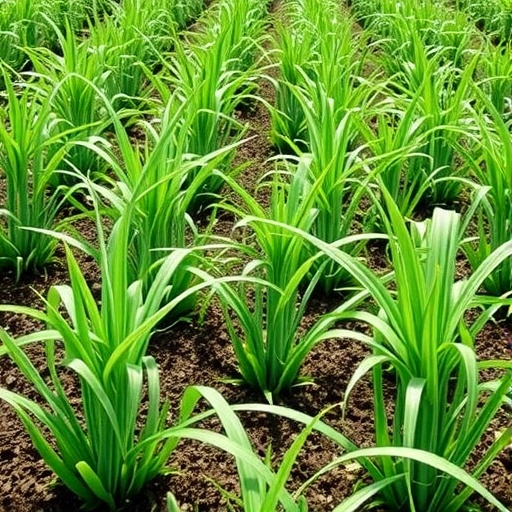
In recent scientific explorations, researchers have meticulously examined the development, growth, and seed dormancy of Barnyardgrass (Echinochloa crus-galli), a species known for its adaptability to varying water regimes. This investigation sheds light on critical variations between resistant and susceptible varieties of this perennial weed, which presents substantial implications for agricultural weed management strategies. The study reveals how water availability significantly influences physiological and developmental parameters in these grass types, potentially altering their competitive relationships with crops.
Barnyardgrass is notorious for its resilience, often thriving in less-than-ideal growing conditions. This adaptability has made it a primary target for research, as understanding its growth dynamics under different water conditions can lead to enhanced crop performance and management tactics. The researchers emphasize that deciphering the ecological and biological intricacies of Barnyardgrass is essential for formulating effective weed control measures, particularly in regions prone to drought or water scarcity.
The research conducted by Thomasi and colleagues involved comprehensive field and controlled environment studies to evaluate the physiological characteristics of both resistant and susceptible Barnyardgrass varieties. These experiments aimed to delineate how variations in soil moisture levels impact seed germination, growth rates, and subsequent development of the plants. By establishing a robust understanding of these responses, the authors seek to inform agricultural practices that mitigate the advantages this weed often possesses over cultivated crops.
One of the primary focuses of the study was the impact of water availability on seed dormancy. The researchers found that different water regimes resulted in distinct patterns of germination rates and dormancy periods. This finding is particularly salient in agricultural settings, where crop yields can be severely affected by the timing of weed emergence relative to that of the crops in which they are situated. The results underscore the importance of tailoring water management strategies to not only support crop productivity but also to suppress the emergence of weeds.
In-depth analyses revealed that the physiological responses of resistant and susceptible Barnyardgrass varieties vary significantly when subjected to differing water stresses. The resistant variety exhibited advanced growth traits and greater germination rates under optimal moisture levels compared to its susceptible counterpart. Such findings highlight the evolutionary adaptations that allow certain varieties to thrive even as water supply diminishes.
As the climate continues to shift, the frequency and intensity of drought-like conditions are expected to rise. Understanding the mechanisms by which Barnyardgrass adapts to these changes is paramount for agronomists and land managers alike. The study articulates the need for developing weed control strategies that consider these environmental pressures, advocating for an integrated approach to weed management that incorporates ecological understanding into traditional agricultural practices.
Furthermore, the intricate relationship between growth, reproduction, and seed dormancy becomes clearer through this research. The authors emphasize that managing the water supply is not merely about irrigation practices but also involves understanding how these practices influence the overall physiological health of both crops and their weed competitors. The findings suggest that proactive management strategies can mitigate the competitive advantages of Barnyardgrass by manipulating water availability.
In an era of precision agriculture, this research offers insights into how farmers can implement data-driven decision-making regarding water usage. Making informed choices about irrigation timing and the quantity of water allocated could shift the competitive dynamics between crops and Barnyardgrass, fostering healthier crop stands and reducing the need for chemical herbicides. Such measures could ultimately lead to more sustainable agricultural practices that align with environmental conservation goals.
The significance of this study extends beyond the immediate implications for Barnyardgrass; it provides a framework for investigating other agronomic weeds and their response to shifting environmental conditions. Researchers are encouraged to explore similar studies with various weed species, as understanding the mechanistic responses under different hydrological stresses may pave the way for broader agricultural advancements. This approach could ultimately lead to enhanced resilience against weeds across diverse agroecosystems.
In conclusion, the insights derived from this extensive research contribute to the foundational body of knowledge surrounding Barnyardgrass and its management under fluctuating water conditions. The authors’ findings advocate for an integration of ecological understanding with practical agricultural techniques, providing a roadmap for enhancing crop resilience and suppressing weed growth. This research serves as a testament to the significance of studying plant responses to environmental variability, particularly in light of the ongoing challenges posed by climate change.
Research like this brings attention to the vital intersection of weed biology and agricultural practice, underscoring the pressing need for innovative strategies in managing this pervasive species. As the scientific community continues to decode the complexities of Barnyardgrass and other resilient weeds, the implications for future food security and sustainable farming practices remain profound. In a world where agricultural performance must continually adapt to changing conditions, understanding the nuances of plant adaptability is more important than ever.
The future of agriculture may rely heavily on this kind of foundational research, paving the way for new methodologies that prioritize ecological balance while maximizing productivity. We must continue to engage with the complexities of species like Barnyardgrass, appreciating their role within the agricultural tapestry and acknowledging the need for resilience in our farming systems moving forward. As these conversations continue, we can remain hopeful that science will lead us towards innovative solutions that benefit both crop and environmental health.
Thomasi, R.M., Wesz, A.M., Rubert, J. et al. Development, growth and seed dormancy of resistant and susceptible Barnyardgrass under two water regimes.
Discov. Plants 2, 251 (2025). https://doi.org/10.1007/s44372-025-00333-x
Cite Scienmag News
Alan Morgan. (August 29, 2025). Barnyardgrass Resistance: Growth in Varying Moisture Conditions. Scienmag. https://scienmag.com/barnyardgrass-resistance-growth-in-varying-moisture-conditions/
Alan Morgan. "Barnyardgrass Resistance: Growth in Varying Moisture Conditions." Scienmag, 29 August 2025, https://scienmag.com/barnyardgrass-resistance-growth-in-varying-moisture-conditions/. Accessed 3 September 2026.
Alan Morgan. "Barnyardgrass Resistance: Growth in Varying Moisture Conditions." Scienmag. August 29, 2025. https://scienmag.com/barnyardgrass-resistance-growth-in-varying-moisture-conditions/


