


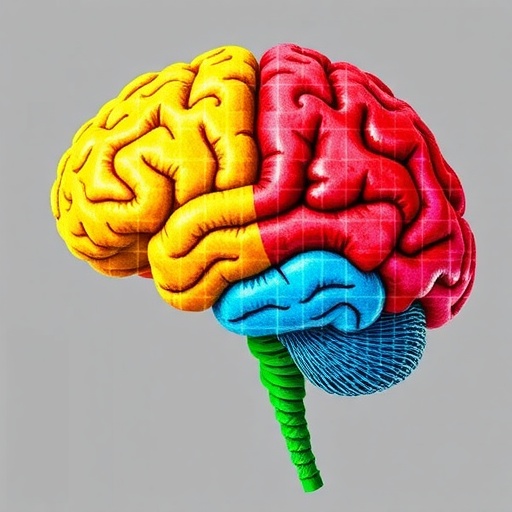
In a groundbreaking study published in Nature Neuroscience, researchers have unveiled a transformative approach to understanding autism spectrum disorder (ASD) by identifying distinct subtypes through innovative cross-species functional connectivity analyses. This research marks a pivotal leap in autism research, offering unprecedented insights into the neural mechanisms underpinning this complex neurodevelopmental condition and opening new avenues for personalized therapies.
The core of this study revolves around functional connectivity—the patterns of communication and synchronization between different brain regions—as a key to differentiating autism subtypes. By employing advanced neuroimaging techniques and sophisticated computational models, the researchers integrated human brain connectivity data with analogous datasets derived from animal models, creating a bridge between species that had long been a conceptual hurdle in neuroscience.
Traditionally, autism has been viewed as a monolithic spectrum characterized by a wide but overlapping range of behavioral and cognitive symptoms. However, this approach often fails to account for the profound heterogeneity observed within the ASD population. The team’s work challenges this notion by demonstrating that intrinsic differences in brain network connectivity correspond to distinct biological subtypes of autism, each with its own neural signature.
To achieve this, the researchers first aggregated large-scale functional MRI datasets from individuals diagnosed with ASD, capturing their brain connectivity profiles under resting-state conditions. Concurrently, they analyzed functional connectivity patterns in rodents specifically engineered to exhibit autism-like behaviors. This animal model data was not only critical for investigating causative genetic and circuit-level factors but also provided a comparative template against which human connectivity patterns were mapped.
One of the remarkable methodological innovations was the use of cross-species alignment algorithms. These computational techniques allow for the translation of neural connectivity patterns across species boundaries by identifying conserved brain network motifs despite anatomical divergences. Such alignment is essential because, while rodent and human brains are structurally dissimilar, certain connectivity principles remain evolutionarily conserved and functionally relevant.
Through this rigorous cross-species framework, the study identified at least three neurofunctional subtypes of autism, each characterized by unique patterns of hypo- or hyper-connectivity within critical brain systems. For instance, one subtype demonstrated reduced connectivity in networks associated with social cognition and emotional processing, aligning with clinical features such as social withdrawal and difficulties in empathy. Another subtype exhibited aberrant connectivity in sensorimotor circuits, potentially explaining repetitive behaviors frequently observed in ASD.
Importantly, these subtypes were not merely theoretical constructs but showed significant correspondence with behavioral phenotypes and differential gene expression profiles in both humans and animal models. This convergence of multimodal data strengthens the validity of the subtyping approach and underscores the intricate biological basis of autism heterogeneity.
Beyond the scientific insights, the implications for clinical practice are profound. Currently, autism diagnosis and intervention strategies are largely based on broad behavioral criteria, which often lead to generalized treatments with variable efficacy. Identifying neurofunctional subtypes paves the way for precision medicine in autism, whereby interventions can be tailored based on an individual’s specific brain connectivity profile, potentially enhancing therapeutic outcomes.
Moreover, the cross-species methodology offers a powerful platform for preclinical testing of interventions within biologically relevant animal models that correspond to human autism subtypes. This bidirectional translational pipeline speeds up the identification of novel pharmacological targets and enables more accurate prediction of treatment responses before clinical trials in humans.
The study’s emphasis on functional brain connectivity also highlights the dynamic nature of autism’s neurobiology. Unlike purely structural biomarkers, functional connectivity patterns may reflect ongoing neural plasticity and could be modifiable through environmental interventions or targeted neuromodulation techniques such as transcranial magnetic stimulation. Thus, subtype identification is not only diagnostic but could inform real-time monitoring of treatment efficacy.
Technically, the research leveraged state-of-the-art machine learning algorithms, including unsupervised clustering and graph theoretical analyses, to dissect complex connectivity matrices into meaningful subnetworks. These computational approaches enabled the distillation of high-dimensional neuroimaging data into interpretable models that reveal how distributed brain networks differ systematically between subtypes.
Importantly, the team validated their findings against multiple independent cohorts, ensuring robustness and generalizability of the subtyping scheme across diverse populations. Additionally, the integration of genetic data, such as transcriptomic profiles, strengthens the biological plausibility of the connectivity-defined subtypes, linking them to underlying molecular pathways.
The use of resting-state functional MRI (rs-fMRI) as the primary modality also signifies a practical move towards scalable diagnostics, given rs-fMRI’s non-invasiveness and feasibility in clinical settings—even among populations with limited capacity for task engagement, such as young children or individuals with severe ASD.
This study also underscores an emerging paradigm shift in neuroscience—a move towards integrative cross-species approaches to better understand human brain disorders. By breaking down barriers between preclinical and clinical research domains, such strategies enrich the translational potential of findings and foster holistic models of brain function and dysfunction.
While the study represents a major advance, the authors note the necessity for longitudinal investigations to ascertain how these subtypes evolve over developmental time and respond to different interventions. The dynamics of brain connectivity in autism remain an open frontier, and understanding temporal trajectories will be crucial for realizing truly personalized medicine.
Furthermore, the researchers advocate for expanding cross-species analyses to include primate models, which share even greater anatomical and functional homology with humans. Such efforts could refine the subtleties of autism subtypes further and aid in developing therapeutic strategies with higher translational fidelity.
In summary, this landmark research harnesses the power of cross-species functional connectivity analysis to disentangle the enigmatic heterogeneity of autism spectrum disorder. By revealing neurobiologically distinct subtypes, it charts a course toward personalized diagnosis and targeted treatment, ultimately aiming to improve the quality of life for millions affected worldwide. The fusion of cutting-edge neuroimaging, computational neuroscience, and comparative biology exemplifies the evolutionary future of brain disorder research—one where complexity is embraced and precision is paramount.
As the field moves forward, this integrative approach could soon become a blueprint for tackling other neuropsychiatric disorders marked by heterogeneity and elusive mechanisms, including schizophrenia, bipolar disorder, and major depression. Autism, with its diverse presentations and profound impact, stands at the forefront of this transformative scientific endeavor.
Cite Scienmag News
Cassandra Pierce. (May 15, 2026). Autism Subtypes Revealed Through Cross-Species Brain Mapping. Scienmag. https://scienmag.com/autism-subtypes-revealed-through-cross-species-brain-mapping/
Cassandra Pierce. "Autism Subtypes Revealed Through Cross-Species Brain Mapping." Scienmag, 15 May 2026, https://scienmag.com/autism-subtypes-revealed-through-cross-species-brain-mapping/. Accessed 5 September 2026.
Cassandra Pierce. "Autism Subtypes Revealed Through Cross-Species Brain Mapping." Scienmag. May 15, 2026. https://scienmag.com/autism-subtypes-revealed-through-cross-species-brain-mapping/


