


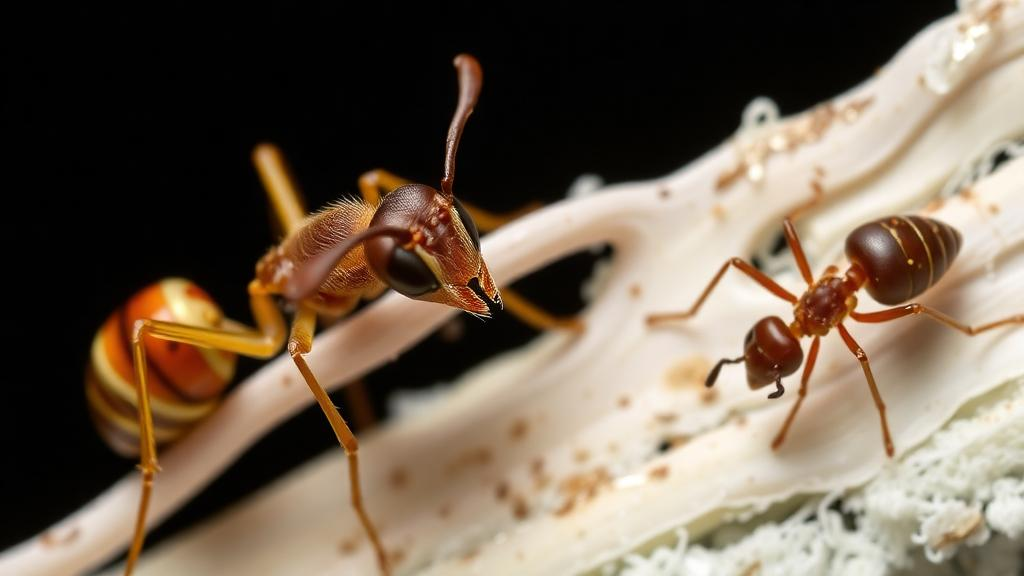
Australian researchers have unveiled a new workflow that combines classical morphology with high-throughput DNA sequencing to identify ants collected at the country’s ports of entry, and the results promise to reshape how biosecurity and biodiversity surveillance are conducted across the continent. The study, published in Metabarcoding and Metagenomics, tackles a long-standing problem: Australia’s ant fauna is extraordinarily diverse and poorly documented, while the DNA reference databases needed for molecular identification are riddled with gaps and errors.
Ants occupy a peculiar position in biosecurity. Native species are among the most ecologically influential animals in Australian terrestrial ecosystems, often dominating ground-dwelling communities. At the same time, exotic invaders such as the red imported fire ant, Solenopsis invicta, have caused an estimated US$6 billion in losses in the United States alone, and invertebrate pests cost Australia more than $300 million every year. Distinguishing a dangerous exotic from a harmless native relative is therefore critical, yet many of the most diverse ant genera, including Monomorium and Tetramorium, may harbour hundreds of undescribed species in Australia, making species-level identification a genuine taxonomic impediment.
The research team, working at the AgriBio research centre in Victoria, collected 180 bulk ant samples at ports of entry in New South Wales and Western Australia using baited traps and hand collection. Each sample contained anywhere from a single individual to 250 specimens. Crucially, the team used a non-destructive DNA extraction method, submerging the ants in buffer and Proteinase K overnight at 56 degrees Celsius, which releases DNA while leaving the specimens physically intact for later morphological examination.
The workflow compared two sequencing platforms. On the Illumina MiSeq, the researchers amplified a short 205-base-pair fragment of the mitochondrial cytochrome oxidase I (COI) gene and processed up to 180 samples per run, generating more than 27 million reads after quality control across three runs. On the Oxford Nanopore MinION, they targeted a much longer fragment of roughly 650 base pairs using the same DNA extracts, producing nearly 19 million raw reads from 90 samples in a single 72-hour run. The MinION, a pocket-sized and portable device, generated almost double the reads obtained on the MiSeq for the same number of samples, suggesting it could handle twice the sample volume.
The comparison produced a striking result: both platforms recovered the same DNA sequences, and the identifications from the combined 180-sample MiSeq run matched the individual runs with 100 percent consistency. Doubling and even quadrupling the number of samples per run did not cost a single species identification, meaning the price per sample can be slashed without sacrificing accuracy. This matters enormously for biosecurity agencies that must screen large volumes of material quickly and cheaply.
But the study’s most important finding concerned not the sequencers but the databases behind them. When the researchers assigned taxonomy using publicly available reference sequences, only 20 of 90 samples received a correct species-level identification, and 26 identifications were wrong or missing. The problems were varied and instructive: identical sequences labelled with different species names, a native Cardiocondyla misidentified as an exotic species by a faulty reference barcode, and a specimen of Iridomyrmex rufoniger matching a database entry identified only to genus, a classic example of a so-called dark taxon. In one case, a native Rhytidoponera victoriae was consistently assigned to the wrong genus, Melophorus, because of an erroneous database record.
The solution was expert taxonomy. Morphological examination of the voucher specimens, aided by high-resolution images taken with a Leica stereo microscope, allowed the team to confirm 38 morphospecies from the 64 operational taxonomic units initially recovered. The specimens retained their diagnostic characters even after the non-destructive extraction: setae, head sculpturing, antennal scrobes and propodeal proportions were all clearly visible, as demonstrated for species such as Myrmecia nigriceps and Tetramorium caldarium. From these vouchers, the researchers generated 46 new curated COI sequences, deposited in GenBank, each linked to a physical specimen lodged in the Victorian Agricultural Insect Collection and photographed on AntWeb.
When the metabarcoding analysis was re-run against this curated database, the improvement was dramatic: 96 of the samples received species-level identifications, compared with just 20 using the public database. The curated sequences matched the ASVs generated on the MiSeq, confirming that the gain came from database quality rather than sequencing platform. The workflow also flagged genuine taxonomic puzzles, including evidence that Iridomyrmex bicknelli and I. chasei each conceal multiple species under a single name, and that the Rhytidoponera victoriae complex likely contains cryptic species warranting formal revision.
Three previously introduced tramp species, Paratrechina longicornis, Pheidole megacephala and Tetramorium caldarium, were detected among the samples, underlining the stakes. The authors argue that the workflow’s real power lies in its self-improving loop: every batch of biosecurity samples processed this way adds curated, voucher-linked sequences to public databases, making the next round of automated identification faster and more accurate, and progressively reducing the need for expert examination of common native species.
The study also carries a broader message for the metabarcoding field. As sequencing costs fall and portable devices like the MinION bring diagnostics to border stations and field laboratories, the bottleneck is no longer generating DNA data but attaching correct taxonomic names to it. The authors call for a shift from quantity to quality, recommending standardised protocols, non-destructive extraction, and a bespoke, curated reference database for Australian ants that links sequences to vouchers, images and documented identification methods. In a country whose ant fauna may number 7,500 species, many still undescribed, that infrastructure could prove as important as any sequencer.
Subject of Research: An integrative morphological and high-throughput sequencing workflow for identifying Australian ants for biosecurity and biodiversity
Article Title: A morphological and high throughput sequencing workflow to identify Australian ants ( Hymenoptera , Formicidae ): a new tool for biosecurity and biodiversity
Article References: Martoni, F., Buxton, J., Sparks, K. S., Li, T., Smith, R. L., Rako, L., & Blacket, M. J. (2024). A morphological and high throughput sequencing workflow to identify Australian ants (Hymenoptera, Formicidae): a new tool for biosecurity and biodiversity. Metabarcoding and Metagenomics, 8, Article e130531. https://doi.org/10.3897/mbmg.8.130531
Image Credits: AI Generated
Keywords: ants, biosecurity, metabarcoding, DNA barcoding, COI, Oxford Nanopore, Illumina MiSeq, taxonomy, biodiversity, Australia, invasive species, reference databases
Cite Scienmag News
Juliet Wilcox. (October 19, 2026). Australian Scientists Merge DNA Sequencing and Taxonomy to Identify Ants. Scienmag. https://scienmag.com/australian-scientists-merge-dna-sequencing-and-taxonomy-to-identify-ants/
Juliet Wilcox. "Australian Scientists Merge DNA Sequencing and Taxonomy to Identify Ants." Scienmag, 19 October 2026, https://scienmag.com/australian-scientists-merge-dna-sequencing-and-taxonomy-to-identify-ants/. Accessed 19 October 2026.
Juliet Wilcox. "Australian Scientists Merge DNA Sequencing and Taxonomy to Identify Ants." Scienmag. October 19, 2026. https://scienmag.com/australian-scientists-merge-dna-sequencing-and-taxonomy-to-identify-ants/


