


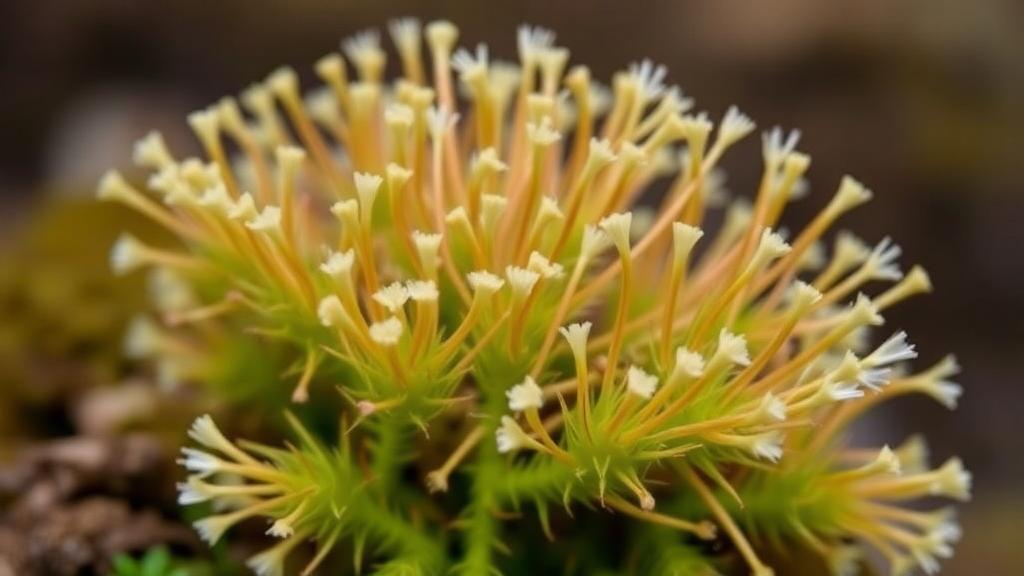
In the mist-soaked cloud forests of northern South America, a quiet botanical revolution is underway. A team of lycophyte specialists, working as part of the long-running “Lycophytes and Ferns of Venezuela” project led by Alan R. Smith, has formally described ten new species of Selaginella, the spikemosses, in a comprehensive treatment published in the journal PhytoKeys. The work, spearheaded by Valdespino and colleagues, also elevates a long-overlooked Venezuelan variety to full species rank and adds a striking new country record, dramatically expanding what science knows about one of the planet’s oldest surviving lineages of vascular plants.
Spikemosses are not mosses at all. Selaginella belongs to the lycophytes, a group of seedless vascular plants whose ancestors dominated the coal-forming swamps of the Carboniferous period more than 300 million years ago. Today the genus is the largest of its family, Selaginellaceae, encompassing an estimated 600 to 800 species worldwide, with roughly 350 in the Americas and about 300 native to the Neotropics. Despite their ancient pedigree, these plants remain poorly documented in many tropical regions, and Venezuela has long stood out as a gap in the map. The most recent full treatment of South American Selaginella, published in 1981, recognized just 133 species across the continent, including 53 confirmed for Venezuela.
The new paper changes that picture substantially. The ten newly described species are Selaginella cataniapensis, S. cultellifolia, S. guaramacalensis, S. liesneri, S. mawarinumensis, S. monoloba, S. mostaceroi, S. plagiochiloides, S. tricula, and S. turingiana. Two of them, S. cultellifolia and S. monoloba, also occur in neighboring Colombia. In addition, the authors reclassify Selaginella flabellata var. latifrons, a taxon first collected near Colonia Tovar in the 1850s, as a distinct species under the new name S. anemosyra, a decision that vindicates a judgment made decades ago by the botanist Alston, who had privately considered the plant a full species and even drafted an unpublished name for it.
The methodology behind these discoveries is a blend of old-fashioned herbarium work and modern imaging technology. The researchers examined specimens from more than twenty herbaria across the Americas and Europe, supplemented by digitized images available through the PteridoPortal database. Crucially, they deployed scanning electron microscopy to study the ornamentation of megaspores and microspores, the microscopic reproductive structures whose surface patterns, ridges, perforations, papillae, and echinate textures, serve as diagnostic fingerprints separating closely related species. Leaf anatomy received equally close attention: the distribution of papillate idioblasts, the arrangement of stomata, and the structure of hyaline cell bands along leaf margins all provided characters that distinguish, for example, S. cataniapensis from its lookalike S. amazonica.
Each new species comes with a story of place. Selaginella cataniapensis, a fern-like plant with erect stems reaching over 70 centimeters, was collected in the Cataniapo river basin in the Venezuelan Amazon, an area that has already lent its name to an orchid, an Ouratea tree, and a Sloanea. S. guaramacalensis grows in the humid montane forests of Parque Nacional Guaramacal, an outlier of the Cordillera de Mérida in the Venezuelan Andes, and appears to be separated from its closest relative, S. meridensis, by dry inter-Andean valleys that act as ecological barriers to gene flow. S. mawarinumensis, a creeping plant with delicate filiform rhizophores, is known only from the banks of the Río Mawarinuma near the Cerro de la Neblina base camp, where it sometimes climbs the lower trunks of trees.
Perhaps the most charming addition is S. plagiochiloides, a tiny epipetric species so small and flat that its authors liken it to a leafy liverwort of the genus Plagiochila. Its strobili, the spore-bearing cones, frequently revert to vegetative growth at their tips, producing a distinctive V/F/V pattern of alternating fertile and sterile zones. Even more intriguingly, the researchers observed occasional bifid, or two-forked, lateral leaves, a developmental oddity previously documented only in the European species S. helvetica. This may be the first report of such leaf-form lability in a Neotropical Selaginella, hinting that latent developmental potential in lycophytes is more widespread than anyone suspected.
Not every name is new. S. monoloba had been lurking in herbaria for half a century, its specimens labeled as a “Magdalena form” of S. kunzeana, while Alan Smith flagged the type collection as a potentially undescribed species back in 1985. Its peltate median leaves, attached at the center rather than the base, and its single short basiscopic auricle finally earned it formal recognition. Similarly, S. tricula carries an epithet that Smith coined in his unpublished 1985 checklist of Venezuelan pteridophytes; the authors retained it because the name aptly describes the short, stiff hairs along the leaf margins. And S. turingiana bears perhaps the most unexpected dedication of all: it honors Alan M. Turing, the computing pioneer who developed a mathematical model linking plant phyllotaxis to Fibonacci numbers, a topic the authors argue deserves far more attention in Selaginella research.
The paper also cleans house taxonomically. Selaginella anceps, long reported from Venezuela, is formally excluded from the country: specimens previously identified as such turn out to belong to S. altheae in Amazonas or to the new S. turingiana in the Coastal Range. Meanwhile, S. mazaruniensis, once thought confined to Guyana and later found in Brazil, is recorded for the first time from Cerro de la Neblina in Venezuela, though the authors note that conflicting herbarium determinations of the same collections mean further study is needed to resolve the discrepancies.
Alongside the descriptions come sobering conservation assessments, conducted under IUCN criteria using the GeoCAT tool to estimate extent of occurrence and area of occupancy. The results are stark. S. cultellifolia, known from just two collections in Colombia and Venezuela, is assessed as Critically Endangered with an area of occupancy of only 8 square kilometers. S. liesneri and S. plagiochiloides, each known from a single locality, and S. mostaceroi, known only from a deforestation-pressured area near La Fundación in Táchira, all receive Critically Endangered status. S. anemosyra, restricted to Aragua state where historical deforestation has been severe, is listed as Endangered. Even S. turingiana, the most widely distributed of the new species with an extent of occurrence of over 9,000 square kilometers, is assessed as Vulnerable due to ongoing habitat degradation in northern Venezuela.
Why do so many spikemoss species hide in plain sight? Part of the answer lies in their habitats: steep cloud-forest slopes, waterfall-splashed boulders, and remote tepui summits that few collectors ever reach. Part lies in their subtlety, as species separated by megaspore micromorphology or the width of a hyaline leaf margin look nearly identical in the field. And part lies in the sheer pace of habitat loss, which may erase species before they are ever named. With Venezuela’s fern and lycophyte flora now estimated at well over 1,100 species, and the country’s Selaginella count pushed past 100, the new treatment makes clear that the inventory is far from complete. Each unnamed species in a herbarium drawer is a race against deforestation, illegal mining, and land conversion, and this paper is a reminder that taxonomy, often dismissed as dusty cataloguing, is in fact one of conservation’s most urgent instruments.
Subject of Research: Taxonomic description of ten new Selaginella spikemoss species from Venezuela and northern South America with conservation assessments
Article Title: Ten new species of Selaginella ( Lycopodiopsida , Selaginellaceae ) from northern South America, primarily Venezuela, with a new status and combination, and distributional updates
Article References: Valdespino, I. A., López, C. A., & Ceballos, J. I. (2026). Ten new species of Selaginella (Lycopodiopsida, Selaginellaceae) from northern South America, primarily Venezuela, with a new status and combination, and distributional updates. PhytoKeys, 276, 51-138. https://doi.org/10.3897/phytokeys.276.191365
Image Credits: AI Generated
DOI: 10.3897/phytokeys.276.191365
Keywords: Selaginella, lycophytes, Venezuela, new species, taxonomy, PhytoKeys, spikemoss, cloud forests, conservation, IUCN, Neotropics, megaspores
Cite Scienmag News
Margaret Porter. (October 19, 2026). Ten New Spikemoss Species Emerge from Venezuela’s Cloud Forests, Rewriting the Map of an Ancient Plant Lineage. Scienmag. https://scienmag.com/ten-new-spikemoss-species-emerge-from-venezuelas-cloud-forests-rewriting-the-map-of-an-ancient-plant-lineage/
Margaret Porter. "Ten New Spikemoss Species Emerge from Venezuela’s Cloud Forests, Rewriting the Map of an Ancient Plant Lineage." Scienmag, 19 October 2026, https://scienmag.com/ten-new-spikemoss-species-emerge-from-venezuelas-cloud-forests-rewriting-the-map-of-an-ancient-plant-lineage/. Accessed 19 October 2026.
Margaret Porter. "Ten New Spikemoss Species Emerge from Venezuela’s Cloud Forests, Rewriting the Map of an Ancient Plant Lineage." Scienmag. October 19, 2026. https://scienmag.com/ten-new-spikemoss-species-emerge-from-venezuelas-cloud-forests-rewriting-the-map-of-an-ancient-plant-lineage/


