


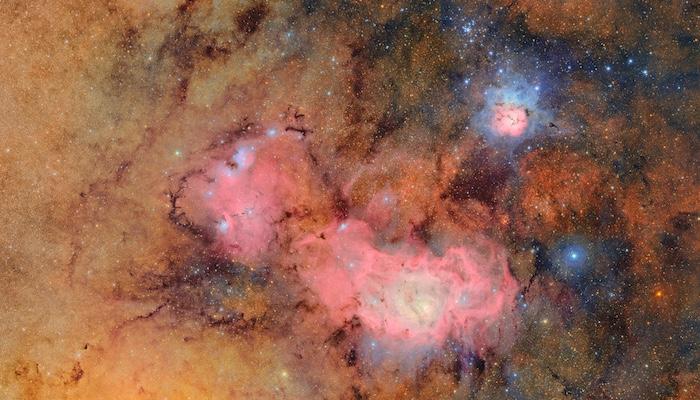
A monumental shift is underway in the field of astronomy, propelled by the ambitious Legacy Survey of Space and Time (LSST) conducted by the Vera C. Rubin Observatory in Chile. As this facility embarks on a ten-year mission to capture the Southern Hemisphere’s night sky, an unprecedented amount of data is set to be processed and analyzed, pushing the boundaries of our cosmological understanding. With the capability to image approximately 20 terabytes of raw data each night, the LSST represents a significant leap forward in astronomical research, providing researchers with a treasure trove of insights previously deemed unimaginable.
At the heart of this groundbreaking endeavor is a collaboration between the Australian Astronomical Optics (AAO) team from Macquarie University and the Centre for Astrophysics & Supercomputing at Swinburne University. Together, they will play a pivotal role in managing and interpreting over seven petabytes of data generated annually by the observatory. This strategic partnership, supported by the Astronomy Data and Computing Services (ADACS) initiative, aims to facilitate astronomers’ access to invaluable datasets, ultimately enriching the global astronomy community.
The LSST’s immense dataset will not only provide detailed images of billions of celestial objects, but will also allow for continuous observation that tracks their evolution over a decade. Equipped with a 3,200-megapixel camera, the observatory holds the potential to revolutionize our knowledge of the cosmos by delivering insights on phenomena that were previously elusive. For the scientific community, this data is a potential goldmine for discovering new stars, galaxies, and understanding the underlying processes governing their behaviors as well as their environments.
As Dr. Simon O’Toole, Head of Research Data & Software at AAO, notes, the sheer volume of information generated by the LSST presents a challenge akin to trolling through intricate layers of data. In comparison, many astronomers typically analyze about 20 terabytes over the span of an entire year. The challenges associated with processing such a deluge are compounded by the necessity to ensure data accessibility, especially as the astronomy field expands rapidly with the continuing development of large telescopes and sophisticated surveys. The team’s collaborative efforts will be focused on implementing robust solutions that will not only process, but also disseminate this data efficiently to researchers worldwide.
The evolution of astronomical data processing techniques will undoubtedly have far-reaching implications, setting the foundations for the next generation of mega-surveys that promise to reshape our understanding of the universe. The methodologies and technologies emerging from the LSST project will likely become standard practice, allowing astronomers to conduct analyses at scales that were not previously possible. The task of making this wealth of information easily accessible to the scientific community reflects a growing recognition of the collaborative nature of modern research.
As the observatory nears its commissioning stage, the excitement within the global astronomical community is palpable. With images already being released, the anticipation of what is to come is building. The Rubin Observatory not only signifies a new era for observational astronomy, but it also places Australia at the forefront of this cosmic exploration. With early access granted to Australian astronomers, alongside their counterparts in the United States and Chile, the potential for collaborative discoveries heightens; this is a distinct advantage in competitive research scenarios often marked by geographical barriers.
Moreover, the LSST’s capability for time-domain astronomy opens doors to tracking dynamic celestial events in near real-time. From monitoring asteroids within our solar system to identifying explosive phenomena emanating from distant galaxies, the implications for astronomical research are profound. This capacity to capture the universe in motion not only propels fundamental science forwards but also feeds into broader public interest in astronomical discoveries, captivating minds and inspiring future generations of scientists and enthusiasts alike.
Education and outreach initiatives will play a significant role in harnessing the excitement generated by the LSST. Engaging with young astronomers through schools, outreach programs, and public presentations about newly discovered phenomena will be vital in nurturing the next wave of scientific inquiry. Establishing connections between the scientific community and society, particularly with newfound insights from the LSST, enriches public understanding of the cosmos and fosters a culture of curiosity and inquiry.
In addition to its scientific objectives, the project showcases the vital importance of funding and institutional support for high-caliber research initiatives. The project has garnered more than $1 million in funding through LIEF grants and NCRIS allocations via Astronomy Australia Limited, highlighting the role of strategic investment in advancing scientific frontiers. Such collaborations between universities and government-backed funding sources exemplify the foundations for significant advances in many fields, not solely limited to astronomy.
As the LSST prepares for its mission ahead, it is clear that the insights gleaned from this massive undertaking will resonate deeply within the astronomical community and beyond. As Dr. O’Toole articulates, this project is a crucial stepping stone towards transcending previously set limits in our understanding of the universe. The Rubin Observatory not only catalyzes unprecedented data collection but also paves the way for innovative scientific practices, enhancing collaboration and communication that extends into myriad other disciplines.
In conclusion, the legacy of the Vera C. Rubin Observatory and the LSST will undoubtedly shape the future of astronomical research. With its emphasis on inclusivity and partnership, significant strides in understanding our universe will take place, providing researchers with the tools and data needed to unlock the secrets of the cosmos. As we stand at the precipice of this extraordinary adventure in cosmic discovery, the promise of what lies ahead captivates the imagination of scientists and enthusiasts alike.
Keywords
Astronomical data, Vera C. Rubin Observatory, LSST, Southern Hemisphere sky, cosmic discovery, astronomical research, time-domain astronomy, collaboration, data processing.
Cite Scienmag News
Grant Pearson. (June 26, 2025). Aussie Data Specialists Collaborate on Ambitious Global Sky Survey. Scienmag. https://scienmag.com/aussie-data-specialists-collaborate-on-ambitious-global-sky-survey/
Grant Pearson. "Aussie Data Specialists Collaborate on Ambitious Global Sky Survey." Scienmag, 26 June 2025, https://scienmag.com/aussie-data-specialists-collaborate-on-ambitious-global-sky-survey/. Accessed 4 September 2026.
Grant Pearson. "Aussie Data Specialists Collaborate on Ambitious Global Sky Survey." Scienmag. June 26, 2025. https://scienmag.com/aussie-data-specialists-collaborate-on-ambitious-global-sky-survey/


