


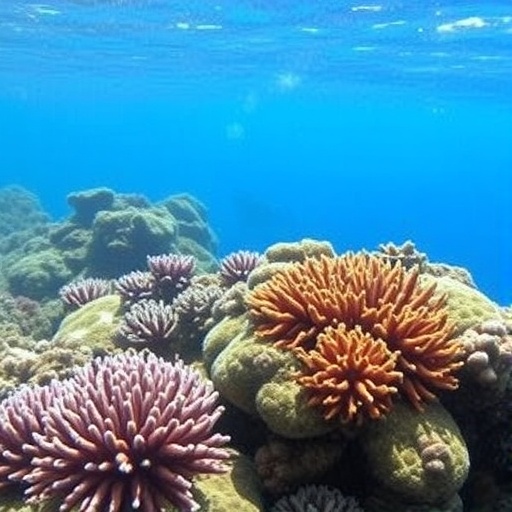
In a pioneering study conducted by researchers at Arizona State University, new insights have emerged regarding the pressing issue of sewage pollution infiltrating the delicate coral reef ecosystems along the western coast of Hawaiʻi Island. This groundbreaking investigation sheds light on the specific locations where contaminated groundwater, laden with fecal bacteria, is discharging into the ocean, further imperiling coral reefs already weakened by climate change. The findings carry profound implications not only for ecological preservation but also for safeguarding human health in coastal communities.
The research harnessed cutting-edge airborne mapping technologies deployed from the ASU Global Airborne Observatory, combined with on-the-ground water sampling and advanced statistical modeling. This integrative approach enabled scientists to precisely identify submarine groundwater discharge zones contaminated with Enterococcus bacteria, a reliable indicator of sewage pollution commonly emanating from human populations and wastewater systems near the coastline. Such precision mapping addresses a longstanding challenge in marine science: pinpointing diffuse, underwater sources of contamination that are not evident through conventional river or stream monitoring.
Published in the journal Frontiers in Marine Science, this investigation provides critical spatially resolved data essential for policy makers and environmental managers. Elevated fecal bacteria levels were detected in 42% of the 47 sampled sites along approximately 120 miles of coastline, with nearly a quarter of these sites exhibiting contamination above established health risk thresholds. This highlights the dual threat of microbial pollution to ecosystem function and human well-being, emphasizing the urgent necessity for strategic intervention.
The primary conduit for pollution identified is submarine groundwater discharge—an often overlooked hydrological pathway where groundwater seeps through sediments and rock layers directly into the ocean, bypassing visible surface watercourses. In Hawaiʻi, this pathway is exacerbated by the presence of tens of thousands of cesspools and leaking septic systems. According to the Hawaiʻi Department of Health, over 88,000 cesspools operate statewide, with approximately 55,000 on the Big Island alone. These outdated wastewater disposal methods percolate contaminants into subterranean water flows, which then transport these pollutants into nearshore marine habitats.
The statistical models developed in the study revealed two key drivers of contamination: the density of on-site sewage treatments, particularly cesspools and septic tanks inland, and the extent of high-density coastal land development. Urbanization and infrastructure expansion increase impermeable surfaces and alter natural groundwater flow, facilitating enhanced pollutant transport. The volcanic geology of areas like South Kona further complicates this dynamic, where the porous and permeable substratum allows rapid movement of contaminated water into vulnerable coral reef zones.
The ecological ramifications of this contamination are significant. Coral reefs rely on pristine water conditions, and exposure to sewage-derived bacteria can promote disease outbreaks, inhibit coral growth, and reduce reef resilience against other stressors such as warming temperatures and acidification. Moreover, contaminated waters pose direct risks to recreational users and local fisheries, as pathogens from sewage can infect humans and marine organisms alike.
Addressing this environmental crisis necessitates prioritizing upgrades to wastewater infrastructure. Conversion of cesspools to advanced treatment units can substantially reduce pollutant loads entering the groundwater system. However, limited resources and the complexity of submarine groundwater discharge locations complicate mitigation efforts. The ASU team’s detailed mapping and predictive modeling offer a vital tool to strategically focus interventions where they will be most impactful and to monitor the efficacy of remedial measures over time.
Local leadership recognizes the significance of these findings. Hawaiʻi County Mayor Kimo Alameda affirmed that the study will guide wastewater management policies and infrastructure investment, underscoring the collaboration between scientific research and community action. This synergy is essential not only for protecting coral reefs but also for sustaining the cultural, economic, and ecological fabric of coastal Hawaiʻi.
Beyond infrastructure upgrades, the researchers advocate a comprehensive approach that includes deploying green infrastructure to reduce runoff, restoring degraded reef habitats, and enhancing community education about land-based sources of pollution. The integration of technical solutions with ecosystem restoration and public engagement forms the cornerstone of a resilient conservation strategy in an era marked by rapid development and climate uncertainty.
The research also exemplifies the power of interdisciplinary science and advanced technology. By combining airborne hyperspectral imaging, field microbiology, and landscape-scale statistics, the study transcends traditional boundaries and provides an unprecedented resolution of coastal contamination dynamics. This methodological framework holds promise for application in other coastal regions facing similar challenges, contributing to global efforts to safeguard marine ecosystems from anthropogenic threats.
As coral reefs worldwide confront escalating threats, this study presents a timely reminder of the interconnectedness of terrestrial activities and marine health. The underwater journey of sewage contaminants vividly illustrates that protecting ocean biodiversity requires concerted action across terrestrial and marine domains. The ability to detect, predict, and prioritize contamination hotspots is a breakthrough that can transform management practices and bolster the resilience of coral reef ecosystems amid accelerating environmental pressures.
In conclusion, the ASU-led investigation into submarine groundwater discharge contamination along West Hawaiʻi offers a comprehensive, data-driven perspective on a critical environmental issue. The combined use of innovative airborne mapping and rigorous statistical modeling equips scientists and decision-makers with actionable insights to combat sewage pollution. This endeavor not only advances scientific understanding but also serves as a beacon for integrative conservation strategies that honor both natural ecosystems and human communities dependent on these vital coastal resources.
News Publication Date: 26-Aug-2025
Web References:
- Frontiers in Marine Science Article
- ASU Center for Global Discovery and Conservation Science
- Hawaiʻi Department of Health – Cesspools
- West Hawaii Discharge Site Mapping Study
References:
- DOI: 10.3389/fmars.2025.1634234
Cite Scienmag News
Violet Maxwell. (August 26, 2025). ASU Study Reveals Sewage Contamination Hotspots Threatening West Hawai’i Coral Reefs. Scienmag. https://scienmag.com/asu-study-reveals-sewage-contamination-hotspots-threatening-west-hawaii-coral-reefs/
Violet Maxwell. "ASU Study Reveals Sewage Contamination Hotspots Threatening West Hawai’i Coral Reefs." Scienmag, 26 August 2025, https://scienmag.com/asu-study-reveals-sewage-contamination-hotspots-threatening-west-hawaii-coral-reefs/. Accessed 3 September 2026.
Violet Maxwell. "ASU Study Reveals Sewage Contamination Hotspots Threatening West Hawai’i Coral Reefs." Scienmag. August 26, 2025. https://scienmag.com/asu-study-reveals-sewage-contamination-hotspots-threatening-west-hawaii-coral-reefs/


