


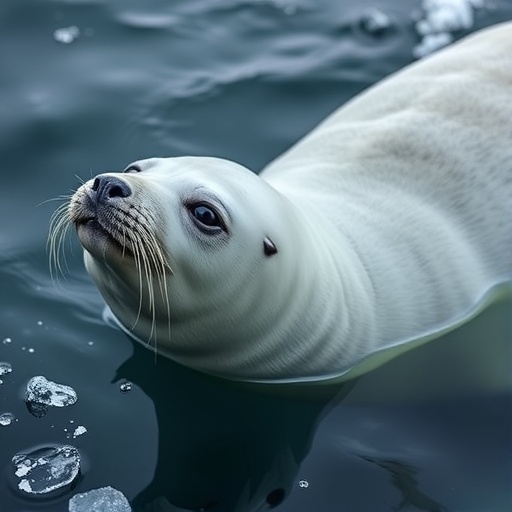
In the remote and icy waters of Northern Labrador, Canada, a profound environmental study has unveiled alarming changes in the health and biochemistry of Arctic ringed seals (Pusa hispida). These creatures serve as vital connectors within the Arctic food web, bridging the gap between invertebrates, fish, and apex predators such as polar bears. Recent research led by marine mammal ecotoxicologists from Simon Fraser University (SFU) reveals the compounded threats these seals face from persistent environmental contaminants and the rapidly shifting Arctic climate.
At the heart of the investigation is a sobering discovery: Arctic ringed seals are having increasing difficulty metabolizing and clearing long-lasting contaminants from their bodies. These pollutants, including polychlorinated biphenyls (PCBs), mercury, and banned synthetic pesticides like DDTs and chlordane, have been accumulating within the seals’ vital tissues due to their lipophilic properties. The bioaccumulation process concentrates these toxins in the seals’ blubber, posing severe risks to cellular health and overall physiological function.
The study meticulously analyzed blood, blubber, and liver samples collected from 38 Arctic ringed seals between 2009 and 2011 around Labrador’s Saglek Bay—a notorious hotspot for PCB pollution dating back to Cold War-era military installations. Results indicated persistently high tissue levels of these hazardous chemicals throughout the sampling period, underscoring the chronic nature of the contamination. These compounds induce oxidative stress—a cellular state linked to inflammation, impaired immunity, metabolic disruption, and diminished reproductive capacity—casting shadows over the seals’ long-term viability.
Compounding the chemical threat is the rapidly warming Arctic environment, a change most conspicuous in the year 2010, when surface sea temperatures soared 5.5 degrees Celsius above average. This unprecedented warming coincided with minimal sea ice extent and significant nutritional deficits in the seal population. Biochemical markers revealed depleted omega-3 and omega-6 fatty acids—essential components of healthy cell membranes and energy metabolism—accompanied by increased saturated fats and a notably thinner blubber layer. Such alterations are indicative of malnutrition and physiological stress.
The significance of blubber thickness alteration extends beyond mere energy storage concerns. As seals become nutritionally stressed, fat stores stored with lipophilic toxicants begin to mobilize, redistributing harmful contaminants from the blubber into the bloodstream and across organ systems. This metabolic shift exacerbates the toxic burden on vital tissues, triggering a vicious cycle of oxidative damage. The research team observed elevated methionine sulfoxide in liver tissues, a biomarker signifying elevated oxidative stress and correlating with tissue inflammation and damage.
This complex interplay between contaminant exposure and climate-driven nutritional stress is particularly alarming given the fundamental role ringed seals occupy in Arctic ecosystems. These seals form a dietary cornerstone for Inuit communities and native predators alike. Their health status acts as a sensitive bioindicator of ecosystem changes, reflecting wider impacts stemming from global pollutant deposition and warming oceanographic conditions.
The findings highlight critical insights into the metabolic adaptations—or maladaptations—emerging in response to acute environmental stressors. Seasonal and annual variability in sea ice coverage, prey availability, and oceanic circulation patterns are already reshaping marine food webs, forcing ringed seals to alter feeding habits. These dietary shifts influence contaminant exposure profiles, underscoring an urgent need for multidimensional environmental monitoring that integrates contaminant toxicology with climate change biology.
Beyond the physical health implications, the study echoes broader social and cultural concerns. Indigenous communities along the Labrador coast have voiced long-standing apprehensions regarding the health of their traditional food sources, raising questions about contaminant risks and the impacts of warmer conditions on animal populations. Maintaining healthy seal populations is crucial for safeguarding Inuit food security and preserving cultural continuity within these vulnerable northern societies.
The research published in the journal Environmental Research also projects future scenarios where climate change could amplify pollutant inflows into the Arctic. Altered ocean currents may transport additional contaminants from industrial regions, further increasing toxic threats to marine mammals. Concurrently, reduced sea ice facilitates greater contaminant bioavailability and changes predator-prey dynamics, necessitating adaptive management frameworks grounded in scientific rigor.
This scientific endeavor represents one of the first metabolomic profiles documenting the biochemical responses of Arctic ringed seals to combined contaminant and climatic stresses. The study’s integration of advanced biomarker analyses with environmental data charts a path forward for comprehensive ecological risk assessments within polar regions undergoing transformation at accelerated rates.
Collectively, the findings resonate as a call to action for sustained research and targeted policy measures addressing both legacy pollutants and emergent climate change challenges. Protecting Arctic wildlife such as ringed seals requires coordinated international efforts to reduce global contaminant emissions and implement conservation strategies that bolster ecosystem resilience in a warming world.
In summary, this seminal study underscores the intricate linkages between environmental contaminants, climate variability, and marine mammal health, highlighting the vulnerability of Arctic food webs amid a rapidly evolving planetary landscape. The Arctic ringed seal emerges not only as a sentinel species but also a poignant emblem of broader ecological shifts that will demand vigilant stewardship and scientific inquiry in the decades to come.
Cite Scienmag News
Sloane Callahan. (February 18, 2026). Arctic Seals Face Double Threat from Climate Change and Persistent Contaminants, SFU Study Reveals. Scienmag. https://scienmag.com/arctic-seals-face-double-threat-from-climate-change-and-persistent-contaminants-sfu-study-reveals/
Sloane Callahan. "Arctic Seals Face Double Threat from Climate Change and Persistent Contaminants, SFU Study Reveals." Scienmag, 18 February 2026, https://scienmag.com/arctic-seals-face-double-threat-from-climate-change-and-persistent-contaminants-sfu-study-reveals/. Accessed 3 September 2026.
Sloane Callahan. "Arctic Seals Face Double Threat from Climate Change and Persistent Contaminants, SFU Study Reveals." Scienmag. February 18, 2026. https://scienmag.com/arctic-seals-face-double-threat-from-climate-change-and-persistent-contaminants-sfu-study-reveals/


