


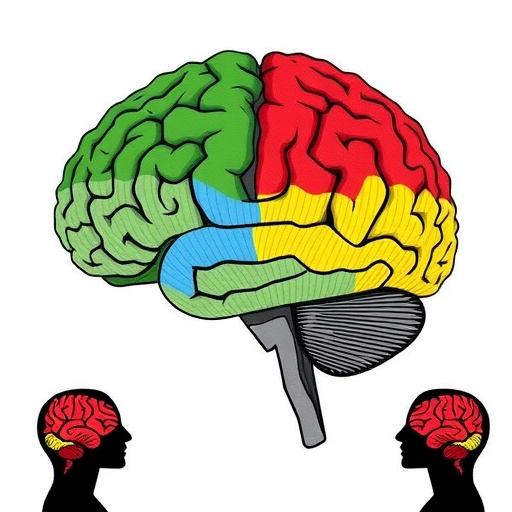
Your brain is a relentless cartographer. It builds intricate maps not just of physical spaces—the route from your bed to the coffee machine, the echoing halls of your high school—but of the far more treacherous terrain of your social world. For decades, neuroscientists have understood how specialized cells in the hippocampus and entorhinal cortex trace the blueprints of our environments, firing in precise sequences as we navigate a room. Yet we are not merely spatial beings; we are profoundly social ones, constantly calculating who is an ally, who is a competitor, and who might betray us. A groundbreaking new study has pulled back the curtain on this hidden dimension of cognition, revealing that the human brain constructs a dynamic “social map” where the people around us are assigned coordinates based on their traits. More startlingly, the research demonstrates that this map is not a neutral, objective chart. Instead, it is viscerally warped by antagonism, bending the cognitive space to push those we dislike, distrust, or fear into a psychological hinterland, fundamentally altering how we perceive the social universe.
The foundational discovery that the brain houses an internal GPS system, a grid-like code for physical space, earned John O’Keefe, May-Britt Moser, and Edvard Moser the 2014 Nobel Prize. This elegant system allows us to know where we are and how to navigate. In the years that followed, a tantalizing hypothesis took root: perhaps the same neural architecture that maps physical space has been evolutionarily recycled to map abstract spaces, including the landscape of social relationships. Cognitive scientists began to speak of “social space,” a multi-dimensional arena where individuals are located along axes of power, warmth, competence, and trustworthiness. If our brains truly organize social knowledge using a spatial framework, then the distance between two people in this mental map should reflect their perceived similarity, and navigating from a friend to a foe should involve traversing a cognitive path. This conceptual leap set the stage for a new discipline of social cognitive neuroscience, one that seeks to decode the representational geometry of our interpersonal world directly from patterns of brain activity.
It is within this intellectual crucible that the research team of Izumi Chikazawa, Ryo Ishibashi, and Tamami Nakano, publishing in Communications Psychology, launched an ambitious investigation. They aimed not merely to confirm the existence of a social cognitive map but to probe a darker, more emotionally charged force that might distort its fabric. Previous work had largely focused on how positive social connections, like friendship or admiration, compress psychological distance, making close friends feel more conceptually aligned. The team identified a glaring blind spot: what about enemies? What happens to the neural representation of a person whom you actively disdain, a rival, or a perceived threat? Their central thesis was provocative—that antagonism, a fundamental and evolutionarily ancient aspect of human interaction, would not simply push an individual away along a linear scale of likeability but would actively warp the very shape of the social map, creating distorted, non-linear representations that reflect the adaptive need to discriminate threats from allies.
To capture this neural cartography in action, the researchers devised a paradigm that combined a richly detailed social learning phase with high-resolution functional magnetic resonance imaging (fMRI). Participants first entered a prolonged training period in which they were introduced to a cast of fictional characters. Each character was defined by a specific combination of personality traits across multiple dimensions, such as honesty, aggression, intelligence, and sociability. By carefully controlling the overlap and divergence of these trait profiles, the scientists could construct a mathematically defined social space where the true similarity between any two characters was precisely known. Crucially, during this learning phase, participants also formed a subjective emotional appraisal of each character, rating them on scales of liking and trust, thereby transforming abstract trait bundles into rich, valenced social entities that ranged from cherished confidants to despised troublemakers.
After the learning had crystallized into a stable mental model of this miniature society, participants were slid into the MRI scanner. Inside the claustrophobic tube, they were presented with pairs of character names and asked to perform a simple yet revealing task: to rate how similar the two individuals were. This judgment forced the brain to consult its internal map, retrieving and comparing the stored representations. By using a technique called representational similarity analysis (RSA), the neuroscientists could then peer into the brain’s functional architecture. RSA does not look for a single brain spot that “lights up” for a specific character; instead, it examines the pattern of activity across thousands of voxels in a region, calculating the dissimilarity between the neural fingerprints evoked by each character. The resulting neural dissimilarity matrix can then be compared to the formal model of social distance, revealing where in the brain a social space map is embedded and, more importantly, how that map deviates from the rationally defined trait matrix.
The data that streamed out of the scanner told a compelling and nuanced story, one that placed the medial prefrontal cortex (mPFC) and the hippocampus at the epicenter of this social spatial code. The mPFC, a region already renowned for processing self-referential thought and mentalizing about others, emerged as a key hub where social distance was represented in a subjectively meaningful way. The activity patterns in the mPFC reliably tracked how similar participants perceived the characters to be, but with a critical caveat: the map within the mPFC was not a faithful reflection of the objective trait overlap. Instead, it was significantly sculpted by the emotional valence attached to each person. The hippocampus, the brain’s master spatial navigator, also encoded a map of the social landscape, adding weight to the theory that our ability to remember sequences of events and navigate places has been co-opted to help us navigate the complex hierarchies and alliances of group life. Together, these regions painted a portrait of a social space that was deeply personal and emotionally saturated.
The study’s most electrifying revelation, however, was the specific manner in which antagonism exerted its force on this neural cartography. The researchers discovered a systematic repulsive effect in the representational space. Characters who were disliked were not simply placed at the other end of a single “valance” axis; rather, they were represented as being more dissimilar to one another and pushed farther away from the self and in-group members than their trait profiles would warrant. In technical terms, the social space underwent a non-linear, expansive warping around negative social targets. This means that two individuals who harbor starkly different antagonistic traits—say, one who is aggressively deceitful and another who is coldly exploitative—are pulled apart in the neural map, making their differences seem larger and more distinct. Conversely, for highly liked individuals, the representational geometry often compresses, making a kind and sociable friend and an intelligent and sociable friend seem closer in cognitive space.
This neural signature of antagonism-driven expansion makes profound evolutionary sense. Survival in a complex social group has always required more than just cozying up to allies; it has demanded the razor-sharp ability to differentiate between threats. A brain that collapses all adversaries into a single, undifferentiated category of “enemy” would be at a critical disadvantage. Is the threat a physically violent rival or a subtle manipulator who spreads malicious gossip? The correct behavioral response—confrontation, avoidance, or counter-scheming—depends on this fine-grained analysis. By expanding the social space around antagonists, the brain effectively zooms in on the threat landscape, creating high-resolution distinctions that allow for more adaptive threat prediction and response. This mechanism transforms a hostile world from a blur of danger into a readable map where the precise coordinates of each menace are sharply defined, a cognitive innovation that likely kept our ancestors alive in the crucible of tribal conflict.
The study’s sophisticated use of a computational model of “social space” allowed the authors to quantify this warping precisely. They constructed a model social map based purely on the conjunction of the characters’ assigned traits—a flat, Euclidean space where distance equaled objective dissimilarity. When participants’ behavioral similarity ratings and their neural activity patterns were pitted against this model, the misfit was not random; it was predicted by the participants’ likeability ratings. The more a participant disliked a character, the greater the deviation of that character’s neural coordinates from the objective trait map. The brain was not just recording an emotional tag; it was actively redrafting the entire geometry of the social world in a manner proportional to the intensity of the antagonism. This finding demonstrates that our subjective feelings do not merely tint our social cognition but fundamentally alter its structural logic, remapping the relational distances that form the scaffold of our social reality.
Delving deeper into the neural substrates, the team uncovered a division of labor between brain regions. While the mPFC and hippocampus showed the most pronounced representational warping due to antagonism, the temporoparietal junction (TPJ), a hub for perspective-taking and distinguishing self from other, appeared to encode a more objective metric of trait similarity, less contaminated by personal feelings. This suggests a multi-system architecture for social mapping: one system, anchored in the ancient memory structures, builds a subjective, emotion-tweaked map optimized for personal survival and goal pursuit, while another, more recent evolutionary system in the association cortex, maintains a sharper, more detached record of others’ characteristics. The competition or collaboration between these maps could be the neural basis for the constant tension we feel between seeing people as we wish they were, or as we fear they are, and seeing them for who they objectively seem to be.
The implications of this research cascade far beyond the laboratory, offering a neural lens through which to view the extreme social polarization gripping modern societies. If the brain naturally warps its social maps to exaggerate differences between those we antagonize, then the very act of cultivating animosity toward an out-group could set in motion a self-reinforcing cognitive cycle. As political rivals, rival fan bases, or ideological opponents are pushed into an expanded representational space by our neural algorithms, their perceived strangeness and threat are amplified. This makes finding common ground not just a matter of overcoming intellectual disagreement but of fighting against a deeply entrenched, prereflective neural computation that has already placed them in a distant and distorted cognitive territory. The digital echo chambers of social media, which constantly feed us curated information that stokes antagonism, may be supercharging this innate neural bias, literally reshaping the social brain’s maps to make societal bridges harder to build.
Furthermore, the findings open a novel window into clinical conditions characterized by pathological social cognition. Individuals suffering from social anxiety disorder often perceive social landscapes as inherently hostile and may harbor a warped sense of where they stand in relation to others. Paranoia involves the hijacking of the social map by a pervasive, unprovoked antagonism, where neutral faces are mapped into threatening territories. This study provides a mechanistic framework for understanding these ailments: they may be, at their core, disorders of social cartography, where the brain’s representational space has undergone a catastrophic, short-circuiting distortion. If antagonism functionally expands the distance between the self and the feared other, a chronically overactive antagonism system could leave a person navigating a terrifyingly alien and unreachable social universe, a profound loneness etched directly onto the neocortex.
The technical elegance of the study also lies in its validation of the social space concept using a brain-imaging approach that inherently captures multidimensional relationships. By moving beyond simple univariate activation analyses—which merely tell you that a region is engaged—to multivariate pattern analysis, the team listened to the chatter of entire neural populations. The geometry of this chatter, its landscape of peaks and valleys of similarity, is what constitutes the map. The fact that this geometry can be systematically and predictably altered by a simple emotional variable like personal antagonism speaks to the dynamic, constructive nature of memory. Our brains are not just retrieving static files when we think of someone; they are reconstructing their place in a vast, ever-shifting atlas, with the contours of that atlas being redrawn by the emotional seasons of our heart.
As with any pioneering study, the findings crack open a host of new, pressing questions. This research mapped a space defined by a controlled set of trait words and minimal personal history. Real-world social maps are forged in a crucible of shared experiences, betrayals, tragedies, and triumphs that unfold over a lifetime. How does the neural geometry adjust when an ally’s single act of betrayal transforms them from a compressed, trusted in-group node into a repelled, expanded antagonist? What is the temporal dynamic of such a remapping? Is the warping instantaneous, driven by a rush of striatal and amygdalar signals, or does it require a slow, sleep-dependent consolidation process in the hippocampus? Uncovering the molecular and systems-level mechanisms behind this map-plasticity could reveal how social learning fundamentally rewires the brain.
The researchers’ work also compels a re-examination of the very metaphor they employ. A map is static, a snapshot, but the brain’s social map is fluid, adapting to new information and shifting contexts. Perhaps the better analogy is a complex gravitational field. In this neural universe, liked individuals are massive objects that pull other friendly entities into closer orbit around the self, creating a warm, dense cluster. Antagonists, in contrast, generate a kind of dark energy, a repulsive force that pushes objects apart, creating vast stretches of empty cognitive space between them. This continuous, dynamic interplay of attraction and repulsion, computed by circuits linking the prefrontal cortex to the ancient memory machinery, may form the fundamental calculus of our social existence, determining the gravitational currents on which every thought about another person flows.
Ultimately, the study by Chikazawa, Ishibashi, and Nakano illuminates a profound truth: the maps we carry in our heads are not passive reflections of the world but active, biased constructs forged by our deepest needs and fears. The human brain is not a dispassionate archivist of social fact but a tormented artist, sketching portraits of others on a canvas stretched and primed with the visceral paint of antagonism. We do not merely live in a social world; we hallucinate one into being within the silent theater of our cortex, a personalized simulation where our enemies’ negative features are drawn with a finer, sharper pen. Recognizing this internal, biological bias—this inherent cartographic distortion—may be the first step toward navigating our shared social reality with a more generous and accurate map, one where the distances between us are not so doomfully and automatically enlarged.
Chikazawa, I., Ishibashi, R. & Nakano, T. Antagonism shapes social maps in the human brain.
Commun Psychol 4, 100 (2026). https://doi.org/10.1038/s44271-026-00491-y
Cite Scienmag News
Cassandra Pierce. (July 6, 2026). Antagonism Shapes the Brain’s Social Maps. Scienmag. https://scienmag.com/antagonism-shapes-the-brains-social-maps/
Cassandra Pierce. "Antagonism Shapes the Brain’s Social Maps." Scienmag, 6 July 2026, https://scienmag.com/antagonism-shapes-the-brains-social-maps/. Accessed 3 September 2026.
Cassandra Pierce. "Antagonism Shapes the Brain’s Social Maps." Scienmag. July 6, 2026. https://scienmag.com/antagonism-shapes-the-brains-social-maps/


