


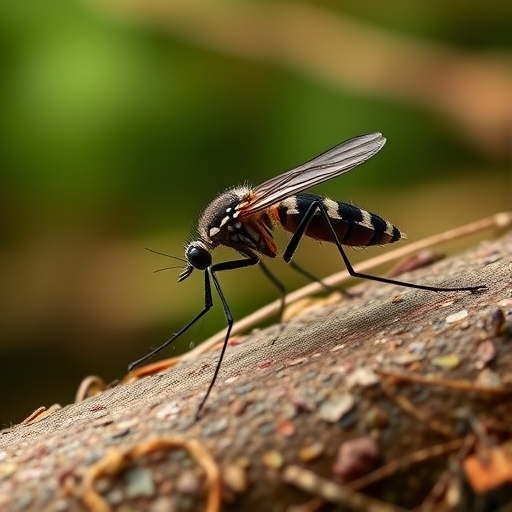
In the ever-evolving field of public health and entomology, few subjects capture the urgent attention of researchers quite like the habitat preferences and ecological roles of mosquito species like Anopheles gambiae s.l. This particular group, belonging to the Diptera order and Culicidae family, holds significant importance due to its role as a primary vector for malaria transmission in sub-Saharan Africa. Recent studies, including groundbreaking research conducted in Osun State, Nigeria, reveal crucial insights into the larval habitats of these mosquitoes and their broader implications for public health management in the region.
The research focused on mapping the larval habitats of Anopheles gambiae s.l. across varied environmental settings in Osun State. Researchers meticulously documented the topographical features associated with the breeding sites, emphasizing the integral role of stagnant water bodies, which are prime locations for mosquito larvae to thrive. Through detailed observations, they established that natural water bodies, such as ponds and streams, as well as man-made structures like water tanks and flooded areas, play a pivotal role in shaping mosquito populations.
One of the critical findings of this study is the significant correlation between specific habitat conditions and the density of larval populations. For instance, areas with abundant aquatic vegetation tend to harbor larger numbers of larvae compared to more barren sites. This underscores the necessity for targeted interventions aimed at reducing these breeding sites, which, if left unchecked, can lead to increased malaria transmission rates. Consequently, modifying habitats through environmental management could present a viable strategy to curb mosquito proliferation.
Moreover, researchers have found that seasonal variations greatly influence the breeding patterns of Anopheles gambiae s.l. During the rainy season, a notable surge in larval populations was observed, linking increased precipitation directly to heightened mosquito activity. This finding is crucial, as it suggests that the incidence of malaria could spike in tandem with rainy months, prompting the need for timely public health response strategies focused on vector control.
As the study advanced, researchers also highlighted the pressing need for public awareness campaigns to educate the community about the risks posed by mosquito breeding sites. Knowledge gaps among residents about effective mosquito control methods, including maintaining clean surroundings and proper drainage systems, exacerbate the problem. Thus, enhancing local understanding of mosquito biology and its implications for disease transmission is a significant step in empowering communities to take proactive measures.
The implications of this research extend beyond mere academic interest. It’s clear that the ugly reality of malaria, a preventable yet often deadly disease, continues to plague many regions, including Osun State. The study serves as a clarion call for increased investment in public health initiatives aimed at tackling vector-borne diseases. Interventions based on the findings could dramatically reduce malaria cases and save countless lives, marking an essential stride toward achieving public health goals.
In addition to the environmental factors influencing larval habitats, the study acknowledges the role of socioeconomic conditions within Osun State. Poor infrastructure and inadequate sanitation systems create environments conducive to mosquito breeding. Thus, improving community resources and health services is as vital as ecological management. This multifaceted approach combines environmental stewardship with social development to confront mosquito-borne diseases holistically.
Furthermore, entomological investigations will need to go hand-in-hand with health policy reforms, emphasizing the importance of cross-sector collaboration. Engaging stakeholders from health, environmental science, and urban planning sectors will foster a more coordinated response to combat the growing threat of malaria. Ultimately, each sector brings unique insights that, when combined, build a robust framework for public health decisions.
In conclusion, the implications of the research conducted on Anopheles gambiae s.l. larval habitats cannot be overstated. The insights gleaned from this study will not only assist in crafting effective vector control measures but also establish a foundation for future research in the field of vector-borne diseases. As specialists continue to unravel the complexities of mosquito ecosystems, it becomes increasingly apparent that a comprehensive strategy will be necessary to mitigate the burden of malaria. Only through concerted community action and public health policies anchored in scientific research can the tide of this ancient disease be turned.
As the global community faces the threat of emerging infectious diseases, the importance of understanding and managing mosquito populations cannot be overlooked. The research spotlighting the ecological facets of Anopheles gambiae s.l. offers invaluable lessons for other nations grappling with similar health challenges. Recognizing and implementing timely solutions based on solid scientific evidence will be crucial in shaping the future direction of public health strategies across Africa and beyond. The battle against malaria is ongoing, and equipping communities with the right knowledge and tools will be fundamental in winning this fight.
In sum, the study exemplifies the intricate relationship between environmental management, public education, and health outcomes. By synthesizing knowledge across disciplines, researchers can catalyze impactful change in global health narratives, paving the way for healthier communities and resilient ecosystems.
Busari, L.O., Surakat, O.A., Adeogun, A.O. et al. Anopheles gambiae s.l (Diptera: Culicidae) larval habitat and its public health implication in Osun State, Nigeria.
Discov Anim 2, 11 (2025). https://doi.org/10.1007/s44338-025-00051-4
Cite Scienmag News
Phoebe Ingram. (December 21, 2025). Anopheles gambiae Habitat and Public Health in Osun. Scienmag. https://scienmag.com/anopheles-gambiae-habitat-and-public-health-in-osun/
Phoebe Ingram. "Anopheles gambiae Habitat and Public Health in Osun." Scienmag, 21 December 2025, https://scienmag.com/anopheles-gambiae-habitat-and-public-health-in-osun/. Accessed 3 September 2026.
Phoebe Ingram. "Anopheles gambiae Habitat and Public Health in Osun." Scienmag. December 21, 2025. https://scienmag.com/anopheles-gambiae-habitat-and-public-health-in-osun/


