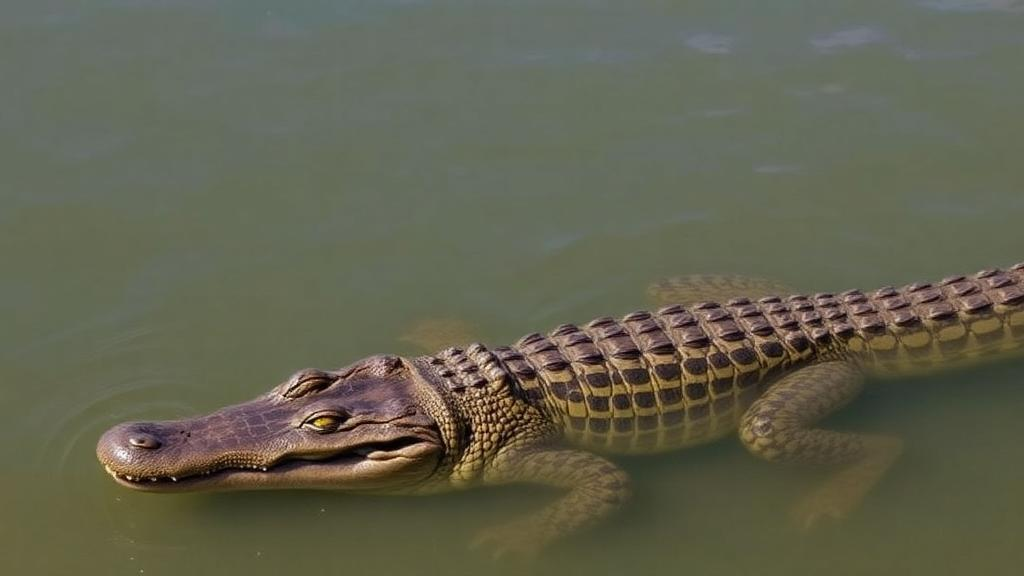
The Nile crocodile has patrolled Africa’s rivers for millions of years, and it has survived ice ages, megadroughts, and the collapse of entire ecosystems. What it may not survive, a new systematic review suggests, is the slow erosion of the very belief systems that once protected it. In a sweeping analysis of wildlife and water policies across the sixteen member states of the Southern African Development Community, published in Frontiers in Conservation Science, researcher Beaven Utete of Chinhoyi University of Technology argues that traditional water knowledge, the intergenerational understanding that indigenous communities hold about rivers, wetlands, and the creatures that inhabit them, is simultaneously the crocodile’s greatest cultural shield and one of its most persistent threats.
The review, guided by the PRISMA 2020 framework and spanning literature from 1900 to 2025, examined how traditional water knowledge, or TWK, is woven into, or more often left out of, the wildlife and water policies of SADC countries. TWK is defined as the profound, inherited understanding that indigenous peoples hold of natural processes, rooted in their ecological dependence on hydrological cycles and their spiritual and cultural connections to water. It differs from the broader concept of traditional ecological knowledge by centering specifically on hydrological dynamics, waterscape management, and aquatic spiritual values. The review found that while TWK operates as a powerful informal conservation mechanism across the region, it remains poorly conceptualized and inconsistently covered in formal policy documents.
The crocodile itself occupies a paradoxical position in Southern African societies. On the IUCN Red List, the species is classified as of Least Concern, and as an apex predator it performs vital ecosystem clean-up roles in the region’s wetlands. Yet the review documents how traditional uses of crocodile parts, from eyes, tail, head, and scales to gall bladder, belly skins, liver, and bile duct secretions, constitute what the author calls an existential threat through ethnozoological medicinal practices. These uses are grounded in what ethnobiologists describe as symbolic resonance reasoning, the belief that crocodile parts embody survival, longevity, resilience, and physical prowess, and can restore human strength, overcome fear, or treat debilitating conditions. The practice operates alongside humoral principles that classify foods and medicines into opposing thermal or symbolic qualities, where health requires a dynamic equilibrium between hot and cold states.
The review’s analysis of use patterns across SADC countries reveals a striking homogeneity. Using a Use Value Index adapted from ethnobotanical research, the study found nearly ninety percent similarity in how crocodile parts are used across the region. Crocodile oils and fat treat ailments including asthma, skin ulcers, rheumatism, burns, chest and respiratory issues, and ringworm in Namibia, Zambia, and Zimbabwe. Claws and teeth serve as protective amulets against physical attacks and witchcraft in Namibia, Mozambique, Lesotho, Eswatini, South Africa, Botswana, and Zambia. Gallbladder and gallstones are used by traditional healers for ear and lung infections and as an antidote to poison. In the Democratic Republic of Congo, belly skin is used for protection against lightning strikes. Crocodile meat, especially from juveniles, is consumed in Mozambique, Namibia, and Zimbabwe to enhance longevity and improve health. Teeth and skin are crafted into necklaces, sandals, bags, and belts in Tanzania, Mozambique, South Africa, and Zambia.
Yet the same cultural framework that drives demand for crocodile parts also protects the species in profound ways. In Madagascar, cultural taboos known as fady designate crocodile habitats as sacred, restricting hunting and fostering coexistence. In Zimbabwe, the crocodile serves as a totem for the BaTonga people, whose clan name Munkuli infers symbolic strength, cunning, and endurance. In Lesotho, Zambia, and Zimbabwe, crocodile imagery signifies chiefly authority and power. In Lesotho, Eswatini, and South Africa, crocodiles are associated with the protection of burial sites, with the belief that ancestral spirits may take the form of a crocodile to guard the deceased. Communities across the region use the presence of crocodiles as bio-indicators of aquatic ecosystem health and fish abundance, inadvertently enhancing conservation. The review characterizes these belief systems as soft conservation tools that regulate resource use, protect nesting sites, and enforce prohibitions on killing.
The policy landscape, however, tells a different story. The foundational legal instrument for wildlife conservation in the region is the SADC Protocol on Wildlife Conservation and Law Enforcement of 1999, which promotes sustainable use and harmonizes national legal instruments. The Revised Protocol on Shared Watercourses in the SADC of 2000 governs water management across the region. Yet the review found that TWK is poorly integrated into both frameworks. Countries with well-developed crocodile ranching industries tend to have fair to excellent coverage of TWK in their policies, while those with poorly developed ranching sectors show poor or negligible coverage. An exception is Mauritius, where a remnant captive population of approximately 2,500 crocodiles is well protected for tourism purposes despite the absence of wild populations.
The review identifies a complex web of barriers to integrating TWK into formal conservation. Legal recognition gaps, differing worldviews between formal science and indigenous practices, fragmented administrative bodies, and centralized authorities that block multi-level knowledge transfer all impede inclusion. The systemic privilege granted to modern Western science over unquantified indigenous knowledge-based findings results in exclusion or piecemeal inclusion of TWK across the region. Social Network Analysis of crocodile conservation governance reveals information bottlenecks where scientific data on population dynamics remain trapped within centralized research institutions, failing to reach fringe communities. Power asymmetries mean that wildlife agencies and commercial ranching operators monopolize decision-making while communities most affected by human-crocodile conflict occupy peripheral positions with low bargaining power.
Crocodile ranching presents its own contradictions. The practice, which involves removing juveniles or eggs from the wild for regulated hatching in commercial facilities, is effective at sustaining populations but relies on wild egg collection that negates its overall conservation contribution. Captive crocodiles do not contribute meaningfully to wild populations in countries such as Botswana, Zambia, Zimbabwe, Mozambique, and Namibia. However, ranching has created what the review describes as subsidized wild security, with some revenue from crocodile farms actively funding anti-poaching patrols and population surveys that state agencies cannot otherwise afford. The review notes that countries with highly developed ranching operations, including Namibia, Malawi, Mozambique, South Africa, Zambia, and Zimbabwe, show high inclusion levels of crocodile aspects in wildlife policies, though this does not necessarily translate into high inclusion levels for TWK.
Looking forward, the review proposes integrating geospatial techniques and citizen science with TWK as a holistic framework for crocodile conservation. This includes tracking local ecological indicators, training local elders and residents to record water table levels, flow rates, and pollution using generational place-based observation methods, and establishing partnerships with traditional leaders to enforce seasonal conservation rules and sacred riverbank protections. The author cautions that formalizing TWK carries risks including cultural commodification, bureaucratic rigidity, and epistemic marginalization, and must be done carefully to avoid empowering elite groups over others. The review also highlights emerging pollution threats, noting that crocodiles as apex indicators of watershed health show persistent endocrine-disrupting chemicals in their tissues and bioaccumulating heavy metals that lead to reproductive organ size reduction and declining juvenile recruitment rates.
The broader implications extend beyond a single species. The review argues that policy developers must balance cultural valuation with conservation realities, noting that skewed analysis toward modern conservation science echoes colonial-era exclusions of indigenous rights. The way forward, the author suggests, lies in community-based frameworks that align protection goals with local governance, where indigenous communities living alongside crocodiles are integrated into co-management rather than perceiving wildlife policies negatively. Exploring captive breeding or ethical substitution to satisfy traditional medicinal demands without depleting wild stocks offers a more nuanced long-term solution. As anthropogenic pressures intensify across Southern African wetlands, the review makes clear that the fate of the Nile crocodile will depend not only on scientific monitoring and legal protection, but on whether the ancient knowledge systems that have coexisted with these apex predators for centuries can be formally recognized before they disappear.
Subject of Research: Integration of traditional water knowledge into Nile crocodile conservation policy in Southern Africa
Article Title: Traditional water knowledge and Nile crocodile (Crocodylus niloticus) conservation in Southern Africa: a systematic review of policy integration, institutional gaps, cultural uses, and barriers
Article References: Utete, B. (2026). Traditional water knowledge and Nile crocodile (Crocodylus niloticus) conservation in Southern Africa: a systematic review of policy integration, institutional gaps, cultural uses, and barriers. Frontiers in Conservation Science, 7, Article 1910283. https://doi.org/10.3389/fcosc.2026.1910283
Image Credits: AI Generated
DOI: 10.3389/fcosc.2026.1910283
Keywords: Nile crocodile, traditional water knowledge, Southern Africa, SADC, wildlife policy, ethnozoology, crocodile ranching, human-wildlife conflict, indigenous knowledge, wetland conservation, PRISMA review, citizen science
Cite Scienmag News
Margaret Porter. (October 16, 2026). Ancient Water Wisdom Could Decide the Fate of Africa’s Nile Crocodiles. Scienmag. https://scienmag.com/ancient-water-wisdom-could-decide-the-fate-of-africas-nile-crocodiles/
Margaret Porter. "Ancient Water Wisdom Could Decide the Fate of Africa’s Nile Crocodiles." Scienmag, 16 October 2026, https://scienmag.com/ancient-water-wisdom-could-decide-the-fate-of-africas-nile-crocodiles/. Accessed 16 October 2026.
Margaret Porter. "Ancient Water Wisdom Could Decide the Fate of Africa’s Nile Crocodiles." Scienmag. October 16, 2026. https://scienmag.com/ancient-water-wisdom-could-decide-the-fate-of-africas-nile-crocodiles/