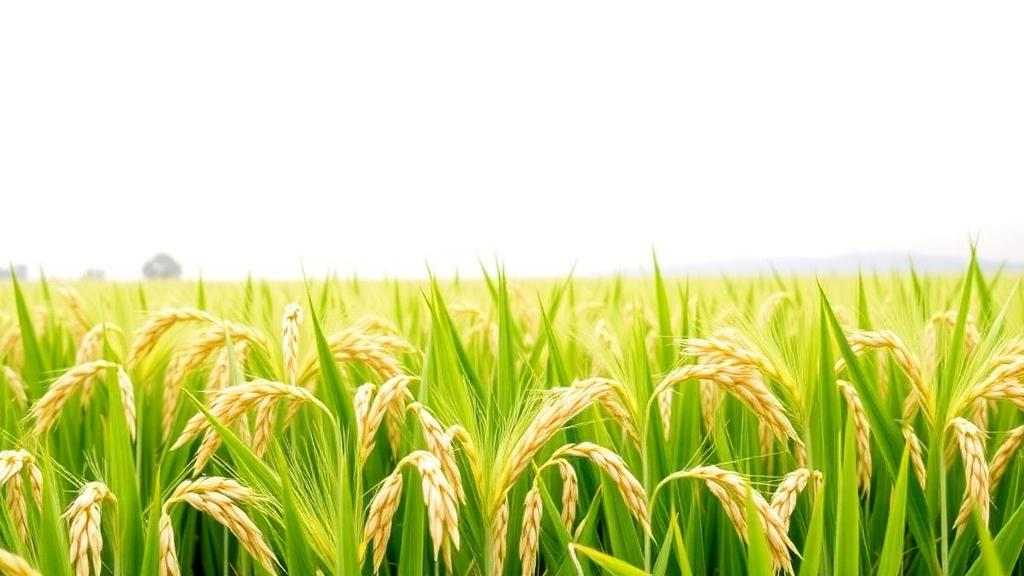
Rice feeds more than half of humanity, yet the relentless push for yield over the past six decades has quietly stripped away much of what made the grain beloved in the first place. A new study from India suggests that the traditional landraces pushed to the margins of cultivation still hold a treasure trove of cooking, sensory and nutritional traits that modern high-yielding varieties cannot simply be assumed to match. The research, published in Discover Agriculture, evaluated 41 traditional rice landraces alongside three modern check varieties across an unusually broad set of quality traits, and its central finding is striking: whether a rice is a farmer-maintained heirloom or a product of a modern breeding programme tells you almost nothing about how it performs on grain quality.
The team, led by Ramalingam Dhinesh of Kerala Agricultural University with colleagues at Pandit Jawaharlal Nehru College of Agriculture and Research Institute in Karaikal, grew the panel during the 2024 season in a randomized complete block design with three replications. The genotypes were deliberately sorted into short-, medium- and long-duration classes, spanning maturity periods from roughly 90 to 185 days, so that each landrace could be judged against a duration-matched modern check rather than only against other landraces. The three checks were ADT 45, Improved White Ponni and CR 1009 Sub 1, all widely grown varieties in southern India. Of an initial 140 landrace accessions collected from farmers in Tamil Nadu, Kerala and Karnataka with their prior consent, 110 germinated and 41 flowered under the trial’s day-length conditions; the rest were evidently so strongly photoperiod-sensitive that they never left the vegetative stage.
What sets this study apart is its breadth. Rather than measuring one or two quality dimensions, the researchers assessed ten grain and cooking traits, including kernel length and breadth, cooking time, water uptake, linear elongation ratio, elongation index and breadth-wise expansion ratio, together with seven organoleptic attributes scored by a blind five-member tasting panel and, for a smaller sub-panel, grain iron, zinc and protein content. Genotypes differed significantly for every single quality trait examined, with probability values below 0.001 across the board. The most variable traits were elongation index and the kernel length-to-breadth ratio, with coefficients of variation of 32.1 and 32.6 percent respectively, while water uptake and post-cooking kernel dimensions were comparatively stable, consistent with the idea that water absorption is more physiologically constrained than simple linear dimensions.
Broad-sense heritability exceeded 96 percent for all ten traits, a figure that demands careful reading. The authors themselves flag that this unusually high value is most likely structural rather than biological: because the trial ran for a single season at a single site, the error term captures only within-season plot noise, not the year-to-year environmental variation that would ordinarily inflate it and pull heritability estimates down. In multi-season studies of comparable traits, heritability typically lands in the 70 to 90 percent range. The prudent interpretation, which the researchers adopt explicitly, is that these figures represent an upper bound pending confirmation across further seasons, not evidence that rice grain quality is somehow insulated from the environment. All ten traits nonetheless combined high heritability with high genetic advance as a percentage of the mean, ranging from 32.4 percent for linear elongation ratio to 72.0 percent for breadth-wise expansion, suggesting that direct phenotypic selection should be effective across the full trait set.
When the researchers set aside the correlations that are mathematically guaranteed by trait formulas, one biologically meaningful pattern emerged with real breeding consequences: kernel breadth was positively correlated with cooking time at r = 0.41 and with elongation index at r = 0.75. In plain terms, bolder grains in this panel take longer to cook but stretch more dramatically on the plate. A breeding programme chasing a slender, fast-cooking grain would therefore have to accept some loss of elongation capacity, because these properties do not vary independently. A negative correlation between post-cooking breadth and elongation index reinforced the same picture, indicating that lengthwise stretching and lateral swelling are, to some extent, competing outcomes of the same cooking process rather than unrelated traits.
Hierarchical clustering using Ward’s minimum-variance method on standardized traits divided the 44 genotypes into four phenotypic groups, and here the study delivered its most eye-catching result. The three modern checks did not cluster together at all. Improved White Ponni fell among the bolder, higher-elongation genotypes, ADT 45 among the slender, faster-cooking ones, and CR 1009 Sub 1 among the high-breadth-expansion group. Each check was closer in its trait profile to a different subset of landraces than to the other two checks. One genotype, Bamathi, stood entirely apart thanks to a genuinely exceptional grain: kernel length around 9.8 millimetres and post-cooking length around 15.7 millimetres, both far beyond the rest of the panel and consistent across all three replications. Principal component analysis told a complementary story, with four components explaining 84.9 percent of total variation and the first component loading heavily on kernel breadth, elongation index and the length-to-breadth ratio, essentially the same breadth-versus-elongation axis that drove the clustering.
To translate all this variation into breeding priorities, the team built a Smith-Hazel selection index on six non-redundant traits, deliberately excluding derivatives such as the length-to-breadth ratio to avoid double-counting the same underlying measurements. The economic weights encoded a generally desirable grain type: slender, fast-cooking and well-elongating. Ranked within each duration group, Anaikomban topped the short-duration class, Improved White Ponni the medium-duration class, and Ilupai poo samba the long-duration class. Crucially, the checks behaved inconsistently. Improved White Ponni outranked every one of the 20 medium-duration genotypes, but ADT 45 ranked 11th of 14 among short-duration entries and CR 1009 Sub 1 ranked 9th of 10 among long-duration entries. Several landraces, including Valan samba, Saramalli, Athokadaya and Kalanamak, outperformed all three checks on the index. The blind sensory panel echoed the same pattern: seven genotypes earned an excellent rating for overall acceptability, six of them landraces, with Improved White Ponni the only check among them.
The nutritional analysis, conducted on a nine-genotype sub-panel using energy-dispersive X-ray fluorescence for iron and zinc and near-infrared reflectance spectroscopy for protein, complicated the picture in an instructive way. Brown rice carried more iron and zinc than polished rice in every genotype tested, as expected since polishing strips away the mineral-rich bran. But no genotype dominated across the board. Among short-duration types, the landrace Rathasalai led on zinc and protein, yet the check ADT 45 had roughly double its iron, an unexpected result for a variety bred primarily for yield. Among medium-duration types, Thanga samba topped zinc and protein, while Improved White Ponni, the star of the cooking-quality index, had the lowest zinc of its group at 12.2 milligrams per kilogram against 18.9 to 24.0 for the others. Long-duration entries differed only marginally. The authors note that these are replicate-averaged means rather than statistically tested differences, and that the nutrient panel did not include Anaikomban or Ilupai poo samba, so whether top cooking quality and top nutrition coincide in those genotypes remains unknown.
The broader message is a caution against tidy categories. Grain-quality superiority and micronutrient density appear to be largely independent properties in this panel, echoing earlier findings that kernel length can be negatively associated with iron and zinc content, so a breeding programme wanting both must select for them as separate targets. Likewise, landrace versus modern variety is not a reliable predictor of quality performance; individual genotypes, not classes, are what matter. The authors put forward Anaikomban, Saramalli and Ilupai poo samba as immediate candidates for grain- and cooking-quality improvement, and Rathasalai and Thanga samba as candidate donors for biofortification, while stressing that all recommendations are provisional pending confirmation across additional seasons and locations. As consumer interest in the distinct flavour, texture and nutritional character of traditional rice continues to grow, studies like this one make the case that the old varieties in farmers’ seed boxes are not relics but an underexploited breeding resource, one whose value can only be unlocked genotype by genotype.
Subject of Research: Grain quality, cooking traits and micronutrient content of rice landraces evaluated against duration-matched modern check varieties for breeding
Article Title: Characterizing grain quality and breeding implications in rice landraces of contrasting duration groups
Article References: Dhinesh, R., Krishnan, V., Vengadessan, V., Mohan, R., Anuratha, A., Pushpa, R., Lovely, B., & Sakthi Anand, M. K. (2026). Characterizing grain quality and breeding implications in rice landraces of contrasting duration groups. Discover Agriculture, 4(1), Article 319. https://doi.org/10.1007/s44279-026-00802-1
Image Credits: AI Generated
DOI: 10.1007/s44279-026-00802-1
Keywords: rice, landraces, grain quality, cooking quality, organoleptic evaluation, iron, zinc, protein, heritability, Smith-Hazel selection index, plant breeding, biofortification
Cite Scienmag News
Alan Morgan. (October 11, 2026). Ancient Rice Landraces Outshine Modern Varieties in Grain Quality Trial. Scienmag. https://scienmag.com/ancient-rice-landraces-outshine-modern-varieties-in-grain-quality-trial/
Alan Morgan. "Ancient Rice Landraces Outshine Modern Varieties in Grain Quality Trial." Scienmag, 11 October 2026, https://scienmag.com/ancient-rice-landraces-outshine-modern-varieties-in-grain-quality-trial/. Accessed 11 October 2026.
Alan Morgan. "Ancient Rice Landraces Outshine Modern Varieties in Grain Quality Trial." Scienmag. October 11, 2026. https://scienmag.com/ancient-rice-landraces-outshine-modern-varieties-in-grain-quality-trial/