


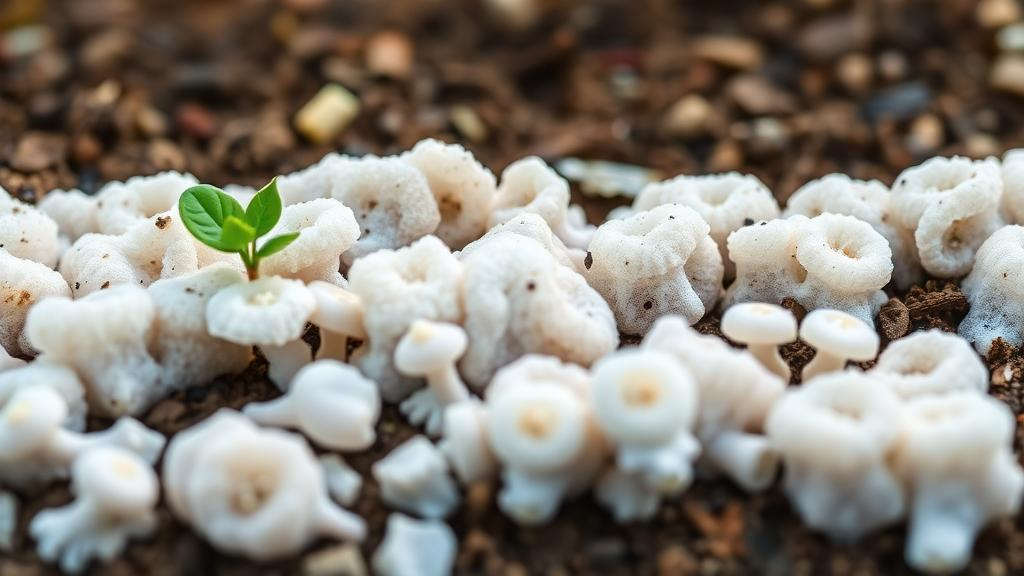
Some of the most promising allies in the fight against soil degradation may be invisible to the naked eye, living quietly inside the tissues of plants that thrive where most crops die. A comprehensive new review published in Discover Plants examines halophyte-associated endophytic fungi, the microscopic symbionts dwelling within salt-tolerant plants, and argues that these organisms could reshape sustainable agriculture, environmental restoration, and even pharmaceutical discovery. The review, led by Rupali Kolap and colleagues at institutions affiliated with Savitribai Phule Pune University and other Indian universities, synthesizes 260 studies selected from an initial pool of 2,570 records following the PRISMA framework, covering publications from 2005 to 2025 across major scientific databases.
Halophytes are a remarkable class of plants that survive and produce substantial biomass under salinity conditions that would kill conventional crops. They flourish in coastal marshes, saline deserts, and other hostile environments, often serving as pioneer species that stabilize soil and initiate nutrient cycling. Because they can be irrigated with saline or brackish water, halophytes reduce pressure on scarce freshwater resources, a critical advantage in drought-prone regions. The fungi living inside them, known as halophyte-associated fungal endophytes or HAFEs, persist within plant tissues without causing disease and appear to be central to this extraordinary stress tolerance. Molecular surveys show that these internal communities are dominated by the phylum Ascomycota, with genera such as Fusarium, Penicillium, Alternaria, and Curvularia frequently reported, alongside Basidiomycota members in certain host species.
The mechanisms by which these fungi benefit their hosts are increasingly well characterized. Endophytes produce phytohormones, most notably indole-3-acetic acid, which stimulates root development and enhances nutrient acquisition. Many express ACC deaminase, an enzyme that lowers stress-induced ethylene levels and prevents growth inhibition under adverse conditions. Others solubilize phosphate and zinc in the rhizosphere, making essential minerals available to the plant. Under salt stress, the fungi help maintain favorable potassium-to-sodium ratios, produce osmo-protectants such as proline and soluble sugars, and activate antioxidant defense systems involving enzymes like superoxide dismutase, catalase, and peroxidase, which neutralize the reactive oxygen species that accumulate when plants are stressed.
The field evidence is striking in several cases. Researchers isolated 426 endophytic fungal isolates representing 112 operational taxonomic units from the coastal halophyte Sesuvium portulacastrum, including eight highly salt-tolerant strains. One of these, Fusarium incarnatum, significantly enhanced maize growth and salinity tolerance by increasing plant height, biomass, chlorophyll content, and potassium-to-sodium balance. Even more dramatic results came from the wild halophytic rice Oryza coarctata, which yielded growth-promoting fungi including Talaromyces adpressus, Talaromyces argentinensis, and Aspergillus welwitschiae. When applied to rice, A. welwitschiae, which produces indole-3-acetic acid, ACC deaminase, and solubilizes phosphate and zinc under high salinity, delivered yield increases of 125 to 204 percent compared with uninoculated controls under both normal and saline conditions.
Stress protection extends well beyond salinity. In quinoa, a halophytic pseudo-cereal, plants harboring native fungal endophytes showed 30 percent higher survival rates under 400 millimolar sodium chloride compared with endophyte-free plants, along with a 25 percent increase in seed protein content and enhanced expression of the NHX1 sodium transporter, all without growth penalties under non-stress conditions. Inoculation with an Aspergillus species from Oryza coarctata induced upregulation of the SOS1 sodium-proton antiporter in rice, reducing sodium accumulation and hydrogen peroxide levels. Drought tolerance has also been demonstrated: halotolerant fungi isolated from salt-lake plants in the central desert of Iran, including Periconia macrospinosa and Neocamarosporium species, enhanced biomass, root growth, and chlorophyll concentration in barley under water deficit, while promoting proline accumulation and antioxidant enzyme activity.
The fungi also act as biological control agents against plant pathogens. Genera commonly isolated from halophytes, including Chaetomium, Fusarium, Penicillium, and Aspergillus, produce antimicrobial secondary metabolites such as alkaloids, phenolics, terpenes, and lipopeptides, and secrete hydrolytic enzymes that degrade pathogen cell walls. Penicillium brevicompactum strains from the mangrove Rhizophora mucronata suppressed Botrytis cinerea infection in Arabidopsis by activating jasmonic acid and ethylene signaling pathways, inducing systemic resistance. Aspergillus awamori inhibited soil-borne pathogens including Rhizoctonia solani and Fusarium oxysporum through organic acids and bioactive volatile compounds. Endophytes from Limonium axillare, including Aspergillus and Cladosporium species, enhanced resistance against Fusarium oxysporum, suggesting these organisms could reduce dependence on chemical pesticides.
Below ground, the ecological contributions of these fungi may be equally significant. Endophytes associated with Salicornia europaea, including Aureobasidium, Epicoccum, Arthrinium, and Trichoderma species, display siderophore production, cellulolytic, chitinolytic, proteolytic, and amylolytic activities that drive nutrient mobilization and organic matter turnover. Fungal consortia from saline soils associated with Distichlis spicata and Kochia scoparia increased phosphorus and nitrogen concentrations in inoculated plants while reducing sodium accumulation. In coastal wetlands, halophyte-endophyte interactions have been linked to elevated soil enzyme activities, including phosphatase and beta-glucosidase, strengthening nutrient cycling under salinity and drought. The fungi also show bioremediation potential: Cladosporium species BF-F enhanced cadmium uptake and accumulation by Sesuvium portulacastrum, improving phytoremediation of contaminated soils, while endophytes from Phragmites australis in highly saline habitats showed elevated tolerance to zinc, mercury, and salt.
Beyond agriculture and ecology, halophyte-associated endophytes are emerging as sources of industrially valuable chemistry. They produce diverse bioactive secondary metabolites, including alkaloids, terpenoids, polyketides, phenolic compounds, flavonoids, and peptides, alongside extracellular enzymes such as cellulases, xylanases, laccases, proteases, amylases, and lipases. Because these fungi evolved under saline conditions, their enzymes may remain functional at high salt concentrations and temperatures, a property of considerable interest for biofuel production, where halophilic fungal cellulases have already been used for the saccharification of lignocellulosic biomass. Genome analysis of the dark septate endophyte Laburnicola rhizohalophila, isolated from the halophyte Suaeda salsa, identified 292 carbohydrate-active enzymes, hinting at a broad enzymatic repertoire awaiting exploitation in food processing, pharmaceuticals, and environmental biotechnology.
Despite the enthusiasm, the review’s authors are careful to emphasize that the field remains young and the evidence base uneven. Most studies have been conducted under laboratory or greenhouse conditions, and relatively few have evaluated these fungi in naturally saline soils or open fields. The effects of individual isolates vary with host plant, fungal strain, and salinity level, meaning a result in one crop may not transfer to another. Host specificity, colonization compatibility, and potential ecological risks remain poorly understood, and genera such as Fusarium contain both beneficial and pathogenic species, raising biosafety questions that demand rigorous assessment. The authors identify the failure to transition from small-scale laboratory experiments to multi-stress environments and open-field applications as the central research gap.
The path forward, the review argues, lies in integrating multi-omics approaches, combining genomics, transcriptomics, and metabolomics, to unravel the molecular mechanisms of plant-fungus interactions and identify candidate genes, pathways, and metabolites associated with salinity tolerance. Molecular validation must be paired with functional assays and multi-location field trials to establish causal relationships and practical applicability. Formulation development, biosafety evaluation, and the systematic testing of compatible fungal consortia, potentially combined with beneficial bacteria, will determine whether these remarkable organisms can move from the petri dish to the farm. If they succeed, halophyte-associated endophytic fungi could help expand arable land onto salt-affected soils, enhance food security under climate change, and rehabilitate degraded ecosystems, all while reducing the chemical inputs that conventional agriculture depends upon.
Subject of Research: Endophytic fungi associated with halophyte plants and their applications in sustainable agriculture, bioremediation, and biotechnology
Article Title: Halophytes-associated endophytic fungi for sustainable development
Article References: Kolap, R., Shelke, D., Sonawane, H., Nikalje, G. C., More, K., & Chambhare, M. (2026). Halophytes-associated endophytic fungi for sustainable development. Discover Plants, 3(1), Article 452. https://doi.org/10.1007/s44372-026-00942-0
Image Credits: AI Generated
DOI: 10.1007/s44372-026-00942-0
Keywords: halophytes, endophytic fungi, salinity tolerance, sustainable agriculture, bioremediation, plant growth promotion, biocontrol, bioactive metabolites, salt stress, soil health, microbial symbiosis, food security
Cite Scienmag News
Alan Morgan. (October 11, 2026). Salt-Loving Plants Hide Fungi That Could Transform Farming on Degraded Land. Scienmag. https://scienmag.com/salt-loving-plants-hide-fungi-that-could-transform-farming-on-degraded-land/
Alan Morgan. "Salt-Loving Plants Hide Fungi That Could Transform Farming on Degraded Land." Scienmag, 11 October 2026, https://scienmag.com/salt-loving-plants-hide-fungi-that-could-transform-farming-on-degraded-land/. Accessed 11 October 2026.
Alan Morgan. "Salt-Loving Plants Hide Fungi That Could Transform Farming on Degraded Land." Scienmag. October 11, 2026. https://scienmag.com/salt-loving-plants-hide-fungi-that-could-transform-farming-on-degraded-land/


