


A recent groundbreaking study into ancient Japanese agricultural practices reveals that significant technological changes do not invariably lead to the abandonment of long-standing cultural customs, especially those related to culinary traditions. This insight nuances our understanding of how prehistoric societies navigated the complex interplay between innovation and cultural continuity.
The prevailing archaeological consensus has long suggested that the advent of farming marked a transformative shift in human societies globally, altering not only subsistence strategies but also social structures and cultural practices. However, new residue analyses from ancient cooking vessels in Japan provide compelling evidence that culinary habits remained remarkably stable despite the introduction of new crop species, highlighting a selective adoption of agricultural products rather than wholesale cultural transformation.
Rice agriculture, introduced to the Japanese archipelago from the Korean Peninsula approximately 3,000 years ago, is widely recognized as a pivotal development in shaping Japan’s agrarian society. Intriguingly, though rice’s introduction heralded profound agricultural changes, its companion crop, millet — despite its importance in contemporaneous Korean diets — appears to have left minimal imprint on Japanese culinary practices during the same period.
An interdisciplinary team comprising archaeologists from the University of York, the University of Cambridge, and Japan’s Nara National Research Institute for Cultural Properties undertook a detailed investigation of organic residues embedded in prehistoric pottery, complemented by analyses of charred plant remains. Their findings indicate that, while both rice and millet were brought into northern Kyushu’s early farming communities, millet did not gain the dietary status it held in Korea, suggesting complex sociocultural factors influencing food adoption beyond mere crop availability.
Dr Jasmine Lundy of the University of York emphasized the critical role of organic residue analysis in this research, noting, “This technique allows us to directly interrogate not only what crops were introduced but how they were integrated—or not—into culinary regimes. By chemically characterizing fats and other compounds absorbed into pots, we gain unprecedented insights into the actual uses of these plants within daily food preparation.”
Microscopic examination of seed impressions on Late Jomon and Yayoi period pottery further corroborates the coexistence of both crop types in early Japanese agricultural contexts. Nevertheless, isotope analyses of human bone collagen and cooking pot residues consistently reveal a conspicuous absence of millet consumption in diets, contrasting sharply with its established role in Bronze Age Korean nutrition.
Professor Oliver Craig, a key contributor from the University of York, expressed surprise at these findings given the established botanical presence of millet. “Environmental suitability can be ruled out as a limiting factor since millet thrives equally in Japanese and Korean climates. This points towards cultural choices or social barriers shaping the acceptance of particular crops.”
Beyond plant-based foods, the research also underscores the persistence of pre-agricultural dietary staples, especially marine resources. Despite the advent of rice farming, fish and other wild food sources continued to dominate the culinary landscape, reflecting adaptive food systems that blended new agricultural inputs with enduring foraging traditions.
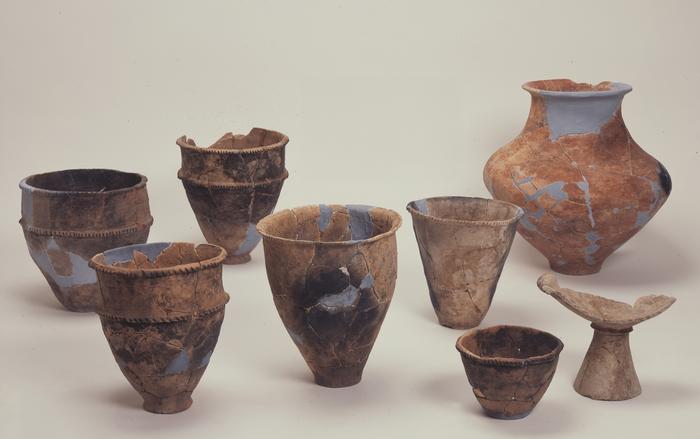
Echoing this, Dr Shinya Shoda from the Nara National Research Institute highlighted interesting continuities in pottery function. He noted, “Even with the influx of Korean-style farming tools and ceramics, there is scant evidence that these were used predominantly for rice processing. The prevalent use of Yayoi pots for cooking fish and other wild foods suggests a remarkable degree of culinary conservatism.”
Comparative perspectives from other regions bolster these observations. For instance, in Southern Scandinavia, hunting and gathering persisted well beyond the advent of farming, while in Britain, farming rapidly supplanted foraging. This regional variability underscores the non-linear nature of cultural and technological transitions, shaped by a matrix of environmental, social, and ideological factors.
Professor Craig concluded by reflecting on the deeper implications of their research: “Our data signal that food culture is entrenched and resilient. Despite visible shifts in material culture and agricultural practice, everyday culinary behaviors may lag significantly, spanning generations before fully integrating new technologies and ingredients.”
This research, published in the prestigious Proceedings of the National Academy of Sciences, is part of the ENCOUNTER project led by Dr Enrico Crema at the University of Cambridge. Crema remarked that the project’s broader findings chart the complex pathways of farming diffusion, demographic changes, and evolving social customs in prehistoric Japan, further illuminating how cultural heritage and innovation co-evolved.
The revelations from this study not only advance our understanding of ancient Japanese society but also offer profound lessons on the persistence of cultural identities in the face of change. By uncovering the nuanced dynamics of dietary choices and technological adoption, this work invites a reevaluation of how societies negotiate continuity and transformation over time.
Cite Scienmag News
Alan Morgan. (July 31, 2025). Ancient Japan’s ‘Millet Mystery’ Uncovered: New Research Reveals Complex Agricultural Adoption. Scienmag. https://scienmag.com/ancient-japans-millet-mystery-uncovered-new-research-reveals-complex-agricultural-adoption/
Alan Morgan. "Ancient Japan’s ‘Millet Mystery’ Uncovered: New Research Reveals Complex Agricultural Adoption." Scienmag, 31 July 2025, https://scienmag.com/ancient-japans-millet-mystery-uncovered-new-research-reveals-complex-agricultural-adoption/. Accessed 3 September 2026.
Alan Morgan. "Ancient Japan’s ‘Millet Mystery’ Uncovered: New Research Reveals Complex Agricultural Adoption." Scienmag. July 31, 2025. https://scienmag.com/ancient-japans-millet-mystery-uncovered-new-research-reveals-complex-agricultural-adoption/


