When a patient survives an ischemic stroke, the danger is not over once blood flow returns. The sudden restoration of oxygen to oxygen-starved brain tissue can trigger a devastating secondary assault known as cerebral ischemia–reperfusion injury, or CIRI, a cascade of oxidative stress, neuroinflammation, metabolic collapse, and regulated cell death that can undo much of the benefit of reperfusion therapy. Now, a team of researchers at Hunan University of Chinese Medicine has reported that a classical Chinese herbal formula may blunt this injury through an unexpected route: the gut. In a study published in Frontiers in Microbiology, the investigators combined serum pharmacochemistry, network pharmacology, molecular docking, 16S rDNA sequencing, and untargeted metabolomics to trace how Xijiao Dihuang Decoction, a prescription first recorded in the seventh-century text Beiji Qianjin Yaofang, protects the rat brain by coordinating the gut microbiota and host metabolism.
Xijiao Dihuang Decoction, abbreviated XDD, contains four ingredients: Cornu Bubali (water buffalo horn), Rehmanniae Radix (dried tuberous root of Rehmannia glutinosa), Paeoniae Radix Rubra (root of Paeonia lactiflora), and Moutan Cortex (root bark of Paeonia suffruticosa). In traditional Chinese medicine theory, the formula clears heat, cools the blood, detoxifies, and resolves blood stasis, and it has historically been prescribed for apoplexy and febrile coma. Modern pharmacological work had already hinted at protective effects in cerebrovascular disease, including regulation of inflammation, neurogenesis, angiogenesis, and TLR4–MyD88/NF-κB signaling, but the systematic mechanisms of the complete formula against CIRI remained poorly understood. The new study set out to test a specific hypothesis: that XDD protects the brain through a coordinated chain running from the formula itself, through gut microbes and their metabolites, to neuroprotection.
The first step was to determine which of the formula’s many constituents actually reach the bloodstream. Using ultra-high-performance liquid chromatography coupled to tandem mass spectrometry on an Orbitrap Exploris 120 instrument, the researchers analyzed serum from rats dosed with XDD at ten times the human-equivalent maximum dose. They identified 54 XDD-derived circulating components, none of which appeared in blank control serum. The top 30 compounds, all confirmed at the highest identification confidence level, spanned seven chemical categories dominated by sesquiterpenoids and phenylpropanoids, with terpenoids, polyketides, alkaloids, and fatty acids also represented. Among the detected molecules were well-known plant phenolics such as epicatechin, protocatechuic acid, caffeic acid, paeoniflorin, and acteoside, with mass accuracy controlled within 5 parts per million and retention-time variation within 0.3 minutes.
With the circulating chemistry in hand, the team turned to network pharmacology to predict what those compounds might do. Cross-referencing component targets from the TCMSP, ChEMBL, and STITCH databases against 136 CIRI-related targets from GeneCards, OMIM, and the Therapeutic Target Database yielded 20 shared targets. Gene Ontology enrichment pointed to biological processes including regulation of inflammatory response, response to hypoxia, extrinsic apoptotic signaling, and epithelial cell proliferation, while KEGG analysis highlighted lipid and atherosclerosis pathways and the longevity regulating pathway. Protein–protein interaction analysis ranked AKT1 and NLRP3, a central node of the inflammasome, as the highest-degree hub targets, alongside EGR1, PTGS1, HMOX1, and CCL2. Molecular docking provided computational support: epicatechin bound AKT1 with an estimated energy of −9.131 kcal/mol and protocatechuic acid bound PTGS1 at −6.350 kcal/mol, all tested pairs falling below the −5.0 kcal/mol threshold generally considered favorable. The authors caution that these docking results remain computational predictions requiring experimental validation.
The in vivo evidence came from a rat model of focal stroke. Ninety-four Sprague–Dawley rats entered the efficacy experiment, with 79 undergoing a 90-minute middle cerebral artery occlusion followed by reperfusion via the intraluminal filament method. After excluding animals that failed the predefined neurological success criterion, 75 modeled rats were randomized to receive distilled water, the antioxidant drug edaravone as a positive control, or XDD at low, medium, or high doses of 0.95, 1.9, or 3.8 grams per kilogram by daily oral gavage for seven days, beginning one hour after reperfusion. Assessments were performed by investigators blinded to group allocation. The results were striking: high-dose XDD significantly reduced neurological deficit scores at 24 hours, and infarct volume, measured by triphenyltetrazolium chloride staining, fell by 23.56 percentage points at the medium dose and 30.27 percentage points at the high dose compared with untreated stroke rats, approaching the 32.32-point reduction achieved by edaravone.
Supporting measurements reinforced the picture. XDD lowered the elevated whole-blood and plasma viscosity characteristic of the stroke model, with the largest corrections at the high dose. Histology told a consistent story: hematoxylin–eosin and Nissl staining showed that treated animals retained denser, more organized neurons in the hippocampus and cortex, with less vacuolation, nuclear pyknosis, and Nissl body loss than untreated stroke controls. Intestinal tissue, which suffered broken villi and glandular disruption after stroke, also recovered partially with high-dose XDD. Inflammation, a key driver of secondary brain injury, was measurably restrained: serum interleukin-6 fell significantly at all three XDD doses, and interleukin-1β dropped significantly at the medium and high doses, as quantified by enzyme-linked immunosorbent assay.
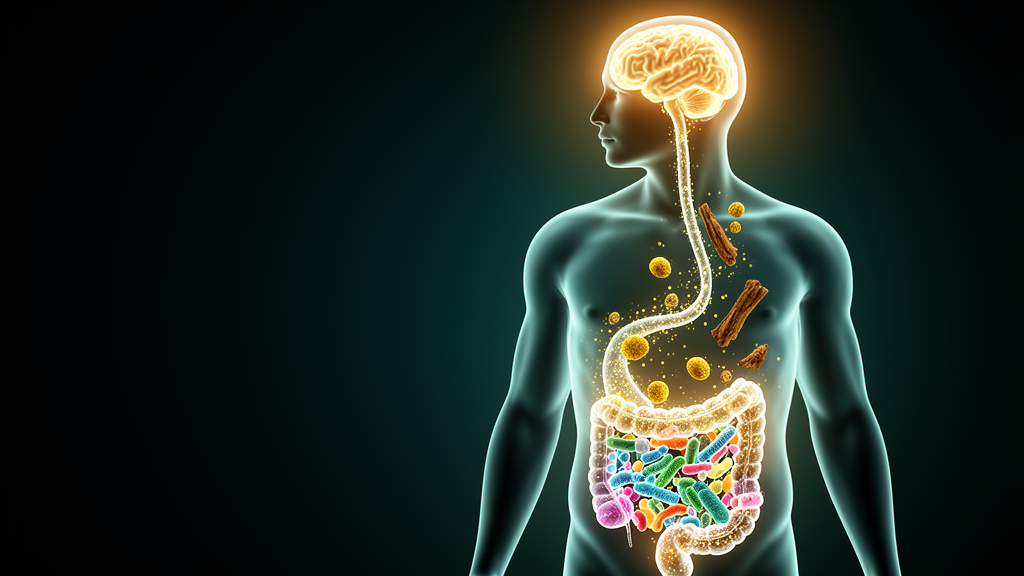
The study’s most novel contribution lies in the gut. Sequencing the V3–V4 region of the bacterial 16S rRNA gene from cecal contents revealed that stroke dramatically reshaped the microbial community: alpha diversity declined, and at the phylum level Firmicutes decreased while Proteobacteria and Patescibacteria expanded, a pattern long associated with dysbiosis. At the genus level, opportunistic taxa such as Escherichia, Parabacteroides, and Klebsiella rose, while beneficial Lactobacillus, Limosilactobacillus, and Duncaniella fell. XDD partially reversed these shifts in a dose-dependent manner, with medium- and high-dose communities clustering closer to healthy controls in principal coordinates analysis. The contrast was especially sharp for Klebsiella, nearly absent in sham and high-dose treatment groups but abundant after stroke, and for Duncaniella, which showed the reverse pattern.
Metabolomics added the biochemical dimension. Untargeted liquid chromatography–mass spectrometry of cecal contents, reduced from 67,727 raw features to 41,906 after quality filtering, detected 970 metabolites significantly altered by stroke. XDD treatment produced a bidirectional corrective effect on 347 of them: 143 metabolites that rose after modeling fell with treatment, and 204 moved the opposite way. Pathway analysis tied the reversing metabolites to fatty acid degradation, glyceride metabolism, sphingolipid metabolism, and alpha-linolenic acid metabolism. Notable examples included hexadecatrienoylcarnitine, an acylcarnitine linked to mitochondrial fatty-acid transport whose accumulation can stress mitochondria; adenosine, a neuroprotective purine depleted after injury; and alpha-linolenic acid, the plant-derived omega-3 fatty acid that serves as precursor to anti-inflammatory EPA and DHA. The authors suggest these findings offer a modern biochemical reading of the formula’s traditional actions of clearing heat and resolving stasis.
Integrating the two datasets across 20 paired samples, Spearman correlation analysis with false-discovery-rate correction linked specific bacteria to specific lipids. Duncaniella, Limosilactobacillus, Schaedlerella, and Ligilactobacillus correlated positively with monogalactosyl lipids, alpha- and gamma-linolenic acid, and the endocannabinoid-like NAE(18:1), a known agonist of the anti-inflammatory nuclear receptor PPAR-alpha. Klebsiella, Blautia_A, and Escherichia showed negative correlations with the same protective metabolites, raising the possibility that pathogen overgrowth depletes beneficial lipid mediators. The authors are careful to frame these as statistical co-variation, not proof of direct interaction or causality, and they acknowledge key limitations: the study cannot establish whether microbial changes cause neuroprotection, network pharmacology relied on human databases while experiments used rats, predicted targets like AKT1 and NLRP3 were not validated at the protein level, only male rats were studied, and the microbiome sample sizes were small after quality exclusions.
Even with those caveats, the work stands as one of the more complete multi-omics portraits of how a traditional formula might act on the microbiota–gut–brain axis. It proposes a testable framework in which XDD suppresses opportunistic gut pathogens, nurtures commensals associated with anti-inflammatory lipids, normalizes energy and lipid metabolism, and thereby dampens the inflammatory and cell-death cascades that amplify brain injury after reperfusion. Future experiments using antibiotic depletion, microbiota-depleted animals, and fecal transplantation, together with protein-level validation in brain tissue, will be needed to convert correlation into causation. But if the gut-brain link holds up, an herbal prescription written more than 1,300 years ago may yet find a place in the modern stroke arsenal, not as a replacement for thrombolysis or thrombectomy, but as a multi-target adjunct aimed at the secondary injury that no single-molecule drug has fully tamed.
Subject of Research: Gut microbiota and metabolic mechanisms underlying the neuroprotective effects of Xijiao Dihuang Decoction against cerebral ischemia–reperfusion injury
Article Title: Integrated multi-omics reveals gut microbiota–metabolic mechanisms underlying the neuroprotective effects of Xijiao Dihuang Decoction against cerebral ischemia–reperfusion injury
Article References: Long, Y.-Y., Feng, Y.-J., Mao, K.-N., Song, Z.-G., Liu, Y.-C., Chen, S.-Y., Zheng, C.-X., Zeng, Y.-D., Yin, S.-T., Dai, S.-S., Li, H., & Liu, W.-H. (2026). Integrated multi-omics reveals gut microbiota–metabolic mechanisms underlying the neuroprotective effects of Xijiao Dihuang Decoction against cerebral ischemia–reperfusion injury. Frontiers in Microbiology, 17, Article 1851608. https://doi.org/10.3389/fmicb.2026.1851608
Image Credits: AI Generated
DOI: 10.3389/fmicb.2026.1851608
Keywords: cerebral ischemia–reperfusion injury, Xijiao Dihuang Decoction, gut microbiota, metabolomics, 16S rDNA sequencing, network pharmacology, molecular docking, neuroinflammation, traditional Chinese medicine, microbiota–gut–brain axis, lipid metabolism, MCAO/R rat model
Cite Scienmag News
Cassandra Pierce. (October 16, 2026). Ancient Chinese Formula Shields the Brain by Rewiring Gut Microbes and Metabolism. Scienmag. https://scienmag.com/ancient-chinese-formula-shields-the-brain-by-rewiring-gut-microbes-and-metabolism/
Cassandra Pierce. "Ancient Chinese Formula Shields the Brain by Rewiring Gut Microbes and Metabolism." Scienmag, 16 October 2026, https://scienmag.com/ancient-chinese-formula-shields-the-brain-by-rewiring-gut-microbes-and-metabolism/. Accessed 16 October 2026.
Cassandra Pierce. "Ancient Chinese Formula Shields the Brain by Rewiring Gut Microbes and Metabolism." Scienmag. October 16, 2026. https://scienmag.com/ancient-chinese-formula-shields-the-brain-by-rewiring-gut-microbes-and-metabolism/