


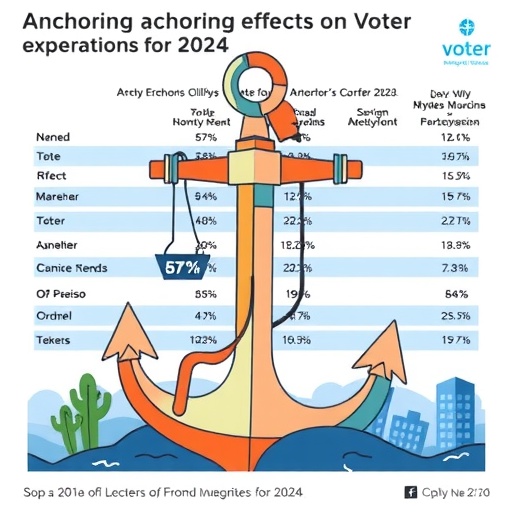
The 2024 presidential election is shaping up to be one of the most politically charged events in recent American history, with a landscape heavily influenced by polarized perceptions. Recent research conducted by Curl and Rocheleau sheds light on how psychological anchoring has affected voter expectations leading up to this critical event. The concept of anchoring is deeply rooted in cognitive psychology and refers to the human tendency to rely heavily on the first piece of information encountered when making decisions. When applied to political contexts, this phenomenon can significantly alter voters’ outlooks and choices.
As the electoral campaigns ramp up, candidates have become increasingly aware of the importance of initial messaging. Those first impressions are vital; they can set the tone for the entire campaign and influence voter perceptions in profound ways. The researchers found that when voters are exposed to initial campaign messages, these become their reference points, anchoring their expectations and perceptions of candidates. This highlights the strategic importance of well-crafted messaging in swaying public opinion.
In their study, Curl and Rocheleau analyzed various touchpoints during the campaign season, assessing how early statements and actions by candidates shaped the narrative around the election. They noted that varying degrees of polarization exist among voters, leading to different interpretations of the same information. This bifurcation often results in persistent belief systems that are difficult to alter, irrespective of the truth or the evidence provided later in the election cycle.
Moreover, the researchers explored the implications of these anchoring effects on overall voter turnout and engagement. They argued that when candidates focus their messaging on stark contrasts between themselves and their opponents, they inadvertently reinforce political polarization. Voters become more entrenched in their respective views, which in turn can either motivate them to vote out of a sense of urgency or lead to disillusionment with the process altogether.
Another significant finding was the interplay between social media and anchoring effects. In the digital age, misinformation can spread rapidly across platforms, serving as powerful anchors that sway public perception. The researchers cited instances where exaggerated claims or negative advertisements within social networks solidified opposing views, making it increasingly challenging for candidates to present a balanced image. This complexity necessitates a more sophisticated understanding of communication strategies, not only from candidates but also from voters themselves.
Understanding how anchoring works can empower voters to recognize when they’re being influenced by skewed information. Curl and Rocheleau emphasized the need for critical thinking skills among constituents who may be bombarded with persuasive, yet polarizing, narratives. They posited that increasing media literacy can serve as a buffer against the detrimental effects of misapplied anchoring.
Additionally, the ramifications of these findings extend beyond the electoral process itself; they may contribute to a broader societal discourse about the role of belief and perception in shaping public policy. When political leaders understand that voter expectations are significantly shaped by anchoring, they might approach policy proposals and public engagement with a greater sense of responsibility. The research advocates for a more nuanced dialogue around how political communication is crafted, encouraging candidates to speak to the roots of voter concerns rather than perpetuating division.
In terms of methodology, the study utilized a mixed-methods approach combining qualitative interviews with quantitative analysis of voter responses across various demographics. This dual approach allowed the researchers to paint a more comprehensive picture of the anchoring phenomenon, illustrating its diverse impacts on different voter segments. The differences in responses between various age groups, educational backgrounds, and political affiliations underscore the need for tailored messaging strategies in political campaigns.
As the election year progresses, monitoring the anchoring effects on voter expectation will prove vital for analysts and strategists alike. Understanding these dynamics can illuminate voting behaviors that may appear irrational when viewed through a traditional lens. It shows that voters are not merely swayed by policy proposals but are significantly influenced by initial perceptions and narratives introduced by candidates and their allies.
What emerges from Curl and Rocheleau’s findings is a call to action for a data-driven approach to political campaigning. By recognizing the power of anchoring, campaigns can better structure their messaging to either mitigate polarization or strategically harness it. This could involve creating nuanced narratives that resonate across the political spectrum, thus fostering a more informed and engaged electorate.
In conclusion, the research by Curl and Rocheleau serves as a timely reminder of the power of psychological principles in the political realm. As Americans move closer to the polls, it is crucial to understand how perceptions are shaped and the potential consequences these perceptions can have on democratic participation. A critical examination of electoral strategies that emphasize understanding over division may pave the way for a more inclusive and constructive political discourse in future elections. Ultimately, the conversation about anchoring invites us to think more deeply about how we form, challenge, and evolve our beliefs in the face of modern political realities.
Curl, L.S., Rocheleau, C.A. Polarized perceptions—how anchoring shaped voter expectations to the 2024 presidential election.
Discov Psychol 5, 43 (2025). https://doi.org/10.1007/s44202-025-00365-0
Cite Scienmag News
Glenn Wilkins. (September 2, 2025). Anchoring Effects on Voter Expectations for 2024. Scienmag. https://scienmag.com/anchoring-effects-on-voter-expectations-for-2024/
Glenn Wilkins. "Anchoring Effects on Voter Expectations for 2024." Scienmag, 2 September 2025, https://scienmag.com/anchoring-effects-on-voter-expectations-for-2024/. Accessed 4 September 2026.
Glenn Wilkins. "Anchoring Effects on Voter Expectations for 2024." Scienmag. September 2, 2025. https://scienmag.com/anchoring-effects-on-voter-expectations-for-2024/


