


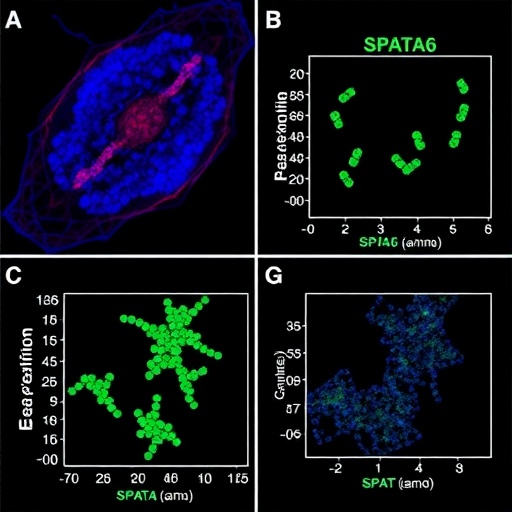
In a groundbreaking study published in Acta Parasitologica, researchers have unveiled new insights into the intricate relationship between parasitic infections and male reproductive health, focusing on the consequences of experimental amebiasis on testicular function and epigenetic regulation. This pioneering work sheds light on how the intestinal parasite Entamoeba histolytica can inadvertently trigger reproductive dysfunction through molecular alterations in the testes, particularly focusing on the methylation status of the SPATA6 gene, a key regulator in spermatogenesis.
Amebiasis, caused by the protozoan parasite Entamoeba histolytica, is predominantly known for its gastrointestinal manifestations, often resulting in dysentery and liver abscesses. However, mounting evidence indicates that the ramifications of this infection extend beyond the gut, influencing systemic physiology in profound ways. This new research delves into the less-explored domain of how amebiasis-induced systemic inflammation and immune responses can affect male reproductive organs at a genetic and epigenetic level, potentially leading to subfertility or infertility.
The study employed a rat model to simulate the conditions of experimental amebiasis, providing a controlled environment to monitor changes in testicular tissue and function over the course of infection. Researchers meticulously induced infection and then assessed both histopathological changes in the testes and epigenetic modifications, with particular attention to DNA methylation patterns in genes critical to spermatogenesis. Among these, SPATA6 emerged as a focal point due to its established role in sperm development and structural integrity.
Through quantitative methylation analysis, the authors identified a significant hypermethylation of the SPATA6 promoter region in rats afflicted with amebiasis compared to controls. This epigenetic alteration correlates with a downregulation of SPATA6 expression, suggesting that methylation changes impair the gene’s normal function. Since SPATA6 is integral to the assembly and maintenance of sperm tail structures, its repression likely contributes to defective sperm morphology and reduced motility, key determinants of male fertility.
Histological examinations complemented these molecular findings, revealing pronounced testicular tissue damage characterized by seminiferous tubule degeneration, decreased germ cell populations, and disorganized Sertoli cell architecture. These observations underscore the direct impact of amebiasis-related systemic inflammation on the testicular microenvironment, disrupting the niche necessary for effective sperm production and maturation.
Importantly, this study did not stop at characterizing damage but also explored the potential for therapeutic intervention. The research team administered a treatment protocol aimed at mitigating both the parasite load and the oxidative stress markers elevated during infection. Notably, treatment led to a partial restoration of SPATA6 methylation levels towards normalcy and a concomitant improvement in sperm parameters, including count and motility, suggesting a reversible component to the epigenetic modifications.
The implications of these findings resonate widely, especially in regions where amebiasis remains endemic and male infertility rates are of significant concern. By establishing a mechanistic link between parasitic infection and epigenetic regulation of spermatogenic genes, this work calls for integrated healthcare strategies that address parasitic diseases not only as acute infections but also as contributors to chronic reproductive health issues.
Additionally, the research opens new avenues for the development of epigenetic biomarkers in diagnosing and monitoring reproductive dysfunction in parasitic disease contexts. The methylation status of SPATA6 offers a promising candidate for non-invasive diagnostic assays that could predict fertility impairments before irreversible damage occurs.
The study also raises crucial questions about the broader impact of parasitic infections on epigenetic landscapes in other organs and systems. Given that epigenetic modifications are reversible and responsive to environmental changes, therapeutic interventions targeting epigenetic machinery may represent a novel frontier in treating infection-related sequelae.
Moreover, the emerging data align with a growing body of literature highlighting the intersection between infectious diseases, immune responses, and epigenetic reprogramming. This triad shapes disease outcomes and host resilience, underscoring the intricate balance of host-pathogen interactions.
By focusing on SPATA6, researchers also underscore the gene’s importance beyond its known biological functions, positioning it as a nexus point where infectious insult translates into tangible reproductive deficits. This gene-centric approach could inspire targeted gene therapies or epigenetic editing techniques aimed at restoring normal gene function disrupted by disease.
As the global health community continues to grapple with neglected tropical diseases and their systemic effects, studies like this emphasize the necessity of multidisciplinary research combining parasitology, reproductive biology, and epigenetics. Such integrative efforts promise to unravel complex disease mechanisms and improve patient outcomes in multifaceted ways.
In conclusion, the study by Noor, Saleh, and AL-Abady marks a significant advance in understanding how experimental amebiasis precipitates male reproductive dysfunction through epigenetic modifications of the SPATA6 gene. Their findings highlight the potential for reversibility in such epigenetic marks with appropriate therapeutic intervention, heralding a hopeful outlook for affected individuals. This research enriches our comprehension of parasite-host interactions and broadens the horizon for future diagnostics and treatment strategies within reproductive medicine.
Cite Scienmag News
Juliet Wilcox. (October 28, 2025). Amebiasis Impairs Male Fertility via SPATA6 Methylation. Scienmag. https://scienmag.com/amebiasis-impairs-male-fertility-via-spata6-methylation/
Juliet Wilcox. "Amebiasis Impairs Male Fertility via SPATA6 Methylation." Scienmag, 28 October 2025, https://scienmag.com/amebiasis-impairs-male-fertility-via-spata6-methylation/. Accessed 3 September 2026.
Juliet Wilcox. "Amebiasis Impairs Male Fertility via SPATA6 Methylation." Scienmag. October 28, 2025. https://scienmag.com/amebiasis-impairs-male-fertility-via-spata6-methylation/


