


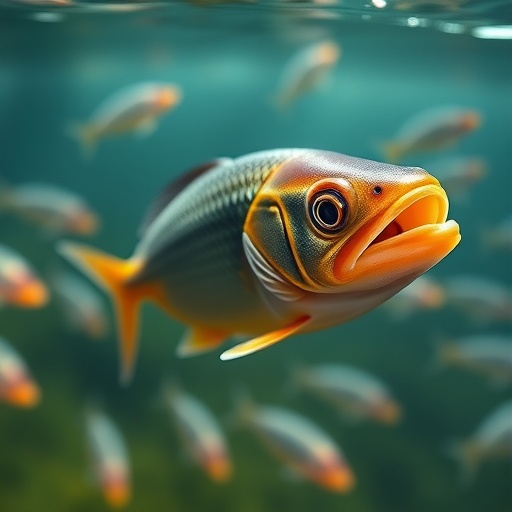
Deep within the heart of the Amazon basin, an international coalition of scientists is unraveling the mysteries of a group of parasites that have surfaced as one of the most formidable threats to global aquaculture. These parasitic organisms, known as myxozoa, are microscopic yet devastating, inflicting lethal diseases on fish populations across oceans and continents. With farmed fish stocks such as salmon and trout succumbing to these infections, the worldwide fishing industry faces economic losses estimated to exceed £50 million annually, jeopardizing food security and aquatic biodiversity alike.
The Amazon Basin, renowned for harboring the most diverse assemblage of freshwater fish species on Earth, presents a unique and comparatively uncharted environment to study the intricate dynamics between parasites and their hosts. A collaborative research team spanning King’s College London, Universidade Federal de São Paulo (UNIFESP), Federal University of Western Pará (Brazil), University of Zagreb (Croatia), University of Cambridge, and the Natural History Museum London embarked on an unprecedented expedition. They established a mobile laboratory aboard a river vessel at the confluence of the Tapajós and Amazon Rivers near Santarém, Pará, Brazil, thereby enabling real-time analysis of parasite prevalence and genetic characteristics in natural fish populations.
Preliminary findings from this exploratory venture reveal a striking infection rate: over half of the fish sampled in the Amazon Basin harbor myxozoan parasites in varying stages of their complex life cycles. This alarming level of infection threatens subsistence fish farming, recreational angling industries, and the delicate balance of aquatic ecosystems that depend on healthy fish populations. Comparable ecological catastrophes are witnessed elsewhere, notably in multiple streams of the western United States where parasite outbreaks have precipitated a 90% decline in trout numbers.
Central to these investigations is the emerging understanding of how myxozoans regulate their genomes in response to fluctuating environmental conditions and host interactions. Traditionally, the gene expression mechanisms of these organisms were thought to be simplistic or absent. However, the research consortium has uncovered evidence of epigenetic mechanisms at play—biochemical modifications that influence gene activity without altering the DNA sequence itself. This discovery challenges longstanding dogma and opens novel avenues for controlling parasite virulence and transmission.
Professor Paul Long, a marine biotechnology expert at King’s College London, underscores the scientific import of these findings: “The Amazon’s unparalleled biodiversity conceals a vast portfolio of parasitic life forms that remain enigmatic. Decoding how gene regulation operates within myxozoans not only augments our grasp of evolutionary biology but also serves as a gateway to innovating gene-based vaccines. Such technologies could revolutionize fish farming by mitigating losses due to parasitic infections, thereby bolstering global food security.”
Complementing this perspective, Professor Edson Adriano of UNIFESP highlights the significance of the Amazonian ecosystem as a living laboratory for parasitology. “The spatial and biological diversity encountered across the Amazon Basin exposes parasites to diverse environmental stimuli during their lifecycle. Our investigations into epigenetic responses suggest that parasites dynamically adjust their genetic expression, potentially enhancing their adaptability and resilience. This epigenetic plasticity may be pivotal in understanding how climate change scenarios influence parasite-host dynamics.”
Instrumental in bridging academic research with practical aquaculture applications, Dr. Santiago Benites de Pádua, veterinarian and manager at the Brazilian Fish Company, emphasizes the translational potential of the discoveries. “Comprehensive insights into parasite biology and gene regulation empower the development of targeted intervention strategies. By harnessing this knowledge, we aim to design efficacious treatments and preventive measures that sustain the health of farmed fish, thus securing economic viability for fish producers worldwide.”
The research delves deeper into the molecular intricacies of myxozoan genomes, deploying advanced genomic sequencing and chromatin modification profiling technologies aboard the mobile research lab. This approach enables the team to characterize novel epigenetic markers such as DNA methylation patterns and histone modifications. These molecular signatures shed light on the parasites’ ability to toggle genes on and off in response to host immune defenses and environmental pressures.
Understanding gene regulatory networks in myxozoans holds profound implications for evolutionary biology. These parasites exemplify extreme cases of genome reduction and adaptation, having evolved from free-living relatives into obligate intracellular parasites. The discovery of epigenetic regulation mechanisms suggests retained complexity within their streamlined genomes, challenging the assumption that parasitism uniformly leads to genetic simplification.
From an ecological standpoint, the pervasive infection of Amazonian fish species introduces cascading effects on biodiversity and ecosystem services. Healthy fish populations underpin nutrient cycling, food webs, and cultural traditions among indigenous communities. The amplification of parasite loads could disrupt these systems, entailing losses that extend beyond economics to include ecological resilience and social wellbeing.
Furthermore, the intersection of parasitology and climate change research emerges as critical. With warming waters and altered hydrological cycles predicted in the Amazon and beyond, parasite-host relationships are expected to shift. Epigenetic adaptability might afford myxozoans the capacity to rapidly respond to such environmental fluctuations, potentially exacerbating infection rates and disease severity.
The ongoing research also exemplifies the power of interdisciplinary collaboration, uniting expertise from molecular genetics, ecology, veterinary medicine, and computational biology. By integrating fieldwork with cutting-edge laboratory analyses, the consortium advances both fundamental science and practical solutions to one of aquaculture’s most pressing challenges.
As the global demand for fish continues to grow, safeguarding aquaculture against pathogenic parasites remains an urgent priority. The insights gleaned from the Amazonian myxozoan study pave the way for innovative gene-based vaccines and therapeutics that could transform disease management strategies. Ultimately, this research not only illuminates hidden facets of parasite biology but also underscores the inextricable link between biodiversity conservation and food security in an era of unprecedented environmental change.
Web References: 10.1093/gigascience/giaf014
References: GigaScience Journal, DOI: 10.1093/gigascience/giaf014
Cite Scienmag News
Juliet Wilcox. (April 22, 2025). Amazon Research Develops Solutions to Combat £50 Million Parasite Devastating Global Fish Farms. Scienmag. https://scienmag.com/amazon-research-develops-solutions-to-combat-50-million-parasite-devastating-global-fish-farms/
Juliet Wilcox. "Amazon Research Develops Solutions to Combat £50 Million Parasite Devastating Global Fish Farms." Scienmag, 22 April 2025, https://scienmag.com/amazon-research-develops-solutions-to-combat-50-million-parasite-devastating-global-fish-farms/. Accessed 3 September 2026.
Juliet Wilcox. "Amazon Research Develops Solutions to Combat £50 Million Parasite Devastating Global Fish Farms." Scienmag. April 22, 2025. https://scienmag.com/amazon-research-develops-solutions-to-combat-50-million-parasite-devastating-global-fish-farms/


